




Digital News Guru Environment Desk:
India is witnessing an unusual and dramatic shift in weather patterns this March, with conditions resembling winter rather than the expected onset of summer. From fresh snowfall in the northern hills to rare hailstorms in the south, the phenomenon—popularly dubbed “Winter in March”—has captured nationwide attention and sparked serious concerns among experts.
Traditionally, March marks the transition from spring to summer in India, with temperatures steadily rising across most regions. However, 2026 has defied expectations. Instead of heat, large parts of the country are experiencing cold winds, rain, thunderstorms, and even snowfall. This sudden reversal of seasonal norms is being attributed to a powerful and persistent weather system known as a Western Disturbance.

Unusual Weather Across Regions
One of the most striking developments has been the return of snowfall in Kashmir and other Himalayan regions. Snowfall at this time of year is rare, as winter typically recedes by late February. Yet, higher altitudes have once again been covered in snow, bringing back winter-like conditions and disrupting normal life.
Equally surprising has been the situation in southern India. Parts of Karnataka experienced intense hailstorms, with hailstones covering the ground in thick layers, giving the appearance of snowfall. Videos of these scenes quickly went viral on social media, with many users describing the visuals as “mini Kashmir” in the south.
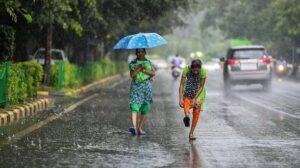
Meanwhile, northern plains including Delhi and surrounding regions have seen rain, thunderstorms, and a sharp drop in temperature, making the weather feel more like January than late March.
The Science Behind the Phenomenon
Meteorologists attribute this unusual weather to an intense Western Disturbance, a weather system that originates in the Mediterranean region and travels eastward toward the Indian subcontinent. These disturbances typically bring winter rain and snowfall to northern India between December and February.
However, the current system is different in both strength and timing. Experts note that this disturbance has formed a long, powerful rain band stretching over 1,000 kilometers, affecting multiple regions simultaneously.
Additionally, the system has been strengthened by other atmospheric factors, including cyclonic circulations and moisture from the Bay of Bengal. This combination has allowed it to extend its influence far beyond its usual range, impacting not only northern India but also central and southern regions.

Widespread Impact
The effects of this unseasonal weather have been felt across the country:
- Northern India: Fresh snowfall, road blockages, and travel disruptions in hill states like Himachal Pradesh and Jammu & Kashmir.
- Central and Western India: Heavy rain and hailstorms damaging crops in states like Maharashtra.
- Southern India: Rare hailstorms in Karnataka causing both curiosity and concern among residents.
- Plains (including Delhi): Sudden cooling, thunderstorms, and disruptions to daily life.
The agricultural sector has been particularly hard hit. Crops such as wheat, mangoes, grapes, and vegetables, which are typically ready for harvest during this period, have suffered significant damage due to hail and excessive moisture.
For farmers, this has meant not only immediate financial losses but also increased uncertainty about future yields and weather patterns.
A Sign of Climate Instability?
While Western Disturbances are not uncommon, their increasing intensity and unpredictability are raising alarms among scientists. Experts suggest that climate change may be altering atmospheric patterns, causing these systems to behave differently than in the past.
In recent years, India has experienced a series of weather extremes—ranging from heatwaves and droughts to sudden floods and cold spells. The current “Winter in March” event fits into this broader pattern of climate variability.
Researchers point out that shifting jet streams and warming temperatures in the Arctic are influencing global weather systems, including those affecting India. As a result, seasonal boundaries are becoming less predictable, leading to unusual events like snowfall in March or heatwaves in winter.
Social Media and Public Reaction
The dramatic visuals of hail-covered towns in Karnataka and snow-covered landscapes in Kashmir have made this phenomenon a trending topic online. Social media platforms are flooded with videos and photos showcasing the unusual weather.
While many users have expressed amazement at the rare scenes, others have voiced concern about the underlying causes. The contrast between regions—snow in the north and hail in the south—has highlighted the scale and unpredictability of the event.
What Lies Ahead?
Meteorological departments have indicated that the current weather system may gradually weaken, with conditions expected to stabilize in the coming days. However, forecasts also suggest the possibility of more disturbances in the near future, raising concerns about continued volatility.
Experts warn that such events could become more frequent, making it essential for governments, farmers, and communities to adapt to changing weather patterns. Improved forecasting, crop insurance, and climate-resilient agricultural practices may play a crucial role in mitigating the impact of such disruptions.
Conclusion
The “Winter in March” phenomenon is more than just an unusual weather event—it is a stark reminder of the changing climate and its far-reaching consequences. While the temporary drop in temperatures may bring relief from heat, the broader implications are serious.
From damaged crops to disrupted livelihoods, the effects of this unseasonal weather highlight the need for greater awareness and preparedness. As India continues to grapple with climate variability, events like these underscore the importance of understanding and adapting to a rapidly changing environment.
You May Also Read: Eid-ul-Fitr 2026 in India: Moon Not Sighted, Festival to Be Celebrated on March 21