



Digital News Guru National Desk:
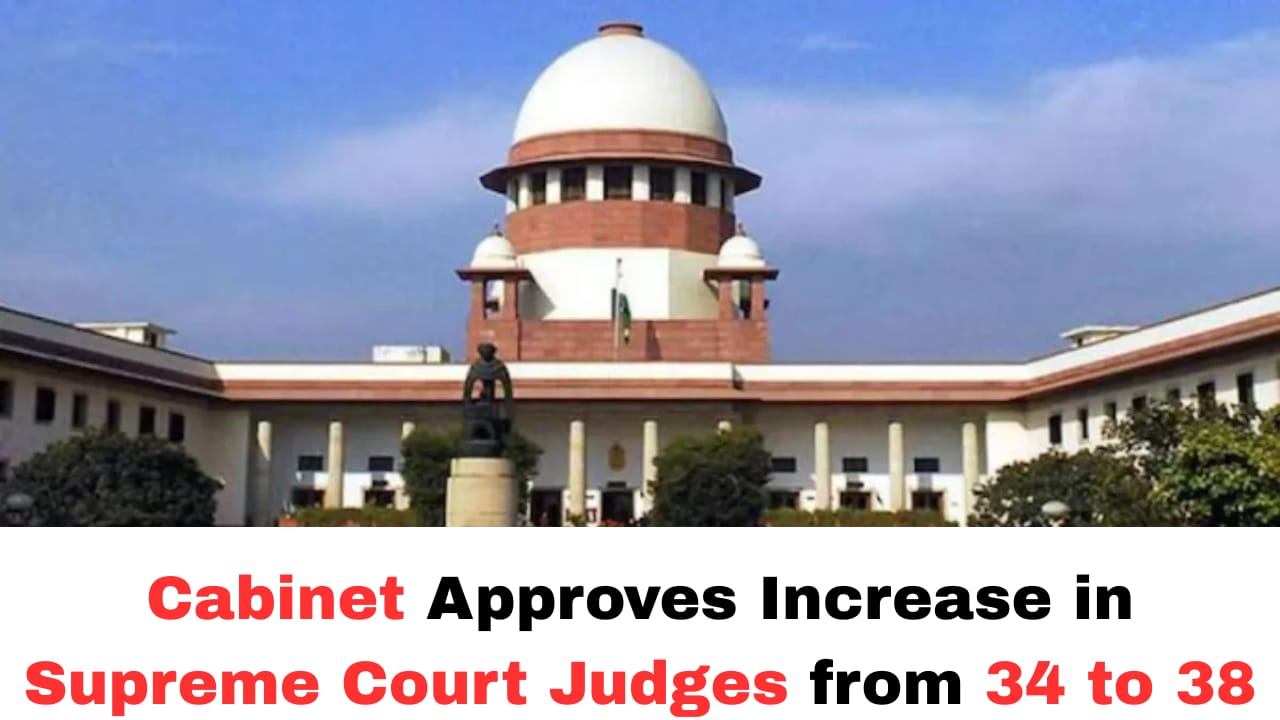
The Union Cabinet’s approval to increase the sanctioned strength of the Supreme Court of India from 34 to 38 judges marks a major step toward judicial reform in the country. The proposal comes at a time when the Indian judiciary is facing a massive burden of pending cases and growing criticism over delays in justice delivery. The decision is expected to strengthen the functioning of the apex court and improve the speed at which important cases are heard and resolved.
Rising Burden on the Judiciary
One of the primary reasons behind this decision is the rapidly increasing number of pending cases in the Supreme Court. According to reports, more than 92,000 cases are currently awaiting disposal in the apex court. These include constitutional matters, criminal appeals, civil disputes, and cases involving fundamental rights. The backlog has created immense pressure on judges and often leads to delays that affect ordinary citizens seeking justice.
The government believes that appointing four additional judges will help the court hear more cases simultaneously and reduce the waiting period for litigants. Faster disposal of cases is considered essential for maintaining public trust in the judiciary and ensuring timely justice.

Current and Proposed Strength of the Supreme Court
At present, the sanctioned strength of the Supreme Court stands at 34 judges, including the Chief Justice of India (CJI). Under the new proposal, the strength will increase to 38 judges, comprising the CJI and 37 other judges. The increase will be implemented through the proposed Supreme Court (Number of Judges) Amendment Bill, 2026.
This is the first increase in the court’s strength since 2019, when Parliament raised the number of judges from 31 to 34. Over the decades, the Supreme Court’s size has expanded steadily in response to the country’s growing population, economic development, and increasing legal disputes.
Historical Growth of the Apex Court
When the Constitution of India came into force in 1950, the Supreme Court consisted of the Chief Justice and seven other judges. As India evolved into a larger and more complex democracy, the workload of the judiciary also expanded significantly. Parliament has revised the sanctioned strength multiple times over the years to meet the growing demand for justice.
The number of judges increased to 11 in 1956, 14 in 1960, 18 in 1978, 26 in 1986, 31 in 2009, and finally 34 in 2019. The latest proposal to increase the strength to 38 reflects the government’s recognition that the present judicial infrastructure is insufficient to handle the mounting caseload.
Constitutional and Legal Process
Under Article 124 of the Constitution, the strength of the Supreme Court can only be changed through legislation passed by Parliament. This means the Cabinet’s approval alone is not enough to implement the proposal. The amendment bill must first be passed by both the Lok Sabha and the Rajya Sabha before receiving the assent of the President of India.
Once the law is passed, the process of appointing additional judges will begin through the existing collegium system, in which senior judges recommend appointments to the government. The appointments are then formally approved by the President.

Reactions from Legal Experts
The decision has been welcomed by many legal experts, former judges, and lawyers. They argue that increasing the number of judges is necessary to reduce pendency and improve access to justice. More judges could allow the Supreme Court to form additional benches, hear urgent matters more efficiently, and dispose of cases at a faster rate.
However, some experts have also pointed out that increasing judge strength alone may not solve the deeper structural issues affecting the judiciary. Delays in appointments, shortage of infrastructure, and procedural complexities continue to remain major challenges. Critics argue that unless vacancies are filled promptly and court management systems are improved, the impact of the reform may be limited.
Need for Broader Judicial Reforms
The proposal has also revived discussions about larger judicial reforms in India. Several experts believe that the Supreme Court is overburdened because it hears thousands of routine appeals every year. Some have suggested the creation of regional benches or a National Court of Appeal to reduce pressure on the apex court and make justice more accessible to people across the country.
Others emphasize the need for better technology, digital court systems, and improved case management practices. The judiciary has already introduced virtual hearings and e-filing systems in recent years, but experts believe more modernization is required to ensure efficient functioning.
Impact on the Justice Delivery System
A stronger Supreme Court could have several positive effects on India’s justice delivery system. Faster hearings and quicker disposal of cases would benefit citizens, businesses, and government institutions alike. Timely justice is essential not only for protecting constitutional rights but also for strengthening investor confidence and economic growth.
The increase in judge strength also sends a message that the government recognizes the importance of judicial efficiency in a democratic society. An independent and effective judiciary is one of the pillars of democracy, and improving its capacity is vital for upholding the rule of law.

Conclusion
The Union Cabinet’s approval to raise the number of Supreme Court judges from 34 to 38 is an important step toward addressing the growing challenges faced by India’s judiciary. While the move alone may not eliminate case pendency, it reflects a serious effort to strengthen the country’s justice delivery system. The success of the reform will ultimately depend on timely appointments, better infrastructure, and broader structural improvements within the judiciary. If implemented effectively, the proposal could help the Supreme Court function more efficiently and provide faster justice to millions of citizens across the country.
You May Also Read: One Year of Operation Sindoor: Indian Air Force Releases Powerful Strike Footage