



Digital News Guru Technology Desk:
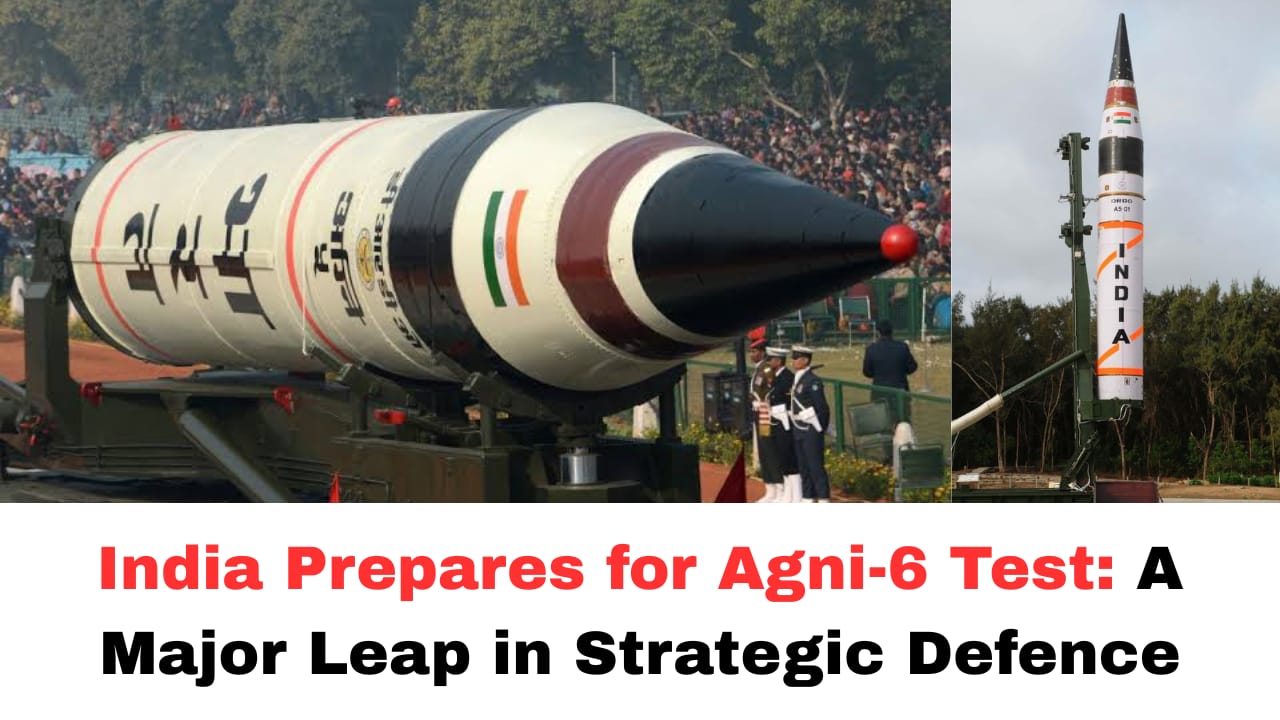
India is reportedly on the verge of a significant breakthrough in its defence capabilities, as preparations advance for the testing of the Agni-6 intercontinental ballistic missile (ICBM). Developed by the Defence Research and Development Organisation (DRDO), Agni-6 is expected to be the most advanced missile in India’s arsenal, marking a new chapter in the country’s strategic deterrence and global military standing.
A Project Awaiting Final Approval
Recent statements from top defence officials indicate that the Agni-6 programme is technically ready to move forward. DRDO Chairman Samir V. Kamat has confirmed that the organisation has completed the groundwork and is fully prepared to conduct the test, pending final approval from the central government.
This highlights an important aspect of India’s strategic weapons development—major decisions, especially those involving long-range ballistic missiles, require political clearance at the highest level. The final go-ahead will determine when the missile is tested and eventually inducted into service.
Political signals suggest that the approval may not be far away. Statements indicating that Agni-6 is “ready to make history” point to strong backing for the programme and hint at an imminent test.
What Makes Agni-6 Significant?
Agni-6 is expected to represent a major technological leap over previous missiles in the Agni series, such as Agni-5. While official specifications remain classified, multiple reports suggest that the missile could have a range exceeding 10,000 kilometres, placing it firmly in the category of true intercontinental ballistic missiles.
This extended range would allow India to strike targets far beyond its immediate neighbourhood, significantly expanding its strategic reach. It would also enable India to join a select group of nations—including the United States, Russia, and China—that possess advanced long-range ICBM capabilities.
Another key feature expected in Agni-6 is Multiple Independently Targetable Re-entry Vehicle (MIRV) technology. This allows a single missile to carry multiple nuclear warheads, each capable of striking different targets. Such a capability dramatically enhances the effectiveness of a country’s deterrence posture by making it harder for adversaries to intercept or neutralize the missile.
Strengthening India’s Nuclear Deterrence
The development of Agni-6 is closely tied to India’s long-standing doctrine of “credible minimum deterrence.” This doctrine emphasizes maintaining a reliable and effective nuclear arsenal without engaging in an arms race.
With its long range and advanced features, Agni-6 is expected to significantly strengthen this deterrence. It would provide India with greater strategic depth, ensuring that it can respond effectively to threats from any part of the world.
Experts believe that the missile’s capabilities—combined with technologies such as maneuverable re-entry vehicles and decoys—could make it more difficult for modern missile defence systems to intercept. This would further enhance India’s second-strike capability, a critical component of nuclear deterrence.
Part of a Broader Defence Modernization Push
The Agni-6 programme is not an isolated development but part of a broader effort by India to modernize its military capabilities. In recent years, the country has made significant progress in missile technology, including successful tests of hypersonic weapons and advancements in cruise and ballistic missile systems.
India is also working on next-generation fighter aircraft and expanding its naval capabilities, reflecting a comprehensive approach to strengthening national security.
This multi-pronged strategy underscores India’s ambition to become a technologically advanced military power capable of addressing both regional and global challenges.
Global and Geopolitical Implications
The potential testing of Agni-6 has important implications beyond India’s borders. The development of a long-range ICBM places India among an elite group of nations with global strike capabilities, enhancing its strategic autonomy and influence on the world stage.
However, it may also draw attention from the international community, particularly in the context of regional security dynamics. While India has consistently maintained a defensive posture, emphasizing deterrence rather than aggression, the advancement of such capabilities inevitably shapes geopolitical perceptions.
At the same time, India’s adherence to its “No First Use” policy and its focus on minimum deterrence provide reassurance that its nuclear programme is intended to maintain stability rather than escalate tensions.
Challenges and the Road Ahead
Despite the progress, several challenges remain. The final approval from the government is a crucial step, and the timeline for testing will depend on policy decisions. Additionally, the development and deployment of such advanced systems require rigorous testing, validation, and integration into the existing defence framework.
There are also technological challenges associated with advanced features like MIRVs and countermeasures against missile defence systems. Ensuring reliability, accuracy, and survivability will be key priorities for the DRDO as the programme moves forward.
Conclusion
India’s reported preparations to test the Agni-6 missile mark a pivotal moment in the country’s defence journey. If successfully tested and deployed, the missile would significantly enhance India’s strategic capabilities, strengthen its deterrence posture, and elevate its position among global military powers.
More importantly, the development of Agni-6 reflects India’s growing emphasis on self-reliance in defence technology and its commitment to safeguarding national security in an increasingly complex global environment.
As the world watches closely, the eventual test of Agni-6 could become one of the most defining milestones in India’s modern defence history.
You May Also Read: Vijay Varma’s Viral “METka King” Moment: How an AI Twist Stole the Spotlight at Met Gala 2026