




Digital News Guru Sports Desk:
IPL 2026 Final Venue Shifted
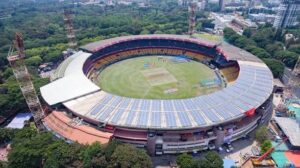
The decision to shift the Indian Premier League (IPL) 2026 final from Bengaluru to Ahmedabad has emerged as one of the most talked-about developments in Indian cricket this season. Originally scheduled to be held at Bengaluru’s iconic M. Chinnaswamy Stadium, the summit clash will now take place at the Narendra Modi Stadium in Ahmedabad on May 31. The move, announced by the Board of Control for Cricket in India (BCCI), has sparked debate among fans, administrators, and cricket experts alike.
Background: Bengaluru Was the Original Host
Bengaluru was initially chosen to host the IPL 2026 final, especially significant because the city’s franchise, Royal Challengers Bengaluru (RCB), are the defending champions. Traditionally, IPL finals are often awarded to venues associated with successful teams or those capable of hosting large-scale events. Earlier confirmations had indicated that the Chinnaswamy Stadium would host not just league matches but also the final and a playoff fixture.

However, despite these plans, the BCCI made a late decision to relocate the final. This unexpected shift has raised questions about the underlying factors that led to such a major change in schedule and venue.
Key Reasons Behind the Venue Change
The BCCI officially cited “operational and logistical issues” as the primary reason for moving the final out of Bengaluru. While this explanation appears broad, several specific concerns have been reported.
One of the most significant factors is safety concerns. In 2025, a tragic stampede outside the Chinnaswamy Stadium during RCB’s title celebrations resulted in multiple fatalities. This incident cast a long shadow over Bengaluru’s ability to handle massive crowds for high-profile matches. Although authorities reviewed and improved safety arrangements for the 2026 season, lingering concerns remained.
Additionally, there were requirements imposed by local authorities and the Karnataka State Cricket Association that reportedly went beyond BCCI’s standard protocols. These included logistical and administrative conditions that the board found difficult to accommodate.
Infrastructure and capacity also played a role. The Chinnaswamy Stadium, while historic and popular, has a significantly smaller seating capacity compared to the Narendra Modi Stadium. For a global event like the IPL final, maximizing attendance, security, and operational efficiency is critical.
There were even reports of political and ticketing-related pressures, including demands for special ticket allocations, which may have complicated planning further.
Why Ahmedabad Was Chosen
Ahmedabad has increasingly become the preferred venue for marquee cricket events in India. The Narendra Modi Stadium, the world’s largest cricket stadium with a seating capacity of over 130,000, offers unmatched infrastructure and crowd management capabilities.

The stadium has already hosted several high-profile matches, including recent IPL finals and international tournaments. Its proven track record in handling large crowds and delivering smooth event execution made it an obvious alternative for the BCCI.
In fact, the IPL 2026 final will mark the fourth time in five years that Ahmedabad hosts the tournament’s final, underlining the BCCI’s growing reliance on the venue for major events.
Changes to the Playoff Schedule
The shift in venue has also led to a reshuffling of the IPL 2026 playoff schedule. Instead of a single host city, matches will now be spread across multiple locations. Dharamsala will host the first qualifier, while New Chandigarh will stage the eliminator and second qualifier, before the final takes place in Ahmedabad.
This multi-city approach reflects the league’s strategy to expand its footprint and bring high-stakes matches to different regions of the country.
Reaction from Bengaluru and Stakeholders
The decision has not gone down well with stakeholders in Bengaluru. The Karnataka State Cricket Association (KSCA) expressed disappointment, stating that the stadium was fully prepared to host the final and that no clear explanation was formally communicated by the BCCI.
Fans in Bengaluru have also voiced frustration, as the city loses the opportunity to host a historic final involving its home team. For RCB supporters, the shift means losing a potential home advantage in the title clash.
Broader Implications
The relocation of the IPL 2026 final highlights several broader themes in modern cricket administration. First, it underscores the increasing importance of infrastructure, safety, and scalability in hosting major sporting events. Stadiums are no longer judged solely on tradition or atmosphere but on their ability to manage large crowds efficiently and safely.
Second, it reflects the centralized decision-making power of the BCCI, which prioritizes operational feasibility and commercial considerations over regional expectations. As the governing body of cricket in India, the BCCI plays a crucial role in balancing logistics, revenue, and fan experience.
Finally, the move reinforces Ahmedabad’s position as India’s premier cricket destination. With its state-of-the-art facilities and massive capacity, the city is fast becoming the default choice for marquee matches.
Conclusion
The shifting of the IPL 2026 final from Bengaluru to Ahmedabad is more than just a logistical adjustment—it is a reflection of evolving priorities in modern sports management. While the decision has disappointed fans in Bengaluru, it highlights the growing emphasis on safety, infrastructure, and large-scale event execution.
As the IPL continues to expand its global footprint, such decisions are likely to become more common. For now, all eyes will be on Ahmedabad as it prepares to host yet another high-stakes IPL final, reaffirming its status as the epicenter of cricketing spectacles in India.
You May Also Read: India Prepares for Agni-6 Test: A Major Leap in Strategic Defence