



Digital News Guru Festival Desk:
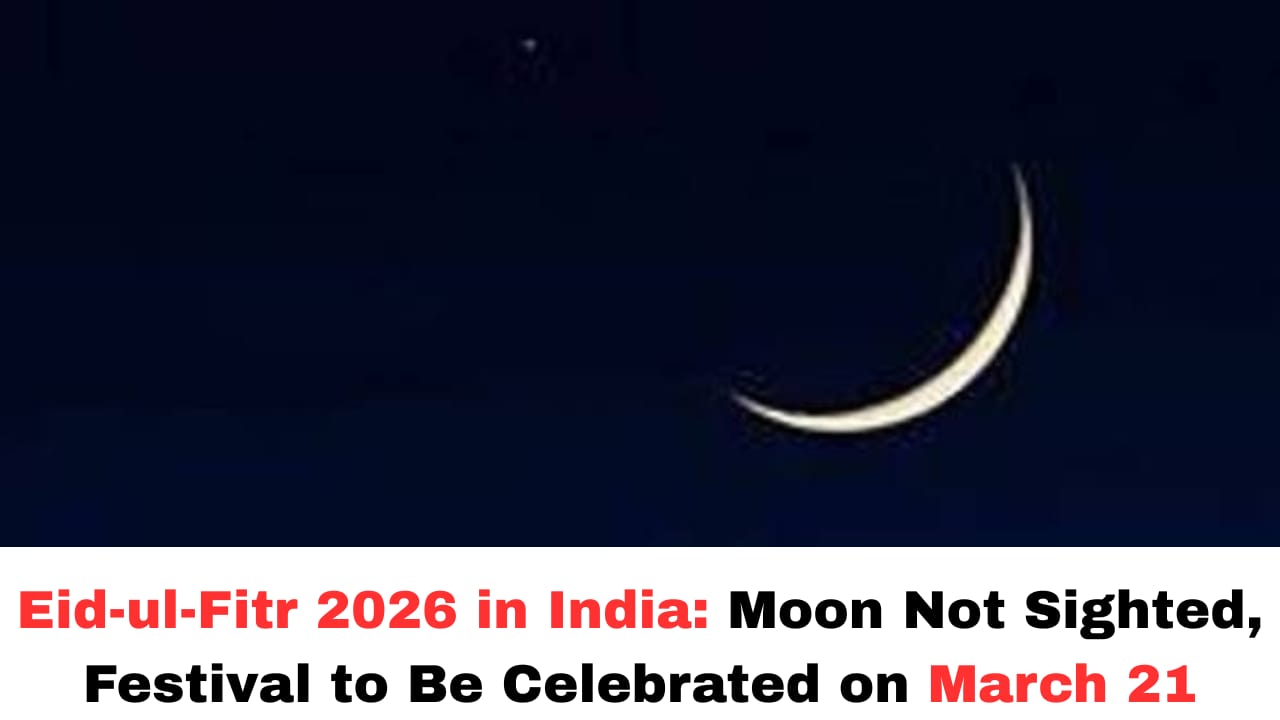
The much-awaited festival of Eid-ul-Fitr in India will be celebrated on Saturday, March 21, 2026, after the crescent moon marking the end of Ramadan was not sighted on the evening of March 19. This announcement has brought clarity to millions of people across the country who were eagerly awaiting confirmation of the festival date.
Eid-ul-Fitr, one of the most significant Islamic festivals, marks the conclusion of the holy month of Ramadan—a period dedicated to fasting, prayer, charity, and spiritual reflection. The exact date of Eid is determined by the sighting of the Shawwal crescent moon, making it a deeply spiritual and community-driven event.
Why the Moon Sighting Matters
In Islam, the calendar is based on the lunar cycle, meaning each month begins with the sighting of the new crescent moon. Eid-ul-Fitr is celebrated on the first day of Shawwal, the month that follows Ramadan. Therefore, the visibility of the moon on the 29th day of Ramadan plays a crucial role in deciding whether the festival will fall the next day or after completing 30 days of fasting.

On March 19, which marked the 29th day of Ramadan in India, religious scholars and moon-sighting committees across the country observed the skies after sunset. However, the crescent moon was not visible in multiple regions, leading to the decision that Ramadan would complete a full 30 days this year.
As per tradition, when the moon is not sighted on the 29th day, fasting continues for one more day, and Eid is observed the following day. This is why Eid-ul-Fitr in India will now be celebrated on March 21.
Nationwide Announcements and Confirmation
Reports from various cities, including Lucknow and Hyderabad, confirmed that the moon was not sighted. Religious authorities and committees officially declared that Eid would be observed on Saturday.
This coordinated announcement ensures uniformity in celebrations across India, as the country follows a system of local moon sighting supported by religious bodies. The decision was widely anticipated, as earlier predictions had suggested a low probability of moon visibility on March 19 due to astronomical and atmospheric conditions.
Why Eid Dates Differ Across Countries
Interestingly, Eid-ul-Fitr will not be celebrated on the same day worldwide. Many Gulf countries such as Saudi Arabia and the United Arab Emirates are observing Eid on March 20, 2026.
This difference occurs because moon sighting depends on geographical location, weather conditions, and local religious practices. While some countries rely on astronomical calculations or sightings from specific regions, India traditionally follows local moon sighting, which often results in the festival being celebrated a day later than in the Middle East.
Such variations are common and reflect the diversity of practices within the global Muslim community.
The Significance of Chand Raat
The night before Eid, known as Chand Raat, holds special cultural and emotional significance. It is a time of joy and anticipation, marked by last-minute shopping, decorating homes, and preparing festive meals. Families gather to celebrate the end of Ramadan and get ready for Eid festivities.
However, since the moon was not sighted on March 19, Chand Raat in India will now be observed on the evening of March 20, just a day before Eid celebrations begin.
Spiritual and Social Importance of Eid
Eid-ul-Fitr is not just a festival but a deeply spiritual occasion. It signifies gratitude to Allah for the strength and patience shown during Ramadan. The day begins with a special prayer known as Eid namaz, offered in mosques and open grounds.
A key aspect of Eid is Zakat al-Fitr, a form of charity given to the गरीब and needy before the prayer. This ensures that everyone, regardless of economic status, can participate in the celebrations.
The festival is also a time for strengthening social bonds. People visit friends and relatives, exchange greetings of “Eid Mubarak,” and share traditional dishes such as sevaiyan and biryani.
What Happens Next
With the date now confirmed, preparations across India are in full swing. Markets are witnessing increased activity as people shop for clothes, sweets, and gifts. Authorities are also making arrangements for smooth conduct of prayers and public gatherings.
Since Eid falls on a weekend this year, it is expected to lead to larger gatherings and celebrations in many parts of the country.
Conclusion
The announcement that the crescent moon was not sighted on March 19 has officially set March 21, 2026, as the date for Eid-ul-Fitr in India. While the delay may have extended the fasting period by an extra day, it also adds to the anticipation and spiritual fulfillment associated with the festival.
Eid remains a powerful symbol of unity, gratitude, and compassion—values that resonate far beyond religious boundaries. As millions prepare to celebrate, the spirit of togetherness and generosity continues to define this joyous occasion.
You May Also Read: NCW Issues Notices to Sanjay Dutt, Nora Fatehi, and Badshah Over “Objectionable” Songs