



Digital News Guru National Desk:
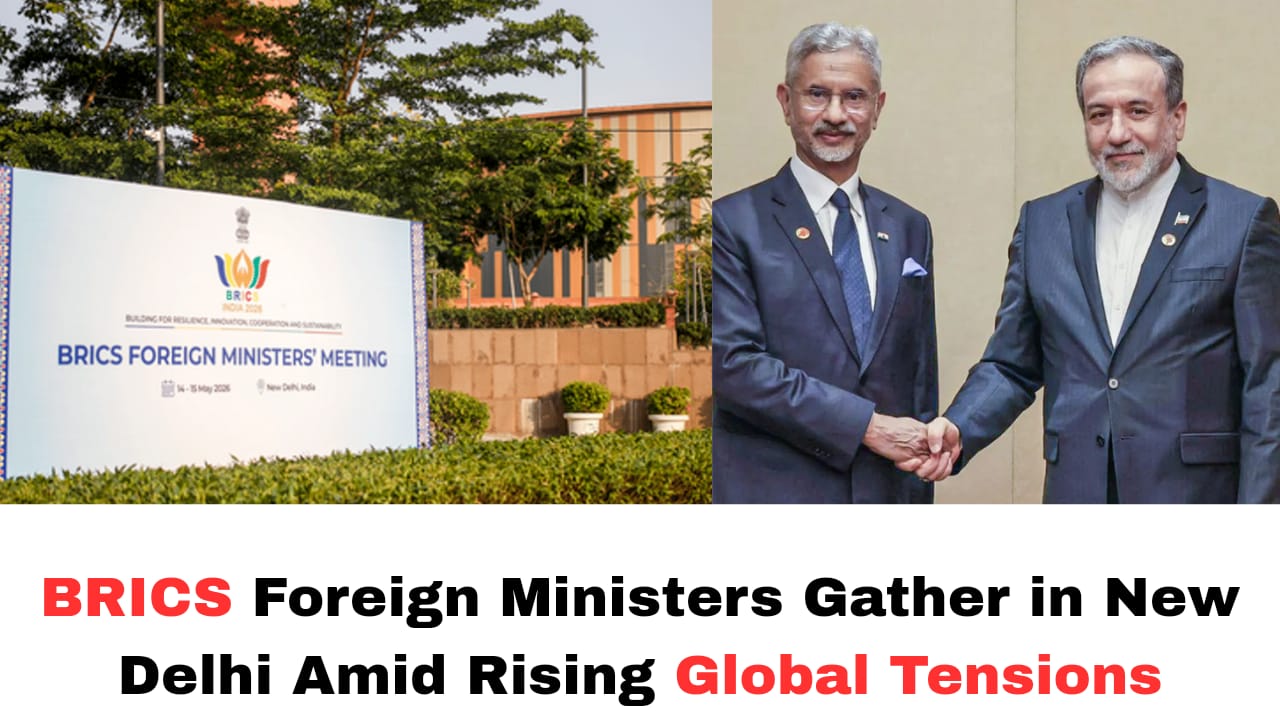
Foreign ministers and senior diplomats from major BRICS nations, including Russia, Iran, Brazil, and South Africa, have arrived in New Delhi for the BRICS Foreign Ministers’ Meeting hosted by India. The high-level gathering comes at a time of growing geopolitical uncertainty, rising energy prices, and increasing concerns over global economic stability. The meeting is being seen as one of the most important diplomatic events ahead of the 18th BRICS Summit scheduled to take place later this year in India.
India, which currently holds the BRICS chairmanship for 2026, is using the platform to strengthen cooperation among emerging economies and expand the role of the Global South in international decision-making. The New Delhi meeting has drawn worldwide attention because it takes place during ongoing conflicts in West Asia and at a time when global trade and energy markets are under pressure.
High-Profile Delegates Arrive in India
Among the major leaders attending the meeting are Russian Foreign Minister Sergey Lavrov, Iranian Foreign Minister Abbas Araghchi, Brazil’s Foreign Minister Mauro Vieira, and South African representatives. Diplomats from several newer BRICS member nations, including Egypt, Ethiopia, Indonesia, and the United Arab Emirates, are also participating in the discussions.
India’s External Affairs Minister Subrahmanyam Jaishankar welcomed delegates in New Delhi and stressed the importance of international cooperation during what he described as a period of “considerable flux” in global relations. According to Jaishankar, emerging economies increasingly expect BRICS to play a constructive and stabilizing role in global affairs.
The arrival of senior diplomats from both traditional BRICS members and newly inducted countries highlights the growing importance of the bloc in international diplomacy. What started as an economic grouping of Brazil, Russia, India, China, and South Africa has now expanded significantly, increasing its influence across global political and economic discussions.
Iran Conflict Dominates Discussions
One of the central topics at the New Delhi meeting is the ongoing Iran conflict, which has severely affected global oil supplies and maritime trade routes. Rising tensions in West Asia have created fears of disruptions in the Strait of Hormuz and the Red Sea, two of the world’s most important shipping corridors for energy supplies.
India has expressed concern over the impact of the conflict on global economic stability. Speaking at the meeting, Jaishankar emphasized the need for “safe and unimpeded maritime flows” to ensure stability in global trade and energy markets.
The conflict has already caused oil prices to rise sharply, affecting both developed and developing economies. BRICS nations are expected to discuss ways to improve energy cooperation and reduce vulnerabilities in global supply chains. Food and fertilizer security are also likely to feature prominently in the discussions because rising fuel costs have affected agricultural production and transportation worldwide.
Analysts believe the New Delhi meeting could shape how BRICS responds collectively to future geopolitical crises. However, differences among member nations may make consensus difficult.
Internal Divisions Challenge BRICS Unity
Despite the strong diplomatic turnout, the meeting has also exposed growing divisions within the expanded BRICS bloc. Reports suggest that member countries are struggling to agree on a common position regarding the Iran conflict.
Iran and the UAE, both now members of BRICS, reportedly hold opposing regional interests, creating difficulties in drafting a joint statement. Iranian officials have indicated that disagreements among members have prevented the bloc from issuing a unified response to the crisis.
The expansion of BRICS has increased its global influence but has also added complexity to internal decision-making. Member countries often have different relationships with Western powers and differing strategic priorities. India and China continue to compete for influence in Asia, while Russia’s geopolitical conflicts and Iran’s regional tensions have further complicated consensus-building within the bloc.
Political experts say the New Delhi meeting will test whether BRICS can evolve into a stronger geopolitical alliance or remain primarily an economic cooperation platform.
India’s Growing Diplomatic Role
India’s hosting of the BRICS Foreign Ministers’ Meeting is being viewed as an important diplomatic opportunity for New Delhi. Under the theme “Building for Resilience, Innovation, Cooperation and Sustainability,” India aims to position itself as a bridge between competing global powers while strengthening the voice of developing nations.
The meeting also reflects India’s expanding global influence. By bringing together countries with different political systems and strategic interests, India is attempting to project itself as a responsible global mediator capable of facilitating dialogue during times of international tension.
India’s relationship with Russia remains strategically important, particularly in defense and energy cooperation. Ahead of the BRICS meeting, Jaishankar held talks with Sergey Lavrov and highlighted the importance of maintaining strong India-Russia ties amid global uncertainty.
At the same time, India continues to maintain relations with Western countries, giving it a unique diplomatic position within BRICS. This balancing approach has become increasingly important as geopolitical rivalries intensify worldwide.
Expansion of BRICS and Global Influence
The BRICS bloc has expanded significantly over the past few years. Originally consisting of Brazil, Russia, India, China, and South Africa, the group now includes Egypt, Ethiopia, Iran, the UAE, and Indonesia. Several partner countries have also joined BRICS cooperation mechanisms.
The expansion reflects growing dissatisfaction among many developing countries with Western-dominated institutions such as the International Monetary Fund (IMF) and the World Bank. BRICS nations are increasingly pushing for reforms in global financial governance and seeking greater representation for emerging economies.
Supporters believe BRICS could become a major counterbalance to Western-led alliances in the future. However, critics argue that internal political differences and competing national interests may limit the bloc’s effectiveness.
Conclusion
The BRICS Foreign Ministers’ Meeting in New Delhi comes at a critical moment for global diplomacy. Rising geopolitical tensions, the Iran conflict, energy market disruptions, and economic uncertainty have increased pressure on emerging economies to cooperate more closely.
India’s role as the 2026 BRICS chair has placed New Delhi at the center of important international discussions. While the meeting highlights the growing influence of BRICS on the global stage, it also exposes the internal divisions that could challenge the bloc’s future unity.
The outcomes of the discussions in New Delhi are expected to shape preparations for the upcoming BRICS Summit later this year and influence future cooperation on trade, diplomacy, energy security, and global governance.
You May Also Read: V. D. Satheesan to Become Kerala Chief Minister After Congress Victory