




Digital News Guru Gujarat Desk:
On Saturday, January 10, 2026, Prime Minister Narendra Modi received an enthusiastic and heartfelt reception upon his arrival in Somnath, Gujarat, marking the beginning of a three-day official visit that blends spiritual observance, cultural pride, and national identity. The occasion—Somnath Swabhiman Parv—is a historic commemoration celebrating the endurance of India’s spiritual legacy, drawing large crowds and dignitaries alike to the famed Somnath Mahadev Temple.
A Special Welcome and Historic Setting
Prime Minister Modi reached Somnath in the Gir Somnath district in the evening, where he was warmly received by Gujarat Chief Minister Bhupendra Patel, other state leaders, and scores of devotees and local residents lining the streets. The crowds cheered and waved as his motorcade passed, creating a jubilant atmosphere as people from nearby towns and villages gathered on rooftops and along roadsides to witness the moment.
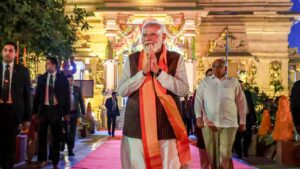
Modi himself expressed his gratitude and emotion, sharing on social media that he felt “blessed to be in Somnath, a proud symbol of our civilisational courage.” He added that the welcome he received was “very special,” reflecting the deep cultural and historical resonance the site holds for millions of Indians.
Commemorating Somnath Swabhiman Parv
The Somnath Swabhiman Parv is being observed from January 8 to January 11, 2026, marking two significant milestones in the history of the temple: the 1,000th anniversary of the first recorded attack on the temple in 1026 CE and the 75th anniversary of its reconstruction after India’s independence. The event is a tribute to the temple’s resilience and enduring place in India’s civilisational narrative.
Originally built on the rugged coast of the Arabian Sea, Somnath Temple is revered as one of the first among the twelve Jyotirlingas dedicated to Lord Shiva. Over centuries, it was destroyed and rebuilt multiple times—an embodiment of India’s collective faith, resilience, and cultural continuity. The Swabhiman Parv honors both the sacrifices of countless defenders and the faith of generations that ensured the temple’s resurrection and preservation.
Spiritual Rites and Rituals
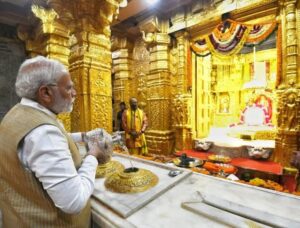
Shortly after his arrival in Somnath, Prime Minister Modi visited the Somnath Mahadev Temple, where he offered prayers and took part in devotional ceremonies, including chanting the Omkar Mantra alongside other participants. The chanting session, held in the temple complex as part of the Swabhiman Parv, is meant to evoke unity, peace, and spiritual reflection among devotees.
Later in the evening, Modi witnessed a grand drone show, which featured thousands of drones illuminating the night sky in thematic patterns that celebrated the temple’s legacy. The visuals included symbolic representations of Lord Shiva, the shivaling, and the temple itself, forming a breathtaking aerial narrative of faith and continuity. The show also incorporated motifs of cosmic symbolism and national unity, designed to highlight the temple’s place in India’s cultural tapestry.
PM Modi’s Message on Somnath
Upon reaching Somnath, Prime Minister Modi expressed that he felt “blessed” to be at the sacred site, calling it a “proud symbol of our civilisational courage”. He emphasized the unity and spiritual strength of the nation that the temple represents, especially during the millennial commemoration of the historic attack. He also thanked the people for the heartfelt welcome they extended to him.
Reflecting on the temple’s storied past, he highlighted how despite repeated assaults and destructions, the enduring spirit of the people ensured its reconstruction time and again. This theme resonated strongly with attendees, who saw the celebrations as both a spiritual and cultural reaffirmation.
The Somnath Swabhiman Parv serves not only as an occasion for religious observance but also as a platform to celebrate India’s ancient heritage, reinforcing how sites of faith can act as focal points for national unity and pride. Leaders and cultural figures from across the state and country have lauded the event for bridging historical remembrance with contemporary expressions of faith and patriotism.
Public Enthusiasm and Roadshow
The welcoming events included a roadshow in which the Prime Minister interacted with crowds and absorbed the festive atmosphere created by throngs of supporters. People cheered slogans and displayed visible excitement, waving flags and lining every available stretch of road, reflecting widespread public engagement with the festivities and Modi’s visit. The roadshow symbolized not just political support but an outpouring of communal spirit.
Looking Ahead: Events and Diplomacy
Modi’s visit to Somnath also intersects with broader political and developmental initiatives. Following the temple celebrations, he is slated to attend the Vibrant Gujarat Regional Conference in Rajkot, a major platform for economic dialogue, strategic partnerships, and development planning that attracts national and international participants. His agenda includes promoting infrastructure growth, entrepreneurship, and industrial innovations in the region.
The Prime Minister is also expected to oversee ceremonial commemorations, such as the Shaurya Yatra—a tribute procession symbolizing the courage of those who defended the Somnath temple through history. This procession, featuring 108 horses, blends cultural symbolism with historical homage, underscoring India’s valorous traditions.
Symbolism of the Visit
Prime Minister Modi’s reception in Somnath and participation in the Swabhiman Parv underscores more than just a political tour; it highlights the enduring role of cultural heritage in shaping national consciousness. By marrying spiritual rites with public celebrations and developmental discourse, the visit serves as a reminder of the interconnectedness of faith, history, and social identity in India.
For thousands of devotees, the chance to see the Prime Minister in a sacred space reaffirmed their pride and bolstered a collective sense of belonging. For observers, the celebrations signal India’s ongoing effort to honor its past while embracing a future grounded in cultural confidence and national unity.
You May Also Read: UP Government Drops Child Aadhaar Requirement for RTE School Admissions