



Digital News Guru Prayagraj Desk:
Magh Mela in Prayagraj
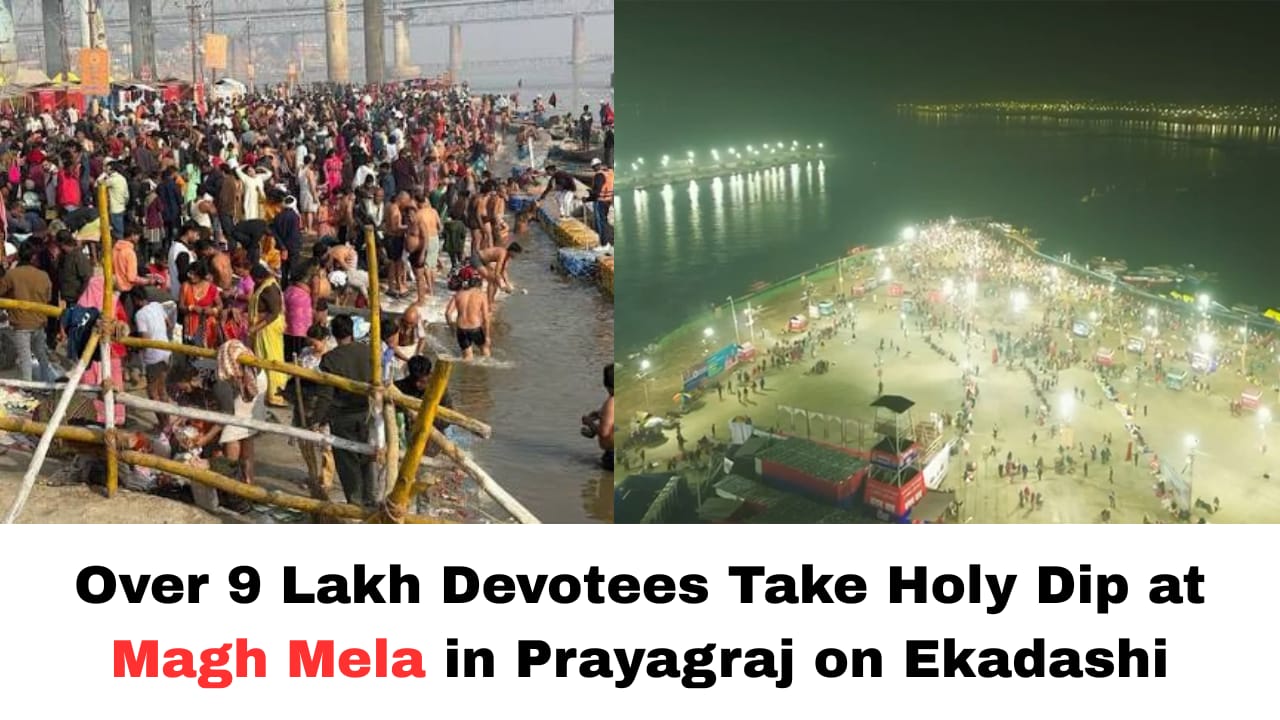
Prayagraj, Uttar Pradesh — Tens of lakhs of devotees thronged the Sangam Ghats in Prayagraj on Ekadashi (January 14, 2026) to participate in the sacred ritual of holy bathing during the ongoing Magh Mela. According to officials, by early morning around 6 a.m., over 9 lakh devotees had already taken a dip in the Triveni Sangam, the confluence of the Ganga, Yamuna, and mythical Saraswati rivers — braving freezing temperatures and dense crowds to seek spiritual merit.
The Magh Mela is one of North India’s most important religious gatherings outside the Maha Kumbh cycle. It attracts millions of pilgrims from across India and beyond, especially on auspicious bathing days such as Ekadashi, Makar Sankranti (January 15), and Mauni Amavasya (January 18), which hold immense spiritual significance in Hindu belief.
Relentless Pilgrimage Despite Harsh Conditions
Drone visuals and on-ground reports showed thousands of devotees lining up along the Sangam Ghats, braving chilly winter weather to take part in the holy dip. Many arrived before dawn, forming long queues leading to the river banks, underscoring the deep faith and devotion that draw people from far and wide to Prayagraj each year.
This year’s festival has seen particularly large numbers from the very beginning. During the Paush Purnima snan (sacred bath) earlier in the month, more than 31 lakh devotees took a holy dip, far exceeding initial expectations. Authorities are now gearing up for an even larger turnout on Makar Sankranti, when officials estimate that over 1 crore pilgrims could participate in the ritual bathing procession.
Massive Security and Crowd Management
In response to the enormous crowds, the Magh Mela administration has deployed a robust security presence, with around 10,000 police personnel, including units from the Provincial Armed Constabulary (PAC), Rapid Action Force (RAF), National Disaster Response Force (NDRF), and Anti-Terror Squad (ATS), among others, stationed across the mela grounds.
Surveillance measures include drone cameras, CCTV networks, and water police patrols, all coordinated to ensure the safety and smooth flow of pilgrims. Senior officials have emphasised that these arrangements are in place to prevent accidents, manage crowd bottlenecks, and respond quickly to any emergencies, especially given the cold weather and the influx of devotees.
Preparations for Makar Sankranti Snan
Magh Mela Officer Rishi Raj said that the extensive preparations undertaken for Ekadashi are also part of the strategy for the Makar Sankranti snan, traditionally one of the biggest bathing days of the festival. He highlighted that the mela administration has fully briefed security and emergency teams, and that surveillance and crowd-control frameworks are operational around the clock.
The Divisional Commissioner of Prayagraj, Soumya Agarwal, also assured devotees of their safety and reiterated the administration’s readiness to handle the expected surge in turnout on January 15, when participation could surpass the current figures.
Fervour and Faith: A Spiritual Journey
For many pilgrims, the holy dip at the Sangam is much more than a ritual — it is a deeply emotional and transformative experience. According to Hindu belief, immersing oneself in the confluence is a sacred act that washes away sins and grants spiritual merit and liberation. Thousands of devotees, young and old, including families, ascetics, and long-term residents of the mela camps (called kalpavasis), embrace this opportunity with heartfelt devotion.
Adding to the vibrancy of the festival are the traditional cultural and spiritual activities that unfold around the ghats — chants, hymns, and community gatherings that reflect centuries-old traditions. Many visitors also exchange greetings and share prasad (blessed food), turning the Mela into a melting pot of faith, festivity, and cultural exchange.
Impact on Local Infrastructure and Economy
The Magh Mela’s massive attendance also significantly impacts local infrastructure, services, and economy. Temporary facilities such as expanded bathing ghats, medical camps, sanitation zones, and parking spaces have been set up to accommodate the large crowds. Furthermore, local businesses, artisans, and service providers benefit economically from the influx, offering goods ranging from holy materials like flowers and incense to food and accommodation services.
Traffic management plans and public transport enhancements have been implemented to alleviate congestion and ensure pilgrims can reach the ghats conveniently. Dedicated parking areas and clear signage aim to streamline movement, while medical and emergency response teams stand ready to assist as needed.
Looking Ahead: A Larger Turnout Expected
With Makar Sankranti falling on January 15, the Magh Mela authorities expect another major congregation of devotees. Officials have projected a turnout exceeding 1 crore pilgrims, which would make this year’s festival one of the most attended in recent memory. Preparations are in full swing to manage this influx and ensure that every pilgrim’s experience is safe, orderly, and fulfilling.
Conclusion
The sight of over 9 lakh devotees taking a holy dip at Prayagraj’s Sangam on Ekadashi symbolizes the power of faith and tradition that continues to draw millions to the Magh Mela each year. As pilgrims prepare for the upcoming Makar Sankranti snan, the festive spirit, deep spiritual fervour, and large scale of participation reflect not just religious devotion but a longstanding cultural tapestry woven into the heart of Uttar Pradesh’s religious calendar.
You May Also Read: DMK MP’s Remarks on Women Ignite National Row: North vs South Controversy Explained