



Digital News Guru New Delhi Desk:
Galgotias AI Robot Dog Fiasco at India AI Impact Summit
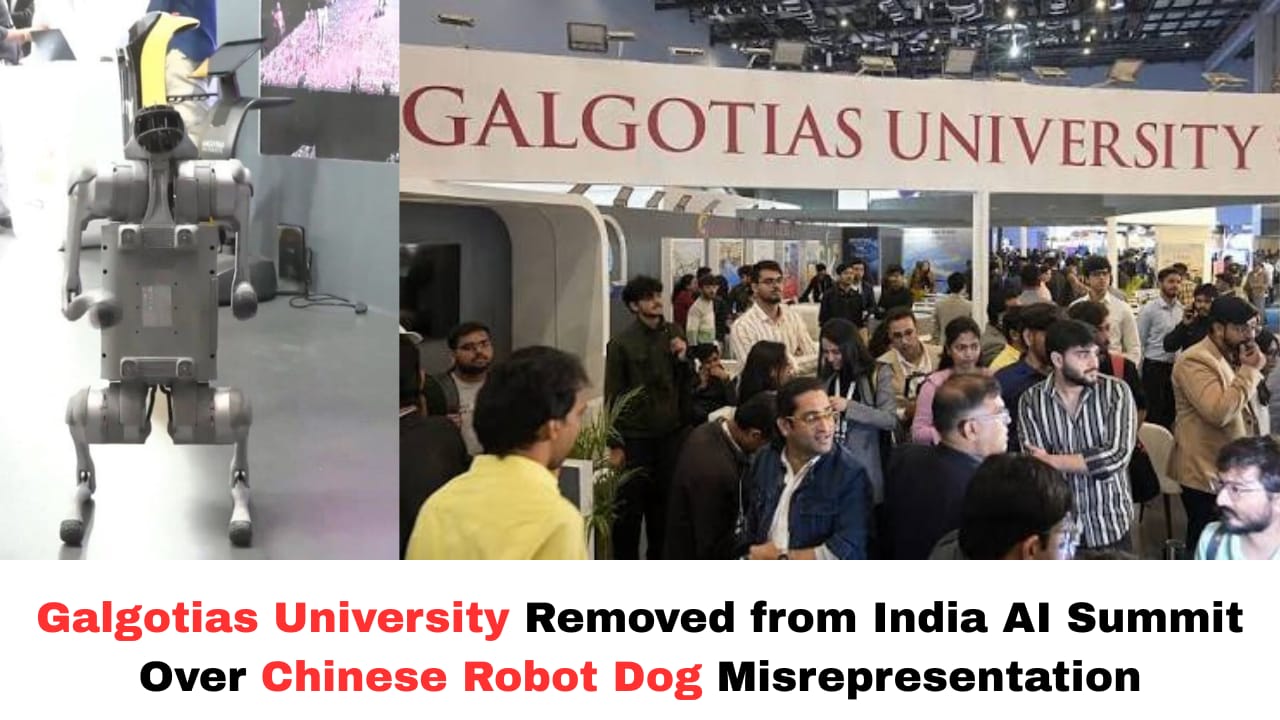
The ongoing India AI Impact Summit 2026 — a flagship event designed to showcase the nation’s advances in artificial intelligence and emerging technologies — was rocked by an unexpected controversy on February 18, when Galgotias University was asked to vacate its exhibition stall after displaying a Chinese-made robotic dog as its own innovation.
The incident quickly became one of the most talked-about developments of the day, drawing sharp criticism on social media and triggering official responses from both the summit organizers and the university itself.
The Robot That Sparked the Uproar
At the summit in Bharat Mandapam, New Delhi, Galgotias University showcased a four-legged robotic device named “Orion” at its pavilion. At least one professor from the university, identified in media as Neha Singh, described the robot during an interview as something “developed by the Centre of Excellence at Galgotias University.”
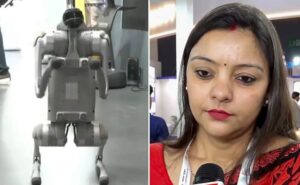
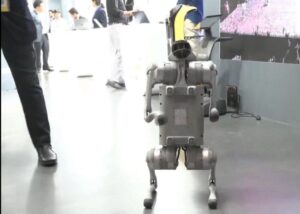
However, the claim quickly drew scrutiny online. Observers and tech enthusiasts on social media identified the robot as a commercially available Chinese-manufactured model, specifically the Unitree Go2, produced by Unitree Robotics. This model is widely used around the world as a research and teaching platform rather than a proprietary innovation — and therefore not something that could be reasonably described as a unique creation of the university.
Within hours, the episode had gone viral, with users questioning the university’s credibility and transparency, and accusing it of misrepresenting imported technology as domestic innovation on a national stage intended to highlight India’s AI capabilities.
Summit Organizers Respond
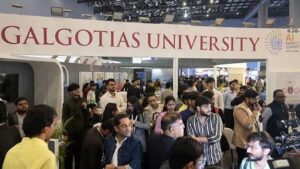
In response to the mounting backlash and concerns raised by government officials at the summit, the organizers took decisive action. Galgotias University was asked to vacate its stall at the AI Summit Expo, effectively removing its exhibition area from the event.
According to multiple accounts, including video footage circulated on social media, authorities reportedly cut the power supply to the university’s pavilion and asked staff to leave the premises, prompting staff and students to clear out their display. While some involved contested the characterization of the action, the exhibit was visibly dismantled by mid-Wednesday afternoon.
Officials reiterated that exhibitors at the AI Summit were expected to present authentic technological work, particularly at an event aimed at strengthening India’s global AI leadership. The government’s Information Technology Secretary, S. Krishnan, publicly emphasized that exhibitors must not display items that are not their own, underscoring the importance of integrity and accurate representation in official showcases.
University’s Apology and Clarifications
Amid the rising controversy, Galgotias University issued a formal apology acknowledging the confusion around the robot’s origins. In an official statement released later on Wednesday, the institution said it regretted the misunderstanding and attributed the inaccurate presentation to a representative who was “ill-informed and not authorized to speak to the press.”
The statement noted that the confusion stemmed from the representative’s excitement about the technology and a misunderstanding of what had been communicated, stressing that there was no institutional intent to mislead summit attendees or the public.
The university emphasized that it never claimed to have built the robodog itself and clarified that the device was instead procured as a hands-on learning tool for students to gain exposure to advanced robotics and AI programming. It stressed its commitment to academic transparency and educational excellence, while also urging understanding of the miscommunication that had occurred.
Reactions and Wider Debate
The fallout from the incident has ignited discussions both within India and internationally about how innovation is presented at high-profile tech events. Critics accused Galgotias University of tarnishing India’s image in the technology sector, suggesting that such episodes may undermine the credibility of domestic AI research and development.
Opposition figures in politics and commentators online have seized on the controversy to question broader trends in technology showcases, alleging that the misrepresentation reflects poorly on regulatory oversight and academic standards. At the same time, university representatives and supporters have argued that the incident was overblown, attributing the problem to miscommunication rather than deliberate deception.
The episode has also raised intricate questions about global supply chains and the role of imported technology in research and education. Many educational institutions around the world import robotics and AI tools for student learning — a practice that is not inherently problematic — but doing so in a way that could be interpreted as claiming original development has fuelled the debate about transparency and ethical exhibition practices.
Significance for India’s AI Agenda
The India AI Impact Summit — which has drawn participation from global tech leaders, government officials, and international delegates — aims to position the country as a hub of innovation for artificial intelligence in the Global South. It includes high-level discussions on policy, investment, and AI ethics, and is intended to spotlight indigenous technological breakthroughs.
In this context, the robot dog controversy was an unexpected distraction from the summit’s lofty goals, but it also highlighted the importance of strict standards for presentations and messaging at major public and international events. Organizers have made it clear that maintaining authenticity and credibility in technological showcases is essential to preserving India’s standing in global AI discourse.
As the summit continues, the incident at Galgotias University is likely to remain a talking point, serving both as a cautionary tale for exhibitors and a reminder of the nuanced challenges facing India’s emerging AI ecosystem.
You May Also Read: Director Shimit Amin to helm ‘Captain India’ with Kartik Aaryan