



Digital News Guru New Delhi Desk:
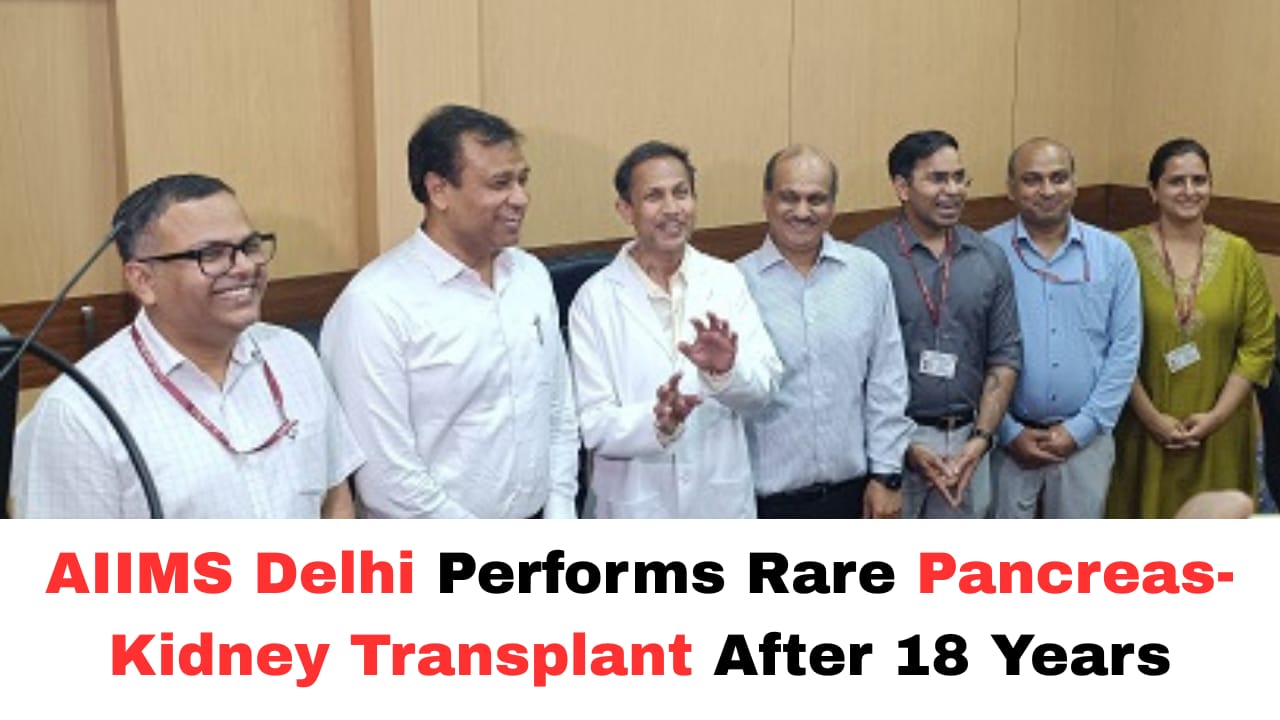
In a remarkable achievement for India’s healthcare sector, doctors at the All India Institute of Medical Sciences (AIIMS), New Delhi, have successfully performed a simultaneous pancreas-kidney (SPK) transplant after nearly 18 years. The complex surgery has given a new life to a 30-year-old patient suffering from severe Type 1 diabetes and end-stage kidney failure. The successful operation is being hailed as a major milestone in advanced organ transplantation in India.
Medical experts say this procedure is among the most difficult surgeries in modern medicine because it involves transplanting two vital organs simultaneously. The achievement has once again highlighted AIIMS Delhi’s role as one of the country’s leading medical institutions.
A Life-Threatening Medical Condition
The patient, a 30-year-old man from Haryana, had been living with Type 1 diabetes for almost two decades. Over the years, the disease severely damaged his kidneys, forcing him to depend on dialysis for survival. Reports indicate that he also developed serious complications such as nerve damage, vision problems, and reduced heart function.
Doctors explained that Type 1 diabetes is a chronic condition in which the pancreas stops producing insulin, making patients dependent on regular insulin injections. If blood sugar levels remain uncontrolled for long periods, the disease can affect major organs, especially the kidneys, heart, nerves, and eyes.
The patient’s condition had become critical, and doctors believed a simultaneous transplant offered the best chance of survival and long-term recovery.
The Complex Surgery
The transplant surgery was performed on April 14, 2026, using organs from a deceased donor from PGIMS Rohtak in Haryana. Authorities created a special “green corridor” with the support of Delhi and Haryana Police to ensure the rapid transportation of the organs to AIIMS Delhi.
The operation reportedly lasted around two-and-a-half hours and involved a highly specialized team of surgeons, nephrologists, endocrinologists, anesthesiologists, and transplant experts. Doctors from PGIMER Chandigarh also assisted during the procedure.
According to the medical team, the surgery was successful, and the patient is now recovering well. His kidney function has improved significantly, and his blood sugar levels are close to normal with minimal insulin support.

Why Pancreas-Kidney Transplants Are Rare
A simultaneous pancreas-kidney transplant is considered one of the most technically demanding transplant surgeries in the world. While kidney transplants are relatively common, pancreas transplantation is much more difficult because the pancreas is a fragile organ with complex blood supply and digestive functions.
Doctors say the procedure requires extreme surgical precision, careful postoperative care, and lifelong monitoring to prevent organ rejection. In addition, finding suitable organ donors remains a major challenge in India.
The surgery is often considered the best treatment option for patients suffering from both Type 1 diabetes and kidney failure because it addresses both conditions simultaneously. The transplanted pancreas produces insulin naturally, reducing dependence on injections, while the new kidney eliminates the need for dialysis.
Revival of AIIMS’ Historic Transplant Programme
AIIMS Delhi had previously performed India’s first successful simultaneous pancreas-kidney transplant in 2004 and another successful procedure in 2008. However, the programme remained inactive for nearly 18 years because of the surgery’s complexity and limited availability of suitable donors.
The latest operation marks the revival of this prestigious programme and demonstrates the growing capabilities of India’s public healthcare system. Medical experts believe the success of this surgery could encourage other hospitals in the country to develop advanced organ transplant programmes.
The achievement is especially significant because AIIMS is a government institution that serves patients from across India, including many from economically weaker backgrounds.
Medical Challenges During the Operation
The surgery was particularly risky because the patient’s heart function had weakened severely due to long-term diabetes complications. Reports suggest that his heart’s ejection fraction had dropped to nearly 25 percent, making anesthesia and surgery highly dangerous.
Doctors had to carefully monitor blood circulation, organ compatibility, and infection risks throughout the procedure. The multidisciplinary coordination among specialists played a crucial role in the successful outcome.
Experts say such surgeries require not only skilled surgeons but also advanced infrastructure, intensive care support, and strong immunosuppressive treatment systems.

Importance of Organ Donation
The success of the surgery has also brought attention to the importance of organ donation in India. Thousands of patients across the country wait for life-saving transplants every year, but the number of organ donors remains low compared to developed nations.
Doctors involved in the case praised the donor’s family for consenting to organ donation during a difficult emotional time. Medical experts believe greater awareness about deceased organ donation can help save countless lives in the future.
A New Hope for Patients
India is witnessing a sharp rise in diabetes cases, including younger patients suffering from Type 1 diabetes. As complications increase, advanced transplant procedures like simultaneous pancreas-kidney transplantation may become more important in the future.
The successful surgery at AIIMS Delhi represents not just a medical breakthrough but also a message of hope for patients battling severe diabetes and kidney disease. It proves that with advanced technology, skilled doctors, and timely organ donation, even the most complex medical conditions can be treated successfully.
For the patient and his family, the operation has offered a second chance at life. For India’s healthcare system, it stands as a proud example of progress in modern medicine.
You May Also Read: Bhojshala Verdict: Madhya Pradesh High Court Declares Site a Saraswati Temple