



Digital News Guru New Delhi Desk:
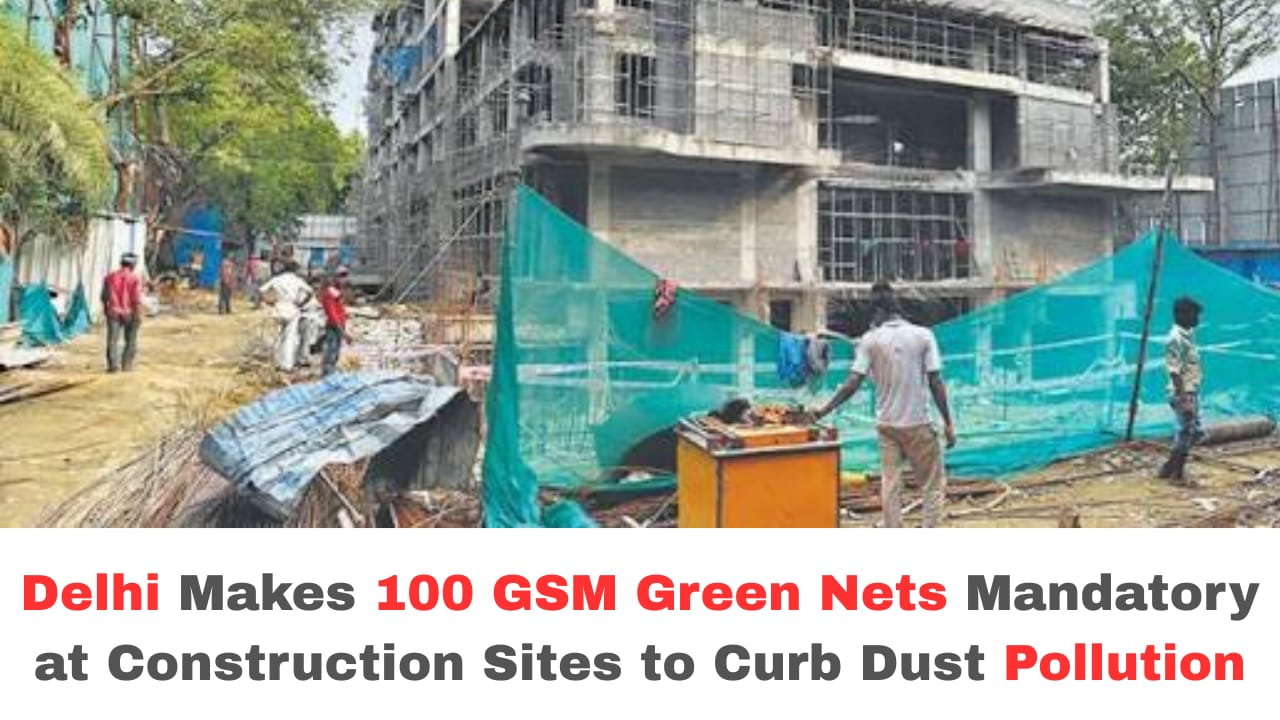
In a significant move to combat rising air pollution levels in the national capital, the Delhi Pollution Control Committee (DPCC) has made it compulsory for all construction and demolition sites to install green protective nets with a minimum thickness of 100 GSM (grams per square meter). The new regulation aims to reduce dust emissions from construction activities, which are considered one of the major contributors to Delhi’s deteriorating air quality.
The order comes amid growing concerns over pollution levels in Delhi-NCR, especially during dry and windy conditions when dust particles from construction sites easily spread into the atmosphere. Authorities believe stricter enforcement of dust-control measures is necessary to improve public health and environmental conditions in the city.

Why the New Rule Was Introduced
Construction dust has long been identified as a major source of particulate pollution in Delhi. Rapid urban development, large infrastructure projects, road digging, and demolition work release fine dust particles into the air, significantly worsening air quality.
According to environmental experts, suspended particulate matter from construction activities contributes heavily to PM10 and PM2.5 pollution levels, both of which can cause serious respiratory and cardiovascular problems.
The DPCC stated that many construction sites either used poor-quality green nets or failed to install protective coverings altogether. Thin or damaged nets were often ineffective in preventing dust from escaping into nearby residential and commercial areas.
To address this issue, the committee has now specified that all sites must use green nets with a minimum density of 100 GSM, ensuring stronger and more durable dust barriers.
What Does 100 GSM Mean?
GSM, or grams per square meter, refers to the weight and thickness of fabric material. A higher GSM value indicates a denser and more durable net.
Under the new guidelines, construction companies will no longer be allowed to use low-quality lightweight nets that tear easily or fail to contain dust effectively. The 100 GSM standard is expected to provide better coverage and stronger protection against dust dispersal, particularly during windy weather conditions.
Environmental officials say thicker nets can significantly reduce airborne dust particles escaping from construction zones and spreading into surrounding neighborhoods.
Construction Sites Under Strict Monitoring
The DPCC has warned that strict action will be taken against builders and contractors who violate the new rule. Inspection teams are expected to conduct surprise checks at construction and demolition sites across Delhi to ensure compliance.
Authorities may impose fines, halt construction work, or issue closure notices against projects failing to follow dust-control norms. Officials have also directed site operators to maintain proper records regarding pollution-control measures implemented at their locations.
Apart from green nets, construction companies are also required to follow additional anti-pollution measures such as:
- Regular water sprinkling to suppress dust
- Covering of construction materials during transportation
- Proper disposal of debris and waste
- Installation of anti-smog guns at large project sites
- Wheel-washing facilities for heavy vehicles leaving construction zones
Rising Pollution Concerns in Delhi
Delhi continues to struggle with severe air pollution despite multiple government initiatives over the years. Construction dust, vehicle emissions, industrial pollution, and seasonal stubble burning remain major contributors to poor air quality in the region.
Experts believe that uncontrolled dust from urban construction projects has become a serious environmental challenge due to the city’s rapid expansion. Large-scale infrastructure developments, including roads, metro projects, housing complexes, and commercial buildings, generate significant amounts of airborne dust daily.
Health professionals warn that prolonged exposure to polluted air can increase the risk of asthma, bronchitis, lung infections, heart disease, and other respiratory illnesses.
Residents Welcome the Decision
Many residents and environmental activists have welcomed the DPCC’s latest decision, calling it a necessary step toward controlling pollution at the source.
People living near construction sites often complain about dust settling inside homes, schools, and shops, causing discomfort and health issues. Residents say the use of stronger green nets could help reduce dust exposure in densely populated localities.
Environmental groups have also urged authorities to ensure strict implementation rather than limiting the rule to paperwork. Experts note that enforcement remains the biggest challenge in Delhi’s pollution-control efforts.

Builders Concerned About Costs
While environmentalists have praised the decision, some builders and contractors have expressed concerns regarding the increased operational costs associated with higher-quality green nets.
Construction companies argue that thicker 100 GSM nets are more expensive compared to low-cost alternatives previously used at many sites. Smaller contractors fear that compliance costs may rise further due to stricter monitoring and additional pollution-control requirements.
However, officials maintain that public health and environmental protection must remain the top priority.
Part of Larger Pollution-Control Strategy
The new regulation is part of Delhi’s broader strategy to tackle worsening air pollution through stricter environmental compliance. Authorities have increasingly focused on controlling dust pollution because it is considered one of the few pollution sources that can be directly managed through better enforcement.
Experts believe that if implemented effectively, the mandatory use of 100 GSM green nets could help reduce local dust pollution levels, especially in high-construction zones across Delhi-NCR.
As the capital continues its battle against toxic air, environmental authorities are expected to introduce more stringent measures in the coming months aimed at balancing urban development with public health and environmental sustainability.
You May Also Read: Kannada Actor Dileep Raj Passes Away at 48 After Cardiac Arrest