



Digital News Guru Uttar Pradesh Desk:
Uttar Pradesh Prepares for Massive Census 2027 Exercise
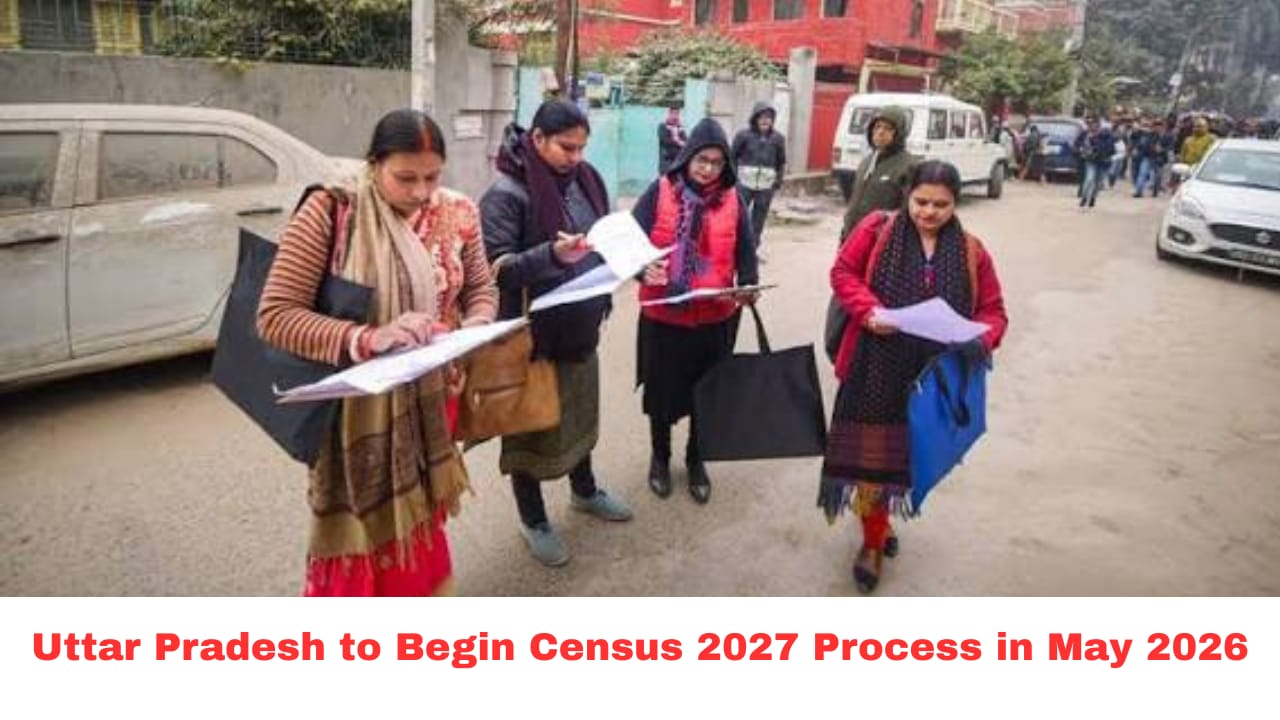
Uttar Pradesh, India’s most populous state, is set to begin the Census 2027 process in May 2026, marking one of the largest administrative exercises ever undertaken in the region. With its vast population, diverse geography, and complex administrative structure, the census operation in the state is expected to play a crucial role in shaping future governance, development policies, and welfare schemes.
A Massive Administrative Undertaking
The scale of the upcoming census in Uttar Pradesh is enormous. According to reports, nearly five lakh personnel, including enumerators and supervisors, will be deployed across the state to carry out the exercise. These officials will be responsible for collecting data from every household, ensuring that no individual or habitation is left out.
The census will cover:
- 75 districts
- More than 1.04 lakh villages
- Around 783 urban towns
Given these numbers, the census in Uttar Pradesh alone resembles a large-scale national operation. Managing logistics, training personnel, and ensuring data accuracy across such a wide area present significant administrative challenges.
Two-Phase Census Structure
The Census 2027 will be conducted in two distinct phases, following the national framework.
Phase 1: House Listing and Housing Census (2026)
The first phase, scheduled to begin in May 2026, will focus on collecting detailed information about households. This includes:
- Condition and structure of houses
- Availability of basic amenities such as water and electricity
- Ownership of assets
In Uttar Pradesh, the house listing exercise will take place from May 22 to June 20, 2026, preceded by a self-enumeration window from May 7 to May 21.
During this stage, enumerators will visit households and gather data using digital tools, ensuring real-time collection and verification.
Phase 2: Population Enumeration (2027)
The second phase, scheduled for early 2027, will involve the actual counting of the population. This phase will gather demographic and socio-economic data such as:
- Age, gender, and education
- Occupation and migration patterns
- Social and economic status
Together, these two phases will provide a comprehensive picture of the population and living conditions in the state.
Digital Transformation of the Census
One of the most notable features of Census 2027 is its digital-first approach. For the first time, the census will be conducted using mobile applications and online platforms.
Enumerators will use smartphones to record data, which will then be uploaded directly to a central database. This system is expected to:
- Reduce errors associated with manual data entry
- Speed up data processing
- Enable real-time monitoring and verification
Additionally, citizens will have the option of self-enumeration, allowing them to submit their information online before the door-to-door survey begins. This hybrid model aims to make the process more efficient and inclusive.
Importance of the Census
The census is not merely a statistical exercise; it is a foundation for policymaking and governance. The data collected during the census helps the government:
- Design and implement welfare schemes
- Allocate resources effectively
- Plan infrastructure projects such as roads, schools, and hospitals
- Assess socio-economic conditions across regions
For a state like Uttar Pradesh, where population density and diversity pose unique challenges, accurate data is essential for targeted development.
Challenges Ahead
While the census offers significant benefits, conducting it in a state as large as Uttar Pradesh comes with several challenges:
- Logistical Complexity
Coordinating lakhs of personnel across thousands of villages and towns requires meticulous planning and execution. - Data Accuracy
Ensuring that every household is counted and data is recorded correctly is a major concern, especially in remote or densely populated areas. - Public Participation
The success of the census depends heavily on public cooperation. Awareness campaigns will be crucial to encourage participation and reduce misinformation. - Technological Adaptation
While digital tools improve efficiency, they also require proper training for enumerators and reliable network connectivity in rural areas.
Part of a Nationwide Exercise
The Uttar Pradesh census is part of the broader Census 2027, which is India’s 16th national census. The nationwide exercise is being conducted in phases between 2026 and 2027 and is considered the largest population enumeration exercise in the world.
The data collected will not only influence state-level policies but also have national implications, including:
- Delimitation of electoral constituencies
- Allocation of central funds to states
- Planning of national welfare programs

A Step Toward Better Governance
The upcoming census represents a critical opportunity for Uttar Pradesh to update its demographic and socio-economic database. With rapid urbanization, migration, and changing economic patterns, the state needs accurate and up-to-date information to address emerging challenges.
The inclusion of digital technology and self-enumeration marks a significant shift from previous census exercises, making the process more transparent and efficient. If implemented successfully, it could set a benchmark for future data-driven governance in India.
Conclusion
The launch of the Census 2027 process in Uttar Pradesh in May 2026 signals the beginning of a massive and transformative administrative exercise. With its vast scale, digital innovation, and policy significance, the census will play a pivotal role in shaping the state’s future.
While challenges remain, the successful execution of this exercise will provide invaluable insights into the population and living conditions of Uttar Pradesh. In doing so, it will enable better planning, more effective governance, and ultimately, improved quality of life for millions of people across the state.
You May Also Read: ₹993 LPG Price Hike Puts Pressure on Small Food Businesses in India