



Digital News Guru New Delhi Desk:
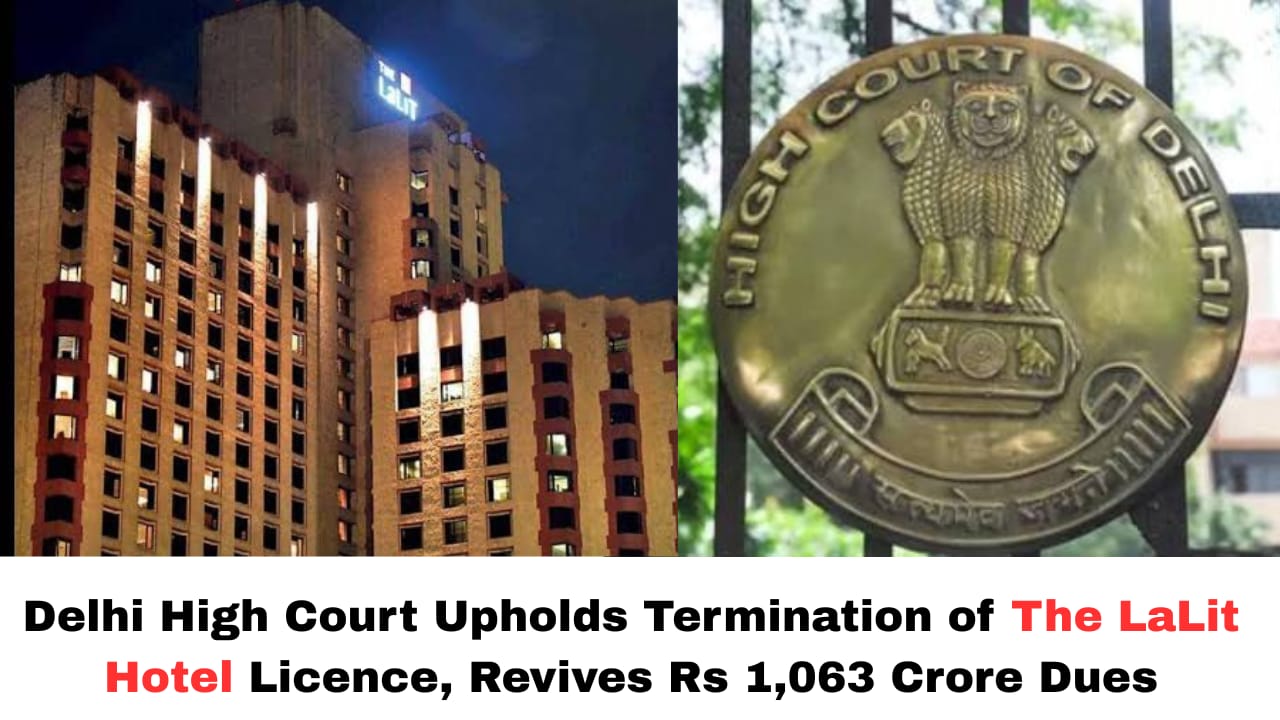
In a significant legal development, the Delhi High Court has delivered a major verdict concerning the luxury hotel The LaLit, bringing clarity to a long-standing dispute between Bharat Hotels Ltd. and the New Delhi Municipal Council. The ruling not only revives a massive financial claim but also upholds the termination of the hotel’s licence agreement, making it one of the most consequential judgments in recent times for Delhi’s hospitality sector.
Background of the Dispute
The origins of the case date back to 1982, when NDMC granted a licence to Bharat Hotels Ltd. to operate a hotel on prime public land in the heart of Delhi. The agreement outlined specific terms, including payment of licence fees and adherence to operational conditions.
Over the years, disputes began to emerge between the two parties. NDMC alleged that Bharat Hotels had violated key clauses of the agreement, including issues related to sub-licensing and non-payment of dues. The civic body claimed that the hotel operator had accumulated substantial unpaid licence fees, eventually amounting to over Rs 1,000 crore.
In 2020, NDMC took decisive action by issuing a notice demanding Rs 1,063 crore in dues and terminating the licence agreement. Bharat Hotels challenged this move in court, leading to a prolonged legal battle that has now culminated in the High Court’s latest judgment.
Delhi High Court Verdict
In its ruling, the Delhi High Court upheld NDMC’s decision on multiple fronts. First, it revived the Rs 1,063 crore licence fee demand, effectively reinstating the financial liability on Bharat Hotels. Second, the court validated the termination of the licence agreement, confirming that NDMC was within its rights to end the contract.
The court observed that there had been “fundamental breaches” of the agreement by the hotel operator. These breaches, it noted, were serious enough to justify both the financial demand and the termination of the licence. The judgment also overturned earlier relief that had been granted to Bharat Hotels, marking a decisive shift in the legal trajectory of the case.
Key Issues Highlighted by the Court
The ruling focused on several critical aspects of the dispute:
- Violation of contractual terms: The court found that the operator had not adhered to key provisions of the licence agreement.
- Sub-licensing concerns: Questions were raised about whether parts of the property were being used in ways not permitted under the original contract.
- Non-payment of dues: The accumulation of unpaid licence fees over time played a central role in the case.
By emphasizing these points, the court reinforced the principle that agreements involving public assets must be strictly followed.
Impact on The LaLit Hotel
For The LaLit, the ruling represents a significant setback. The revival of a Rs 1,063 crore liability places a substantial financial burden on Bharat Hotels. In addition, the termination of the licence agreement raises questions about the hotel’s future operations.

While the immediate operational status of the hotel remains subject to further legal and administrative steps, the judgment has undoubtedly created uncertainty. The company may explore options such as appealing the decision or negotiating with NDMC, but the road ahead appears challenging.
Implications for NDMC and Public Governance
For NDMC, the ruling is a major victory. It strengthens the authority of civic bodies to enforce contracts and recover dues, particularly when public land and resources are involved. The judgment underscores that government agencies have the legal backing to take strict action in cases of non-compliance.
More broadly, the case highlights the importance of transparency and accountability in public-private partnerships. When private entities operate on government land, they are expected to meet high standards of compliance and financial responsibility.
A Message to the Hospitality Industry
The verdict sends a strong signal to the hospitality and real estate sectors. It makes clear that no entity, regardless of its size or prominence, is above contractual obligations. Hotels and other commercial establishments operating on leased public land must ensure strict adherence to agreements, including timely payment of dues and compliance with operational terms.
Industry experts believe the ruling could have a ripple effect, prompting other civic bodies and government agencies to review similar agreements. It may also lead to increased scrutiny of how public land is utilized by private enterprises.
Legal and Economic Significance
From a legal perspective, the judgment reinforces the sanctity of contracts, especially those involving public assets. The court’s emphasis on “fundamental breaches” sets a precedent for how such cases may be handled in the future.
Economically, the case involves a substantial sum of public money. By reviving the Rs 1,063 crore demand, the court has underscored the importance of safeguarding public revenue. This aspect of the ruling is likely to resonate beyond the hospitality sector, influencing policy and governance practices.
What Lies Ahead
The case may not be entirely over. Bharat Hotels could choose to challenge the decision in a higher court, potentially extending the legal battle. Meanwhile, NDMC will need to decide on the next steps regarding the property and its management.
Regardless of the outcome, the judgment marks a turning point. It highlights the evolving nature of governance in India, where accountability and enforcement are becoming increasingly central.
Conclusion
The Delhi High Court’s ruling in the LaLit case is more than just a legal decision—it is a statement about accountability, governance, and the rule of law. By upholding NDMC’s actions and reviving a massive financial claim, the court has set a clear precedent for how public-private agreements should be managed.
As the situation unfolds, the case will remain a key reference point for policymakers, businesses, and legal experts alike. It serves as a reminder that when public resources are involved, compliance is not optional—it is essential.
You May Also Read: South Delhi Murder Case: 22-Year-Old Woman Killed Inside Home, Accused Arrested