



Digital News Guru Politics Desk:
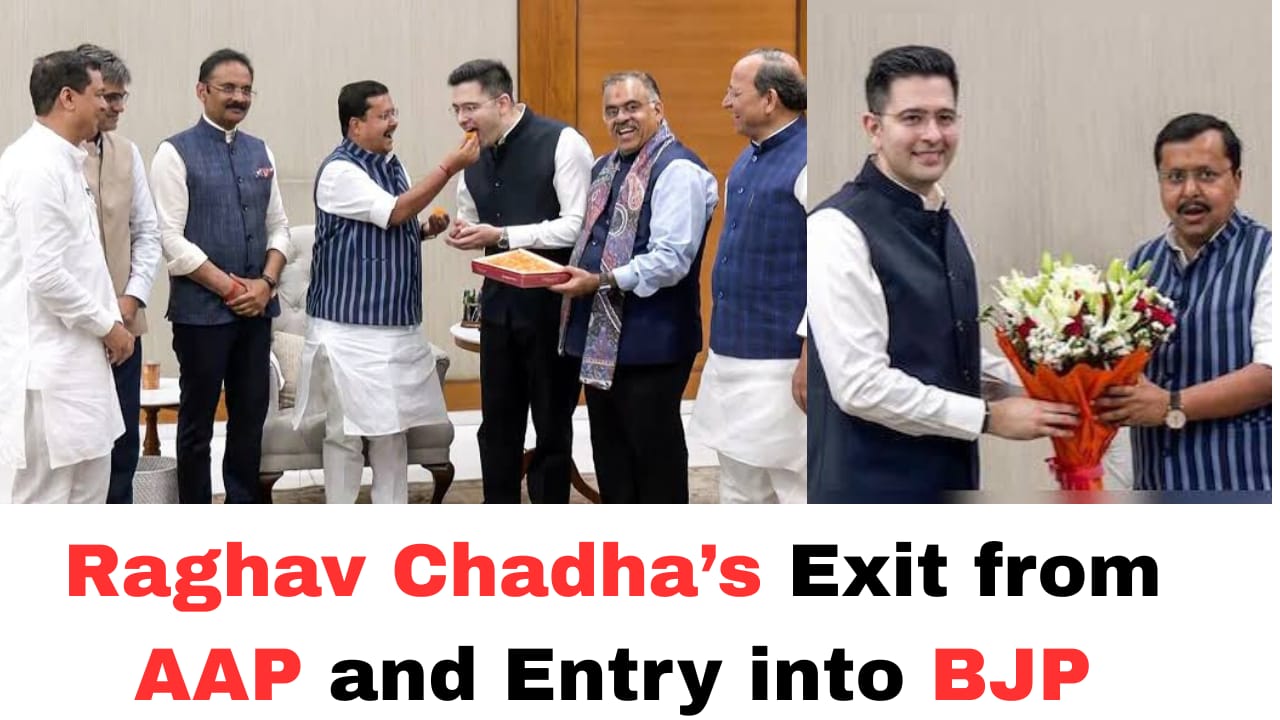
In a dramatic and potentially game-changing political development, Raghav Chadha, once considered one of the brightest young leaders of the Aam Aadmi Party (AAP), has resigned from the party and joined the Bharatiya Janata Party (BJP). What makes this move particularly significant is that Chadha did not act alone—he was accompanied by six other AAP Members of Parliament (MPs), marking one of the biggest internal splits in AAP’s history.
This development has not only shaken AAP’s internal structure but has also triggered a wider debate about party loyalty, ideology, and the evolving dynamics of Indian politics.
Raghav Chadha and 6 other MPs from AAP have reportedly joined BJP
On April 24, 2026, Chadha, along with six Rajya Sabha MPs, formally announced their resignation from AAP and merger with the BJP. The group reportedly constitutes around two-thirds of AAP’s strength in the Rajya Sabha, a figure that is constitutionally significant because it allows a “merger” without disqualification under anti-defection laws.

Among those who joined Chadha are prominent MPs such as Sandeep Pathak and Ashok Mittal, along with others from Punjab and Delhi.
This was not a sudden decision. Reports suggest that the move followed weeks—if not months—of internal disagreements, tensions, and growing dissatisfaction within the party ranks.
Reasons Behind the Exit
Chadha justified his decision by claiming that AAP had “deviated from its original principles” and no longer represented the ideals it was founded on. He famously described himself as the “right man in the wrong party,” a statement that quickly became symbolic of the political fallout.
Behind this statement lies a deeper conflict. Reports indicate that Chadha had a strained relationship with AAP leadership, especially with party chief Arvind Kejriwal. His removal from key responsibilities, including his role as a deputy leader in the Rajya Sabha, further intensified the rift.
Additionally, internal disagreements over party strategy, communication, and governance—particularly in Punjab—are believed to have contributed to the split.
Impact on AAP
The immediate impact on AAP is severe. Losing seven MPs in the Rajya Sabha significantly weakens the party’s presence in Parliament. Before the split, AAP had about ten members in the Upper House, meaning the defection reduces its strength drastically.
Beyond numbers, the symbolic loss is equally damaging. Chadha was widely seen as a future face of the party—articulate, young, and nationally visible. His departure raises questions about leadership stability and internal democracy within AAP.

Party leaders have reacted strongly, accusing the BJP of orchestrating the split as part of a broader political strategy often referred to as “Operation Lotus.” Punjab AAP leaders have gone even further, calling the move a “betrayal” and alleging attempts to destabilize the party.
Advantage for BJP
For the BJP, this development is clearly advantageous. The addition of multiple MPs strengthens its position in the Rajya Sabha, where numbers often play a crucial role in passing legislation.
Moreover, the BJP gains not just numbers but also experienced parliamentarians and politically influential figures. Chadha’s inclusion, in particular, adds a young and articulate voice to the party’s national leadership pool.
The BJP has dismissed AAP’s allegations, welcoming the defectors and framing their move as a voluntary decision driven by ideological alignment.
Legal and Constitutional Angle
The fact that nearly two-thirds of AAP’s Rajya Sabha MPs joined the BJP is not just politically significant but also legally strategic. Under India’s anti-defection law, such a large group can merge with another party without facing disqualification.
This suggests that the move was carefully planned and executed, rather than being a spontaneous political shift.

Broader Political Implications
This episode reflects a broader trend in Indian politics where internal party conflicts and ideological shifts often lead to major realignments. For AAP, which emerged from the anti-corruption movement with a strong emphasis on internal democracy and transparency, repeated exits of senior leaders raise serious concerns about its long-term cohesion.
For the BJP, the development reinforces its expanding influence and ability to attract leaders from rival parties.
Looking ahead, the impact could be particularly significant in states like Punjab, where AAP has been a major political force. The loss of key leaders may weaken its organizational strength and electoral prospects in upcoming elections.
Conclusion
Raghav Chadha’s exit from AAP, along with six other MPs, marks a pivotal moment in contemporary Indian politics. It is not merely a case of political defection but a reflection of deeper ideological, organizational, and leadership challenges within parties.
While the BJP emerges stronger in the short term, AAP faces a critical test of resilience and reinvention. How both parties navigate this turning point will shape not only their futures but also the broader trajectory of Indian politics in the coming years.
You May Also Read: Mercedes-Benz Launches Electric CLA Sedan in India with 792 km Range