



Digital News Guru Noida Desk:
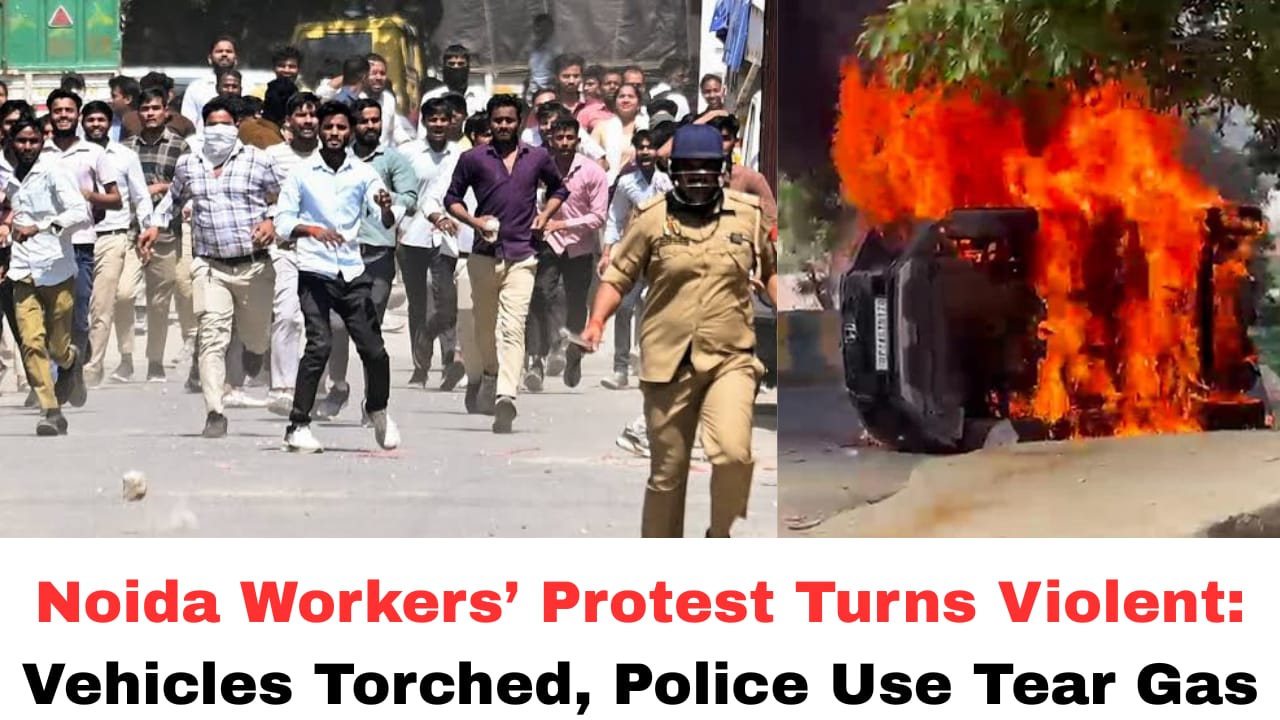
A major labour unrest in Noida, one of India’s key industrial hubs near Delhi, turned violent on April 13, 2026, highlighting growing tensions between workers and industries. What began as a peaceful demonstration over wages and working conditions quickly escalated into clashes, arson, and widespread disruption, drawing national attention to the challenges faced by industrial workers.
Background of the Protest
The protests originated in the Phase-2 industrial area of Noida, particularly around the Hosiery Complex, where thousands of factory workers gathered to demand higher wages and better working conditions. For several days, workers had been voicing their grievances, including low pay, long working hours, and lack of proper benefits.
One of the primary triggers was the disparity in wages between workers in Noida and neighboring Haryana, where the government had recently increased minimum wages significantly. Workers in Noida argued that they were being underpaid despite similar work conditions, leading to mounting frustration.
In addition to wage concerns, workers demanded fixed duty hours, proper overtime compensation, and adherence to labor laws. Rising living costs and inflation further intensified the pressure on workers, making their demands more urgent.
Workers’ Protest Turns Violent in Noida
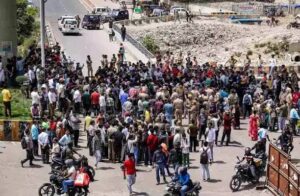
Although the protests initially remained peaceful, tensions escalated on the fourth day. Large groups of workers moved from factory premises onto the streets, blocking key roads and disrupting traffic across the city.
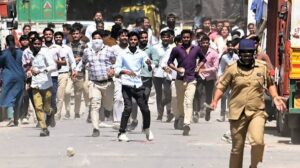
The situation quickly spiraled out of control. Protesters reportedly engaged in stone-pelting, vandalism, and arson. Several vehicles, including a police vehicle, were set on fire, and property was damaged in multiple locations such as Sector 60 and Phase-2 industrial areas.
Clashes between protesters and police intensified as authorities attempted to disperse the crowd. Police responded by using tear gas and what they described as “minimum force” to restore order.
Visuals from the scene showed chaotic conditions, with burning vehicles, damaged infrastructure, and large crowds clashing with security personnel. The unrest underscored how quickly economic grievances can transform into law-and-order challenges when not addressed in time.
Impact on Daily Life
The protest had a significant impact on daily life in Noida and nearby areas. Major roads, including routes connecting Delhi and Noida, were blocked, leading to severe traffic congestion. Commuters were stranded for hours, particularly at key points like the Chilla Border and Sector 62.
Industrial operations were also affected, with several factories temporarily shutting down due to safety concerns and worker participation in the protests. The disruption extended beyond industrial zones, affecting residential areas and office-goers as well.
The scale of the disruption highlighted the economic importance of Noida as an industrial center and the potential ripple effects of such unrest on production and supply chains.

Government and Police Response
In response to the violence, authorities deployed heavy police forces, including additional reinforcements, to control the situation. Security measures were tightened, and officials worked to restore normalcy in affected areas.
The administration also appealed to workers to remain calm and avoid spreading rumors. Talks were initiated between government officials, labor representatives, and industry stakeholders to address the workers’ demands.
The Uttar Pradesh government reportedly set up a probe panel to investigate the incident and identify factors that contributed to the escalation. Authorities also warned of strict action against those involved in violence and vandalism.
At the same time, political reactions emerged, with opposition leaders criticizing the government over rising unemployment, inflation, and worker dissatisfaction, while the state government urged workers to resolve issues through dialogue.
Underlying Issues and Broader Implications
The Noida protest is not an isolated incident but part of a broader pattern of labor unrest in India. Rising inflation, wage disparities, and concerns over working conditions have created a volatile environment in several industrial regions.
Experts note that the protest reflects deeper structural issues, including gaps in labor law enforcement, communication failures between employers and employees, and the growing cost of living. The fact that similar protests recently occurred in Haryana suggests that worker dissatisfaction is spreading across regions.
The incident also raises questions about the balance between industrial growth and worker welfare. While cities like Noida have become major manufacturing hubs, the benefits of growth are not always evenly distributed, leading to tensions between labor and management.
Conclusion
The violent turn of the workers’ protest in Noida serves as a stark reminder of the challenges facing India’s industrial workforce. What began as a demand for fair wages and better working conditions quickly escalated into a major law-and-order situation, disrupting daily life and economic activity.
While the immediate situation appears to be under control, the underlying issues remain unresolved. Addressing these concerns will require sustained dialogue, policy reforms, and a commitment to improving labor conditions. Without such measures, similar incidents could occur in the future, posing risks not only to industrial stability but also to broader economic growth.
Ultimately, the Noida unrest highlights a critical reality: economic development must go hand in hand with social equity, ensuring that the workforce driving industrial progress is not left behind.
You May Also Read: India Pharma 2026: Roadmap to Make India a Global Pharmaceutical Leader