



Digital News Guru National Desk:
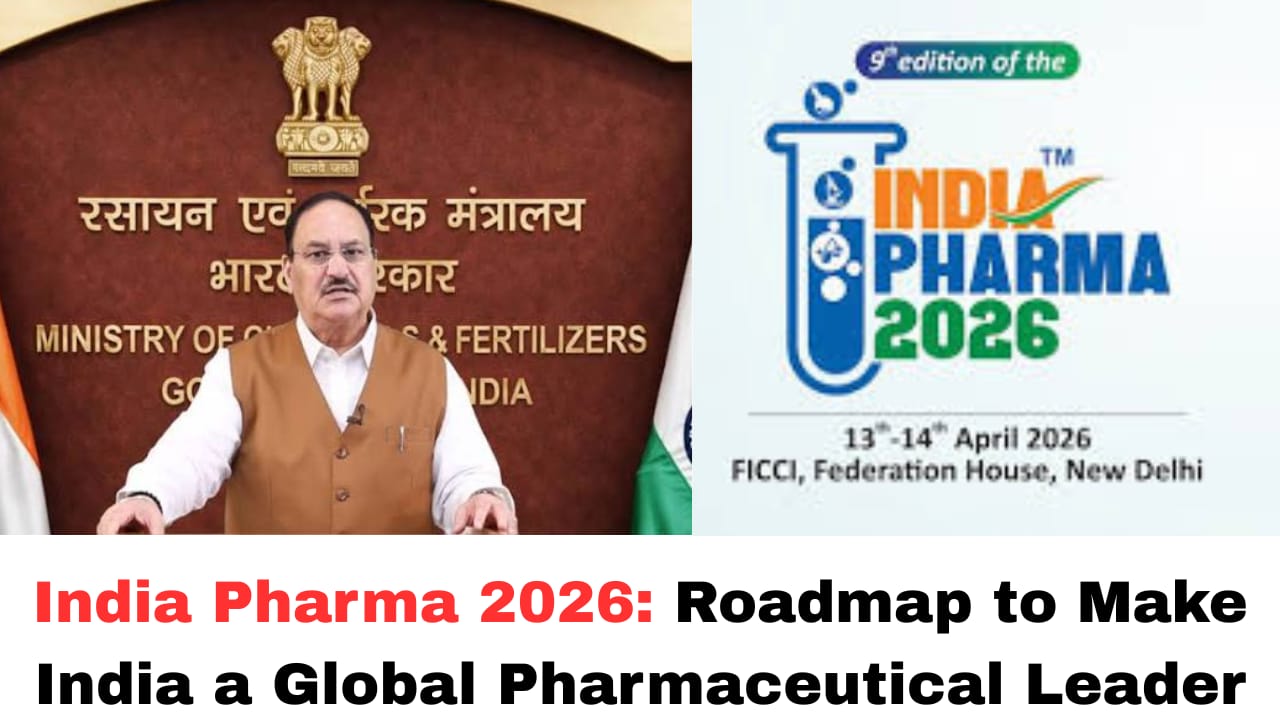
At the India Pharma 2026 event, Union Health Minister Jagat Prakash Nadda unveiled an ambitious roadmap to transform India into a global leader in the pharmaceutical sector. The announcement reflects a strategic shift in India’s approach—from being a volume-driven producer of generic medicines to becoming an innovation-led powerhouse in advanced healthcare solutions.
India’s Current Position in Global Pharma
India has long been known as the “pharmacy of the world”, supplying affordable generic medicines to over 200 countries and playing a critical role in global healthcare. This reputation is built on strong manufacturing capabilities, cost efficiency, and a large skilled workforce.

However, as highlighted at the event, the global pharmaceutical industry is undergoing a major transformation. The focus is shifting toward high-value and complex therapies, such as biologics, biosimilars, and specialty medicines. Jagat Prakash Nadda emphasized that India is well-positioned to lead this transition but must significantly upgrade its research, investment, and innovation capabilities.
The Need for a Strategic Shift
The roadmap presented at India Pharma 2026 signals a clear transition:
- From generic manufacturing → innovative drug development
- From low-cost production → high-value medicines
- From supplier → global healthcare leader
This shift is essential because advanced medicines now dominate global pharmaceutical markets, accounting for a major share of industry value.
Key Pillars of the Roadmap
1. Strengthening Research and Innovation
A central focus of the government’s strategy is to boost research and development (R&D). India aims to move beyond manufacturing and become a hub for drug discovery and innovation.
- Increased funding for research initiatives
- Promotion of collaboration between academia, industry, and government
- Support for cutting-edge technologies such as AI-driven drug discovery
The government is also promoting schemes to accelerate pharmaceutical research and innovation, helping India compete with global leaders.
2. Expanding Investment and Infrastructure
Another major pillar is increasing investment in the pharmaceutical sector. The government is encouraging both domestic and foreign investments to strengthen infrastructure and production capabilities.
Initiatives such as the Production Linked Incentive (PLI) scheme and the development of bulk drug parks aim to boost domestic manufacturing and reduce reliance on imports.
These measures are designed to create a self-reliant and resilient pharmaceutical ecosystem, capable of meeting both domestic and global demand.
3. Focus on Advanced Medicines
The roadmap places strong emphasis on emerging segments like:
- Biologics
- Biosimilars
- Specialty and complex therapies
These areas represent the future of global pharmaceuticals, with rapidly growing demand and higher value compared to traditional generics. India’s entry into these segments will significantly enhance its global competitiveness.
4. Leveraging India’s Strengths
India already has several advantages that support its global ambitions:
- A large pool of skilled professionals
- Over 3,000 pharma companies and 10,000+ manufacturing units
- The highest number of USFDA-compliant plants outside the United States
These strengths provide a strong foundation for scaling innovation and expanding into high-value markets.
5. Encouraging Industry Collaboration
The government is also focusing on public-private partnerships and greater industry participation. Collaboration between pharmaceutical companies, research institutions, and policymakers will be key to driving innovation and achieving global leadership.
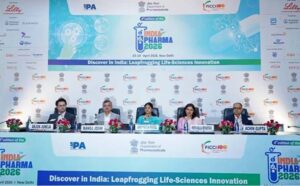
The event itself served as a platform for dialogue, bringing together policymakers and industry leaders to shape the future of the sector.
Role of Technology and Innovation
Technology is expected to play a transformative role in India’s pharma growth. Areas such as:
- Artificial Intelligence in drug discovery
- Automation in manufacturing
- Advanced diagnostics
are becoming critical to improving efficiency and accelerating innovation. Discussions at the event highlighted the need to integrate these technologies into the pharmaceutical ecosystem to remain globally competitive.
Global Implications of India’s Pharma Push
India’s ambition to become a global pharma leader has far-reaching implications:
- Improved global access to affordable medicines
- Strengthened global supply chains
- Increased innovation in healthcare solutions
As demand for advanced therapies grows worldwide, India’s expansion into high-value segments could significantly influence global healthcare systems.
Challenges Ahead
Despite the optimistic outlook, several challenges remain:
- Need for higher investment in R&D
- Regulatory complexities
- Competition from global pharma giants
- Ensuring quality standards across the industry
Addressing these challenges will be crucial for successfully implementing the roadmap.
Conclusion
The roadmap unveiled by Jagat Prakash Nadda at India Pharma 2026 marks a defining moment for India’s pharmaceutical sector. By focusing on innovation, investment, and advanced drug development, India aims to transition from a global supplier of generics to a leader in pharmaceutical innovation.
If executed effectively, this vision could not only strengthen India’s economy but also reshape the global pharmaceutical landscape—making advanced healthcare more accessible and affordable worldwide.
You May Also Read: Delhi to Dehradun in 2 Hours: Expressway Set to Open on April 14, 2026