



Digital News Guru Delhi Desk:
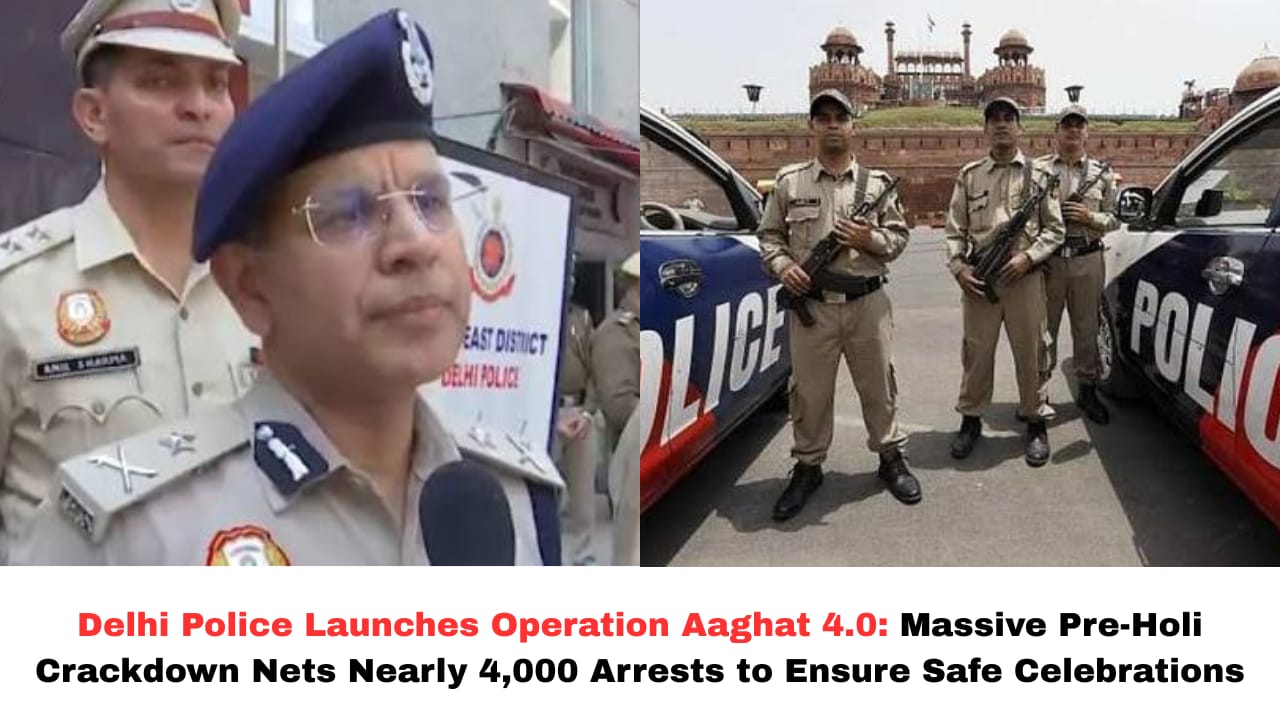
As India’s festival of colours Holi approached, the Delhi Police intensified its law-and-order efforts, launching a major security initiative titled “Operation Aaghat 4.0” across the national capital. Conducted over March 1 and 2, 2026, this special two-day drive aimed to neutralise criminal elements, prevent festive disorder, and create a safe environment for residents and visitors alike. The drive resulted in the arrest of nearly 4,000 people, sending a strong message against bootleggers, drug peddlers and repeat offenders on the streets of Delhi.
Delhi Police crackdown “Operation Aaghat 4.0” ahead of Holi
Operation Aaghat 4.0 was part of a proactive policing strategy initiated by the Delhi Police to tighten security before Holi, when cities typically see an increase in public festivities mixed with alcohol consumption, heightened street activity, and heightened risk of crime and accidents. According to official information shared with news agencies, the operation was designed not as a reactionary measure but as a preventive and intelligence-led crackdown to deter anti-social behaviour and criminal activity before they could escalate into serious public safety threats.

The name “Aaghat” (which means “strike” or “blow” in Hindi) reflects the operation’s intent: to deal a decisive blow to burgeoning criminal activities that can mar festive celebrations. The drive was strategically rolled out across multiple districts of Delhi with the full participation of local police units and specialised squads.
Arrests and Enforcement Actions
During the two days of heightened operations, the Delhi Police detained approximately 4,000 individuals. These included:
- Bootleggers (those involved in the illegal manufacture and sale of liquor),
- Drug peddlers (persons selling or distributing illegal narcotics),
- Repeat offenders and habitual criminals with open cases or prior arrest records.
The high number of arrests reflects the scale and intensity of the drive, which focused on hotspots known for liquor supply, illicit drug distribution and repeat criminal activity. Senior police officials stated that the operation was aimed at cleaning up the streets and pre-empting potential threats to public safety ahead of the festivities.
Comprehensive Festive Security Measures
Operation Aaghat 4.0 did not operate in isolation. It was part of a broader festival security posture adopted by the Delhi Police. Ahead of Holi, authorities deployed a citywide security grid that involved more than 15,000 police personnel — including district officers, traffic police, PCR units and specialized teams tasked with rapid response. These forces were strategically positioned across sensitive intersections, busy markets, residential localities and public spaces to deter crimes and respond swiftly to any incident.
The enforcement strategy also incorporated specific measures to tackle dangerous behaviour during Holi celebrations. These included:
- Crackdown on drunken driving and vehicle stunts, particularly dangerous motorcycle ‘wheelies’ or triple-riding on crowded roads.
- Traffic pickets and breathalyser checks to deter motorists driving under the influence of alcohol or violating road safety norms.
- Plainclothes officers and anti-sabotage checks in densely populated or high-risk areas to identify troublemakers and prevent disorderly conduct.
These actions underscore the dual focus of Delhi Police: to reduce festival-related law violations, and to ensure road safety and public order during peak celebration hours.

Why Such Large-Scale Action?
Holi, like many major festivals in India, brings out large crowds and heightened social interaction, which can unfortunately sometimes lead to disruptive behaviour, public nuisance, alcohol-related incidents and even violence. In response, law enforcement agencies across the country — including in neighboring cities and states like Gurugram and Agra — have also intensified security measures and special drives aimed at containing crime and ensuring public safety during Holi.
For the national capital, such operations are part of a broader strategy to pre-empt chaotic situations before they occur. By targeting repeat offenders and criminal networks, police aim to reduce the likelihood of their involvement in festival bad behaviour, such as drunken brawls, drug distribution or dangerous street racing.
Official Statements and Public Response
Delhi Police leadership has defended the operation as necessary and constructive. Officials emphasised that the security measures, arrests and patrols were not intended to dampen celebrations, but rather to ensure that people could enjoy Holi peacefully and responsibly. They also appealed to citizens to cooperate with law enforcement and adhere to public order norms — including avoiding forceful colouring of unwilling participants and refraining from creating unnecessary nuisance in public spaces.
Public reactions to these enforcement efforts have been mixed. Many residents have praised the proactive policing, noting that a strong visible presence of law enforcement can discourage reckless behaviour and make families more comfortable celebrating the festival in public areas. Others have recommended continued engagement between police and local communities to build trust and understanding of why such measures are adopted during major festivals.
Looking Ahead: A Safer, More Orderly Holi
With Operation Aaghat 4.0 concluded, police forces remain on active duty across the city during the Holi period, maintaining vigilance over both traffic and street behaviour. Senior officers reiterated that law enforcement will be firm but fair, and action will be tailored to ensure that the joy of the festival does not compromise public safety.
The success of the operation may also influence future festival security plans, encouraging a blend of preventive action, technology-driven monitoring and community participation to achieve safer celebrations across India’s cities.
You May Also Read: India vs West Indies: T20 World Cup 2026 – A Must-Win Clash for Semi-Final Dreams