



Digital News Guru International Affairs Desk:
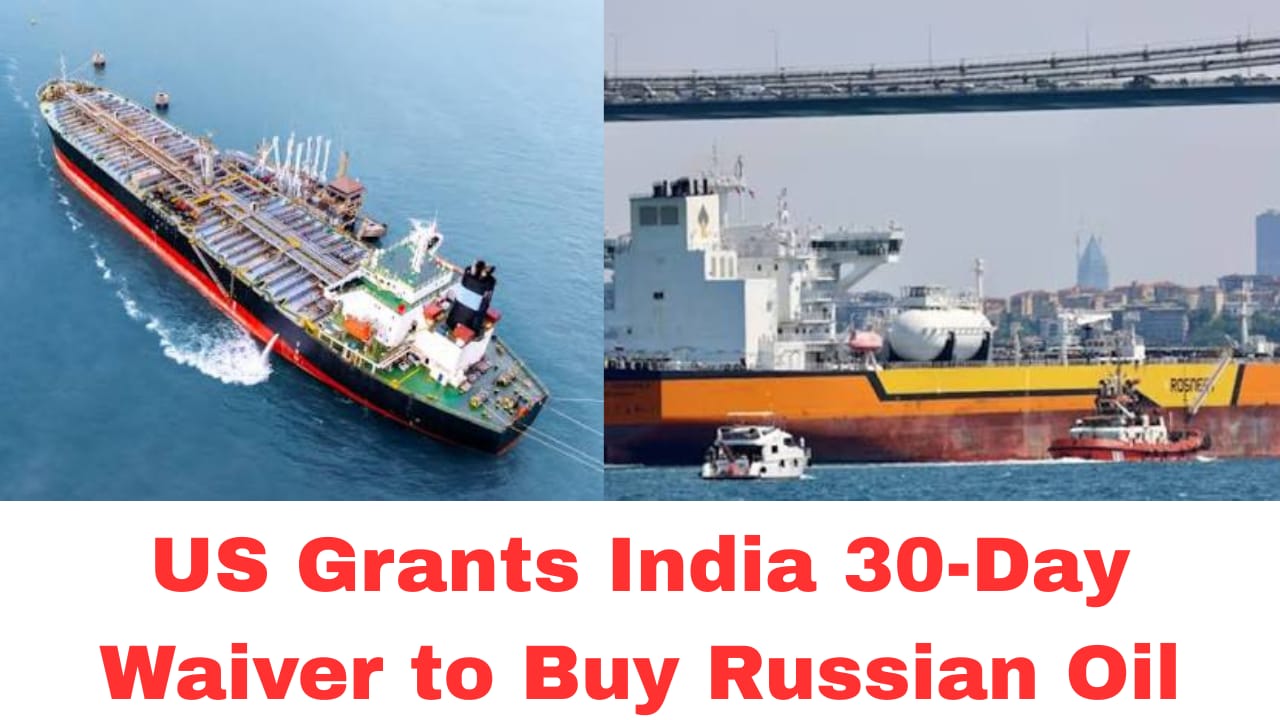
In a significant development in global energy diplomacy, the United States has granted India a temporary 30-day waiver allowing Indian refiners to purchase Russian crude oil that is currently stranded at sea. The decision comes at a time when global oil markets are under pressure due to rising geopolitical tensions in the Middle East and disruptions in major oil shipping routes. The waiver is intended as a short-term measure to stabilize global energy supplies and prevent a sudden spike in oil prices.
Background of the Decision
Since the outbreak of the Russia-Ukraine conflict in 2022, the United States and its allies have imposed strict sanctions on Russia’s energy sector. These sanctions were designed to reduce Russia’s revenue from oil exports and limit its ability to finance the war. As part of this strategy, many countries were discouraged or restricted from buying Russian oil.

India, however, continued purchasing Russian crude oil because it was available at discounted prices and was crucial for meeting the country’s growing energy needs. Over the past few years, Russia became one of India’s largest oil suppliers. However, increasing geopolitical tensions and sanctions complicated these trade flows, leading to several Russian oil cargoes being stranded on ships at sea.
Details of the 30-Day Waiver
The waiver was issued by the U.S. Treasury Department and allows Indian refiners to buy Russian oil that was already loaded on vessels before March 5, 2026. The exemption is valid until early April and only applies to cargoes currently stuck at sea due to sanctions or disrupted shipping routes.
This means that Indian companies can receive shipments of Russian oil that were already in transit but were unable to reach their destination due to international restrictions or security concerns. Estimates suggest that the waiver could unlock around 20 million barrels of crude oil for Indian refiners.
The U.S. government emphasized that the waiver is a temporary measure and not a change in its long-term sanctions policy against Russia. The aim is to maintain stability in the global oil market during a period of severe supply disruptions.
Why the US gave this waiver
The immediate trigger behind this decision is the escalating conflict in the Middle East, particularly tensions involving Iran and disruptions around the Strait of Hormuz, one of the world’s most critical oil shipping routes. Nearly 20 percent of global oil shipments normally pass through this narrow waterway, making it vital for global energy supply.
Recent hostilities and security risks in the region have caused shipping delays and uncertainty in global energy markets. Many countries that depend heavily on Middle Eastern oil—especially in Asia—have begun searching for alternative sources. As a result, the United States decided to allow limited Russian oil shipments to reach India in order to prevent a supply crisis and stabilize prices.

Importance for India
India is the world’s third-largest importer of crude oil, and its economy depends heavily on stable energy supplies. A significant disruption in oil imports could lead to higher fuel prices, inflation, and economic slowdown.
The waiver therefore provides short-term relief for India’s energy security. It allows Indian refiners to process millions of barrels of oil that were already purchased or shipped earlier. This could help reduce pressure on India’s import bill and maintain stable fuel prices domestically.
Furthermore, India imports a large portion of its oil through the Middle East. With tensions affecting this region, access to alternative supplies such as Russian crude becomes even more important for ensuring uninterrupted energy availability.
Global Market Implications
The waiver also reflects broader concerns about the stability of global energy markets. If the stranded oil cargoes were not allowed to reach buyers, the sudden reduction in supply could have pushed global oil prices higher.
By allowing India to purchase these shipments, the United States hopes to keep oil flowing into international markets and prevent major price fluctuations. U.S. officials stated that the move is intended “to enable oil to keep flowing into the global market.”
However, the waiver is deliberately limited in scope. It applies only to oil already at sea and does not permit long-term expansion of Russian oil purchases. This ensures that the measure does not significantly benefit Russia financially while still addressing immediate supply concerns.

Political Reactions and Debate
The decision has also sparked political debate in India. Some opposition leaders have criticized the government, arguing that India’s energy policies appear influenced by external pressure from the United States. Others view the waiver as a pragmatic step that balances diplomatic relations with national energy needs.
The situation highlights the complex nature of global energy politics, where economic interests, geopolitical alliances, and security concerns often intersect.
Conclusion
The U.S. decision to grant India a 30-day waiver to buy Russian oil represents a strategic response to an evolving global energy crisis. While the move temporarily eases sanctions, it is primarily aimed at stabilizing oil markets and ensuring that supply disruptions do not trigger a global price shock.
For India, the waiver provides short-term relief by securing access to millions of barrels of crude oil during a period of uncertainty in the Middle East. At the same time, the limited duration of the exemption reflects ongoing international pressure on Russia’s energy exports.
Ultimately, this development underscores how interconnected global energy markets have become. Decisions taken by major powers such as the United States can quickly influence trade flows, diplomatic relations, and economic stability across the world.
You May Also Read: Priyanka Chopra to Present at the 2026 Academy Awards