




Digital News Guru Tamil Nadu Desk:
Tamil Nadu Emerges as India’s Economic Front-Runner Despite Centre’s Limited Support, Claims CM Stalin
Tamil Nadu Chief Minister M.K. Stalin has asserted that the southern state has risen to the top among Indian states in terms of economic growth, even as it grapples with what he describes as a lack of adequate support from the central government. Based on official economic indicators and Reserve Bank of India (RBI) data, Stalin highlighted Tamil Nadu’s performance at a public event, positioning the state as a model of development driven by its own governance strategies rather than reliance on central aid.
The announcement comes amid clear political messaging from the Dravida Munnetra Kazhagam (DMK) government that highlights not only its economic achievements but also its ambitions to continue Tamil Nadu’s rise as a leading state across various development parameters by 2031.
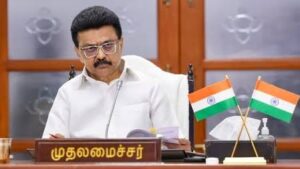
Tamil Nadu Economic Growth Surges to 16% — Highest in India in 2024-25
Stalin stated that Tamil Nadu recorded a 16% Gross State Domestic Product (GSDP) growth rate for the financial year 2024–25 — the highest rate among major Indian states. According to him, the state’s GSDP expanded from Rs 26.89 lakh crore to Rs 31.19 lakh crore over the year, showcasing a robust economic expansion that outpaced states like Maharashtra, Karnataka and Gujarat.
“This phenomenal growth is not merely a statistic; it represents the sustained effort of our people, investors, and governance framework,” said Stalin, emphasising that this was achieved despite what he described as inadequate cooperation and financial backing from the Union government.
In a post on social media platform X (formerly Twitter), Stalin reiterated that Tamil Nadu’s economic performance, based on RBI figures, demonstrated that the state could excel even in the absence of extensive central assistance, and he framed this achievement as validation of the “Dravidian Model 2.0” approach to governance — a philosophy focused on inclusive and equitable development.
‘Dravidian Model 2.0’: A Vision for Inclusive Development
Stalin’s comments are part of a broader narrative projecting the Dravidian Model of governance as an engine of Tamil Nadu’s growth. Under this approach, the state has prioritized investments in industrialization, infrastructure development, social welfare programmes, education and healthcare, alongside initiatives aimed at strengthening small and medium enterprises (SMEs).
“We have cultivated a balance between industrial growth and social upliftment,” Stalin said. “This is why Tamil Nadu is not only growing in terms of economic figures but also outranking others in per capita income levels and human development outcomes.”
According to government claims, this model has helped the state expand its economy by approximately Rs 10.5 lakh crore over the past three years, a rate of progress that Stalin believes positions Tamil Nadu as a “national benchmark” for growth and governance.
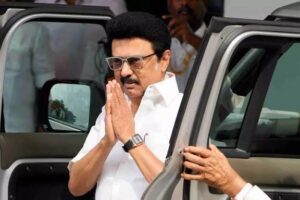
Centre-State Relations and Fiscal Frictions
While touting the state’s achievements, Stalin did not hold back criticism of the Union government’s fiscal policies towards Tamil Nadu. He pointed to a perceived bias in the allocation of central funds, noting that several requests for additional support — particularly in sectors like education and infrastructure — had either gone unfulfilled or been delayed.
For instance, at a NITI Aayog meeting earlier this year, Stalin advocated for a 50% share of central taxes to be allocated to states, arguing that Tamil Nadu was receiving less than its due share despite being one of the highest revenue-contributing states in the country. He also sought the release of funds for education programmes that were reportedly withheld because of policy differences with the central leadership.
“These fiscal disparities undermine the principle of cooperative federalism,” Stalin has said on multiple occasions, urging that equitable fund distribution is essential for states to achieve their development goals.
Political and Developmental Implications
Stalin’s remarks carry political weight as well as developmental implications. With Tamil Nadu gearing up for the 2026 Assembly elections, the DMK is keen to underscore both its economic record and its stance against what it describes as central indifference. By asserting that Tamil Nadu’s achievements have come despite limited central support, Stalin and his party aim to galvanize regional pride and consolidate political support.
However, his declarations have not gone uncontested. Opposition leaders have challenged some of the DMK’s claims, particularly around employment growth and job creation statistics — a debate that adds another dimension to the state’s political discourse.
Economic Growth Figures and National Context
Tamil Nadu’s reported 16% GSDP growth is remarkable when viewed against national averages and the economic performance of other Indian states. The RBI’s data highlights not only rapid short-term growth but sustained activity across multiple sectors, positioning the state to attract further investment.
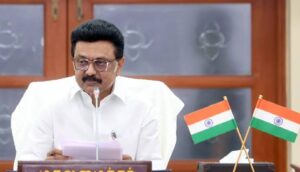
Government officials note that this growth has been underpinned by Tamil Nadu’s diversified economic base — encompassing automotive manufacturing, textiles, electronics, information technology, and renewable energy — as well as targeted welfare programmes aimed at boosting human development indices.
Vision for the Future: National Leadership by 2031
Looking forward, Stalin has articulated a vision where Tamil Nadu becomes the leading state in India across all sectors by 2031. Under what he terms “Dravidian Model 2.0,” the goal is to maintain growth momentum while expanding infrastructure, improving education and healthcare outcomes, and enhancing quality of life for citizens across urban and rural areas.
“By 2031, Tamil Nadu will not trail behind any other state in any sector,” he stated. “Instead, it will set national benchmarks for development and progress.”
Conclusion: A Story of Growth Amid Challenges
Tamil Nadu’s economic performance, as highlighted by CM Stalin, reflects a complex interplay between state-level governance, fiscal negotiations with the Union government, and strategic policy implementation. While some may debate aspects of the data or political framing, there is little dispute that the state’s recorded GSDP growth and development outcomes are among the strongest in the country.
Whether Tamil Nadu can sustain this momentum and turn its 2031 vision into reality will hinge on continued investment, policy innovation and — as Stalin insists — a balance between asserting regional priorities and engaging constructively with the broader national framework.
You May Also Read: Messi Kolkata Chaos: Angry Fans Throw Bottles and Chairs at Salt Lake Stadium