



Digital News Guru Tamil Nadu Desk:
The 2026 Tamil Nadu Assembly elections have emerged as one of the most closely watched political contests in India. With voting scheduled for April 23 and results expected on May 4, the state is witnessing intense campaigning, sharp political exchanges, and a battle of narratives between major alliances. More than just a routine electoral exercise, this election represents a larger ideological clash involving governance models, regional identity, and national political ambitions.
Tamil Nadu elections 2026
Tamil Nadu will vote in a single-phase election on April 23, 2026, to elect representatives for all 234 assembly seats, with 118 seats required for a majority.
The election will determine whether the ruling Dravida Munnetra Kazhagam (DMK), led by Chief Minister M.K. Stalin, retains power or whether the opposition alliance led by the All India Anna Dravida Munnetra Kazhagam (AIADMK) can stage a comeback.
Main Political Alliances
DMK-Led Alliance
The ruling DMK heads the Secular Progressive Alliance, which includes the Congress and several regional parties. The party is focusing on:
- Welfare schemes
- Social justice initiatives
- Infrastructure development
Recent campaign efforts include targeted urban promises, such as a “Super Six” development plan for Chennai to strengthen support among city voters.
AIADMK-BJP Alliance
The main opposition alliance is led by AIADMK under Edappadi K. Palaniswami, with support from the Bharatiya Janata Party (BJP). Their campaign is centered on:
- Allegations of corruption against the DMK
- Law and order concerns
- Promises of welfare schemes and economic relief
AIADMK leaders have also accused the ruling alliance of failing to protect women’s rights and ensure good governance.
Emerging Third Forces
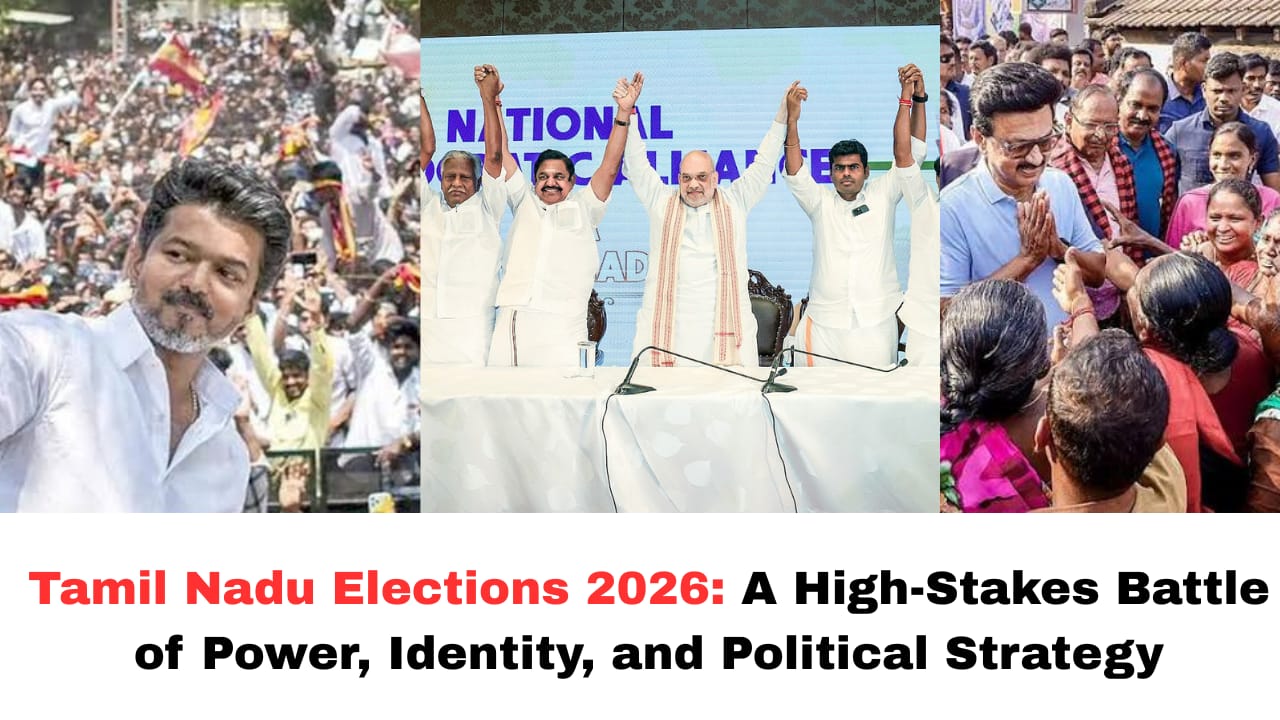
New and smaller parties are also playing a crucial role. The Tamilaga Vettri Kazhagam (TVK), led by actor-turned-politician Vijay, is emerging as a significant third force, potentially reshaping traditional voting patterns.
Campaign Intensifies Across the State
Campaigning has entered its final and most aggressive phase, with top leaders from across India visiting Tamil Nadu. Prime Minister Narendra Modi and Union Home Minister Amit Shah have campaigned for the NDA, while Congress leader Rahul Gandhi has addressed rallies to support the DMK alliance.
Political rhetoric has intensified, with parties engaging in sharp verbal attacks and counterattacks. Issues such as governance, corruption, and federal relations have dominated campaign speeches.
Key Issues in the Election
- Development vs Welfare
The DMK is highlighting its welfare schemes and development projects, while the opposition is questioning their implementation and effectiveness.
- Corruption Allegations
The BJP and AIADMK have accused the ruling government of corruption, making it a central campaign issue. In response, the DMK has defended its record and accused the opposition of misinformation.
- Centre vs State Politics
A major narrative in this election is the tension between regional autonomy and central influence. DMK leaders have framed the contest as a fight to protect Tamil Nadu’s identity and rights, while BJP leaders emphasize national integration and development.
- Women’s Reservation Debate
The issue of women’s representation has also sparked political controversy. While the BJP claims to support greater representation, DMK leaders have criticized certain proposals, calling them politically motivated.
Key Battlegrounds
Certain constituencies have gained special attention in this election:
- Chennai: A critical urban stronghold where development promises are key
- Kanyakumari: A unique multi-party battleground involving national and regional players
These constituencies could significantly influence the overall outcome.
Human and Social Dimension
Amid the political heat, the election has also revealed a human side. In some constituencies, teachers have come forward to campaign for their former students who are now candidates. This unusual trend highlights personal connections and adds an emotional layer to the electoral battle.

Opinion Polls and Trends
Recent opinion polls suggest that the DMK may have an advantage, but the presence of new political players and shifting alliances has made the contest unpredictable.
Voter turnout is expected to be high, reflecting strong public engagement and the importance of the election.
What Is at Stake
The 2026 Tamil Nadu elections carry significant implications:
- For DMK: A chance to retain power and reinforce its governance model
- For AIADMK: An opportunity to regain political dominance
- For BJP: A strategic push to expand its presence in South India
- For voters: A choice between continuity and change
Conclusion
The Tamil Nadu Assembly elections of 2026 are shaping up to be a defining political moment. With intense campaigning, multiple alliances, and high voter interest, the outcome remains uncertain.
Beyond the numbers, this election reflects deeper questions about governance, regional identity, and the evolving dynamics of Indian politics. As the state heads toward polling day, all eyes are on Tamil Nadu to see which vision of leadership and development will prevail.
You May Also Read: CBSE 12th Result 2026 Anytime Soon? Big Update for Students