



Digital News Guru Maharashtra Desk:
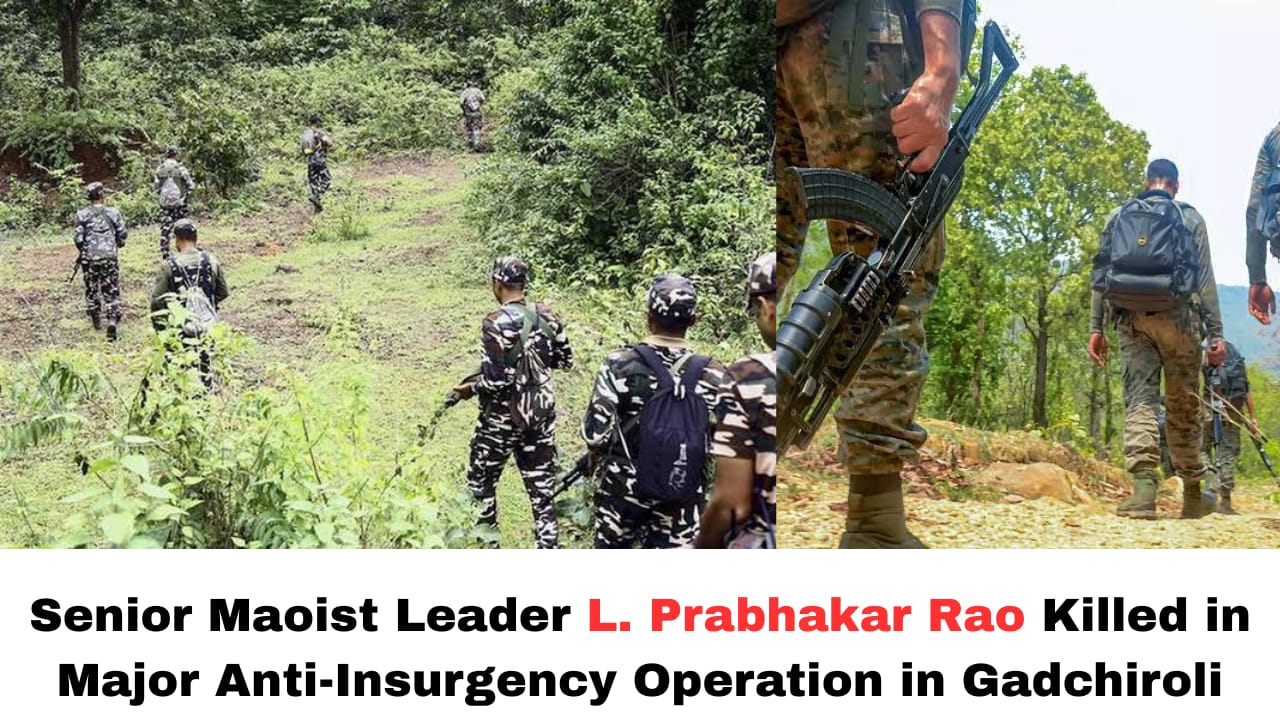
In a significant development in India’s long-running battle against left-wing extremism, seven Maoist insurgents — including senior leader Loketi Chandar Rao, also known as L. Prabhakar Rao — were killed in a three-day anti-Naxal operation carried out by security forces in Gadchiroli district, Maharashtra. The encounter, which began in the early hours of February 3 and continued through February 6, 2026, marks one of the most decisive blows to the Communist Party of India (Maoist) in recent years.
Operation Overview and Encounter Details
The operation was launched after credible intelligence indicated the presence of Maoist cadres from the feared Company No. 10 and other formations moving through dense forest areas near Phodewada village, on the Narayanpur–Gadchiroli border. In response, fourteen units of the C-60 commandos, an elite anti-Maoist force of the Gadchiroli Police, were deployed to cordon off the suspected hideouts. Following initial engagements on Wednesday night, additional forces were sent in, including a Quick Action Team (QAT) of the Central Reserve Police Force (CRPF).
During intense firefights in dense jungles, security forces recovered the bodies of three Maoists on Thursday night. Over the next 24 hours, four more bodies were retrieved, bringing the total number of Maoists killed to seven.
Among the slain was Prabhakar, a senior CPI (Maoist) commander known by multiple aliases (including Swami, Ravi and Padakal Swamy), who carried a reward of Rs 25 lakh on his head. He had been active in the insurgency since the mid-1990s and was reportedly in charge of the Gadchiroli Division Committee, West Sub-Zonal Bureau and Company No. 10 of the Maoist organisation.
Who Was L. Prabhakar Rao?
Prabhakar’s journey into the Maoist movement began in his youth. Hailing from Isrojiwadi village in Kamareddy district, Telangana, he is believed to have gone underground in 1995 after brief involvement with radical student and Maoist organisations. Over the decades, he rose through the ranks of the People’s Liberation Guerrilla Army (PLGA), the armed wing of the CPI (Maoist), becoming a key strategist and battlefield commander.
Officials described Prabhakar as a seasoned guerrilla leader, responsible for planning and leading numerous ambushes and violent engagements against security forces across Gadchiroli and adjoining regions, including parts of neighbouring Chhattisgarh. His operational experience and reputed ability to evade capture made him one of the most wanted Maoist figures in central India.
Despite repeated calls to surrender from colleagues and even from within Maoist ranks — including an overture from ideologue Mallojula Venugopal Rao, who surrendered last year — Prabhakar chose instead to remain active in the insurgency until his death in this encounter.
Casualties and Human Cost
While the elimination of Prabhakar and other cadres represents a tactical success for Indian security forces, the operation was not without cost. C-60 commando Deepak Chinna Madavi (38), a dedicated officer from Aheri tehsil, was critically wounded during heavy firefights and later succumbed to his injuries at a hospital in Bhamragad. His sacrifice has been honoured by police officials and is a somber reminder of the risks faced by security personnel in counter-insurgency operations.
Another jawan, identified as Joga Madavi, also sustained injuries during the operation and is reported to be in stable condition following medical treatment.
Arms and Material Recovered
In addition to the bodies, security forces recovered multiple high-powered weapons from the encounter sites, including three AK-47 rifles, one self-loading rifle (SLR) and a .303 rifle, along with other materials indicating the armed readiness of the group. This seizure highlights the continuing challenge of disarming and dismantling well-equipped rebel cadres operating in remote regions.
Impact on Maoist Insurgency
The death of a figure as significant as Prabhakar is being widely interpreted as a major setback for Maoist operations in central India, particularly in the Gadchiroli area, long considered a stronghold of left-wing extremism. Officials believe that the elimination of senior leaders disrupts organisational structures, weakens morale, and diminishes operational capacity — at least in the short term.
Over recent years, sustained pressure by security forces has resulted in the neutralisation or surrender of dozens of senior Maoist leaders and cadres across insurgency-affected states such as Maharashtra, Chhattisgarh, Odisha and Telangana. The combined efforts of specialised units like C-60, local police, and central paramilitary forces have reportedly reduced the number of active guerrillas and disrupted supply and movement corridors historically used by Maoist formations.
Broader Context and Challenges Ahead
While the operation boosts the morale of security agencies and strengthens the government’s narrative of reclaiming forest belts from extremist control, experts caution that eradicating the Maoist threat entirely remains a complex and long-term endeavour. The movement, driven by socio-economic grievances in underdeveloped tribal regions, has shown resilience by adapting its tactics and reorganising after setbacks.
Government officials insist that comprehensive approaches combining security action with development initiatives are essential to addressing the root causes of extremism. Investments in infrastructure, education, and employment opportunities in historically neglected regions are being touted as crucial to reducing the appeal of armed insurgency among local populations.
Looking Forward
The successful operation against Prabhakar and his associates underscores the continued resolve of Indian security forces to dismantle extremist networks operating within the country. However, it also highlights the delicate balance between tactical victories and lasting peace — a balance that necessitates both forceful action against violent actors and sustained socio-economic engagement with communities vulnerable to recruitment by insurgent groups.
As authorities assess the outcomes of this operation and prepare for future efforts, the shadow of Maoist insurgency — though diminished — still looms over large swathes of central and eastern India. The death of L. Prabhakar Rao is a stark milestone in this protracted conflict, emblematic of both progress and the enduring challenges that lie ahead.
You May Also Read: Ayodhya GST Deputy Commissioner Withdraws Resignation After Controversy