



Digital News Guru Rajasthan Desk:
A Rs 1 Lakh Crore Push: What’s the Plan
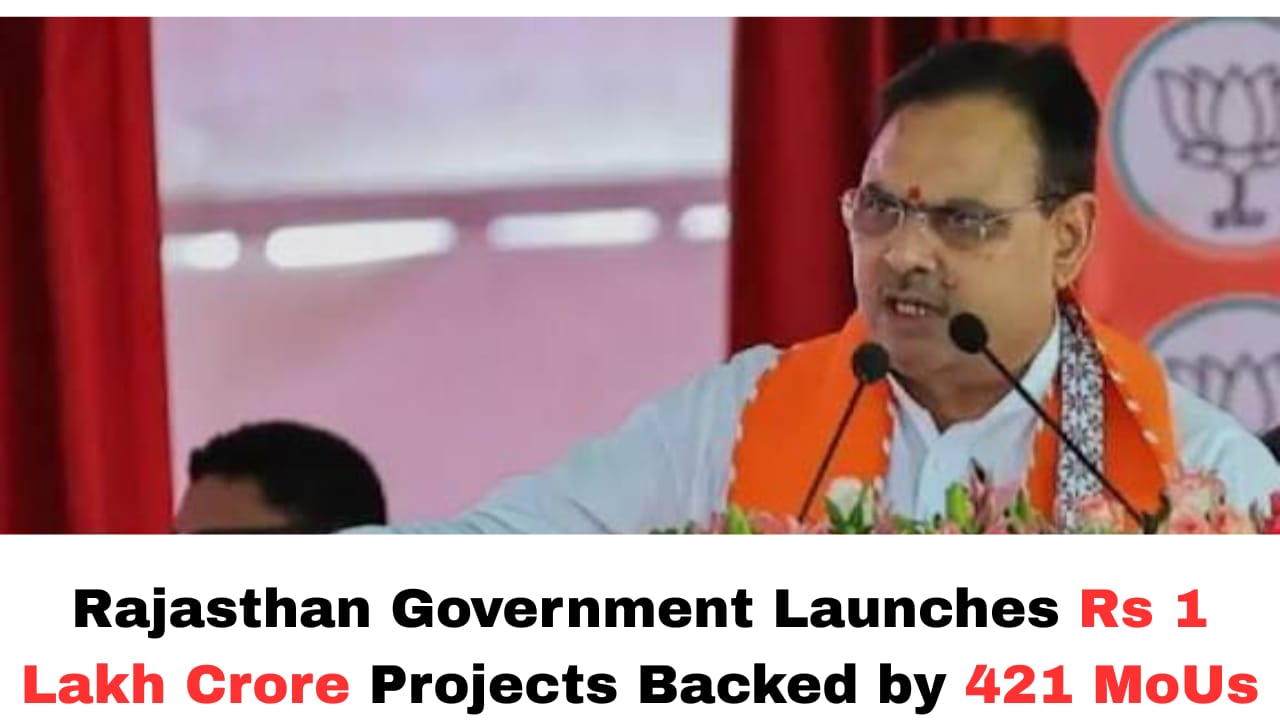
The Rajasthan government, under Bhajan Lal Sharma, is preparing to officially launch the grounding of projects totalling 1 lakh crore. These projects are based on 421 Memorandums of Understanding (MoUs) that cover a range of sectors including energy, agriculture, tourism, education & skilling, health, and mining.
The announcement is scheduled to be made during the upcoming Pravasi Rajasthani Divas 2025 — a diaspora-and-public outreach event in Rajasthan on December 10.
This is part of a broader push by the state to convert pledges from previous investment summits into live, ground-level activity.
Sectors Covered & Broader Vision
The 421 MoUs span multiple domains:
- Energy — building on prior energy-sector plans.
- Agriculture & Food Processing — aiming to bolster farming, allied services, and agro-industry.
- Tourism — leveraging Rajasthan’s heritage, culture, and tourist appeal.
- Education & Skilling — infrastructure for education, perhaps training centers, and upskilling programs.
- Health — investments targeting healthcare facilities or related industries.
- Mining — likely tapping into Rajasthan’s mineral resources and related industrial activity.
In addition to this immediate announcement, the government plans to unveil 13 new policies aimed at promoting industrial growth, technological innovation, and sustainable development. These policies cover areas like trade promotion, green growth, food processing, IT/services (GCC — Global Capability Centre), aerospace & defence, among others.
Together, these moves reflect a long-term vision of positioning Rajasthan not just as a heritage/tourism state — but as a hub for industry, green energy, services, and diversified economic growth.
Why This Matters — Signals and Implications
From MoU to Ground Reality
In the past, signing MoUs (i.e. agreements) was often criticized for remaining on paper — with little actual execution. With this 1 lakh crore push, Rajasthan seems serious about converting MoUs into real projects. Officials claim that with this launch, the state’s rate of “grounding” MoUs will rise, marking a shift from promise to implementation.
Economic Diversification & Job Creation
Because the investment spans so many sectors — from agriculture to high-end industry and services — this push could create a variety of employment opportunities. For youth, skilled workers, and even semi-skilled labourers across Rajasthan, this can mean jobs beyond traditional agriculture or tourism. The inclusion of sectors like education, health, mining, manufacturing, and energy suggests potential for long-term economic stability and growth.
Moreover, with policies like the new “Global Capability Centre (GCC) Policy” and support for industries, the state is signalling its intent to attract both domestic and foreign investment — potentially leading to higher-value jobs and greater industrial activity.
Infrastructure, Services & Long-term Growth
Projects in energy, health, education, skilling and agriculture can improve the quality of life, enhance human capital, and strengthen social infrastructure. Over time, such development can reduce migration pressures, improve rural prosperity, and make Rajasthan more competitive.
The policy push also includes sustainable development and green growth measures, indicating awareness that future industries must balance development objectives with environmental and social concerns.
Sending a Signal to Investors and Diaspora
Through the Pravasi Rajasthani Divas, the government appears to target not only local investors but also members of the Rajasthani diaspora globally — encouraging them to invest, engage, and contribute to their home state’s growth. According to state officials, this move is part of building “Brand Rajasthan” and showcasing the state as an attractive destination for investment, innovation, and global-scale projects.
What to Watch — Challenges & What Could Go Wrong
While the announcement is ambitious and promising, several caveats and challenges remain.
- Implementation risks: Groundbreaking investments is one thing — but timely execution, monitoring, regulation, and completion are far harder. Rajasthan will need robust governance to ensure that projects don’t stall or get stuck mid-way.
- Equity & inclusion: Ensuring that benefits — jobs, infrastructure, services — reach marginalized communities, rural populations, and not just urban or privileged groups, will be critical.
- Environmental / sustainability concerns: With sectors like mining and industrial energy, there is always risk to environment, local ecology, and displacement. The “green growth” rhetoric will need to match on-ground practices.
- Skill-job matching: Unless skilling and education programs are effective, there may be a mismatch between what industries need and what workers are trained for — leading to unfilled roles or underemployment.
- Investor confidence vs. ground reality: Investor sentiment can be high soon after such announcements, but actual follow-through — land allocation, clearances, regulatory approvals — often takes time.
What This Means for the People of Rajasthan — and India
For ordinary Rajasthan residents — farmers, youth, workers — this initiative could mark a turning point. New jobs in energy, industry, services, mining, agriculture value-chain, and allied sectors can offer alternative livelihoods beyond traditional agriculture or seasonal labour.
For aspirational youth, especially those from rural or semi-urban areas, the injection of large-scale investments means access to jobs that might offer stability, skill development, and upward mobility. With new policies promoting education, skilling, and global standards, there’s potential for a significant uplift in human capital.
On a broader scale, if executed well, Rajasthan’s plan can serve as a blueprint for other states — showing how investment-summits + MoUs + follow-through + policy support can drive structural change. It could help decentralize industrial growth away from a few metro areas and diversify India’s economic geography.
The Road Ahead — What to Expect
- On December 10, during Pravasi Rajasthani Divas 2025, expect formal inauguration and announcements along with detailed breakdowns of which projects will begin first, timelines, and sector-wise rollouts.
- In coming months, look out for implementation status — land allotments, foundation-stone ceremonies, project-wise approvals, investments being released, and first signs of on-ground construction.
- Watch how the 13 new policies unfold — especially those related to global-scale industries (GCCs, green energy, food processing, technology) — as these will determine long-term success beyond the initial splash.
- For citizens and communities: monitor whether development comes with inclusion, transparency, environmental safeguards, and skill-based employment rather than just corporatisation.
The 1 lakh crore push marks a bold move by the Rajasthan government to turn investment promises into tangible development. If the momentum is maintained — with strict oversight, inclusive policies, and transparent execution — Rajasthan could well redefine what large-scale state-level development looks like in India’s coming decade.
You May Also Read: Bigg Boss 19 Finale — Gaurav Khanna Wins