



Digital News Guru New Delhi Desk:
Naval Commanders’ Conference 2026
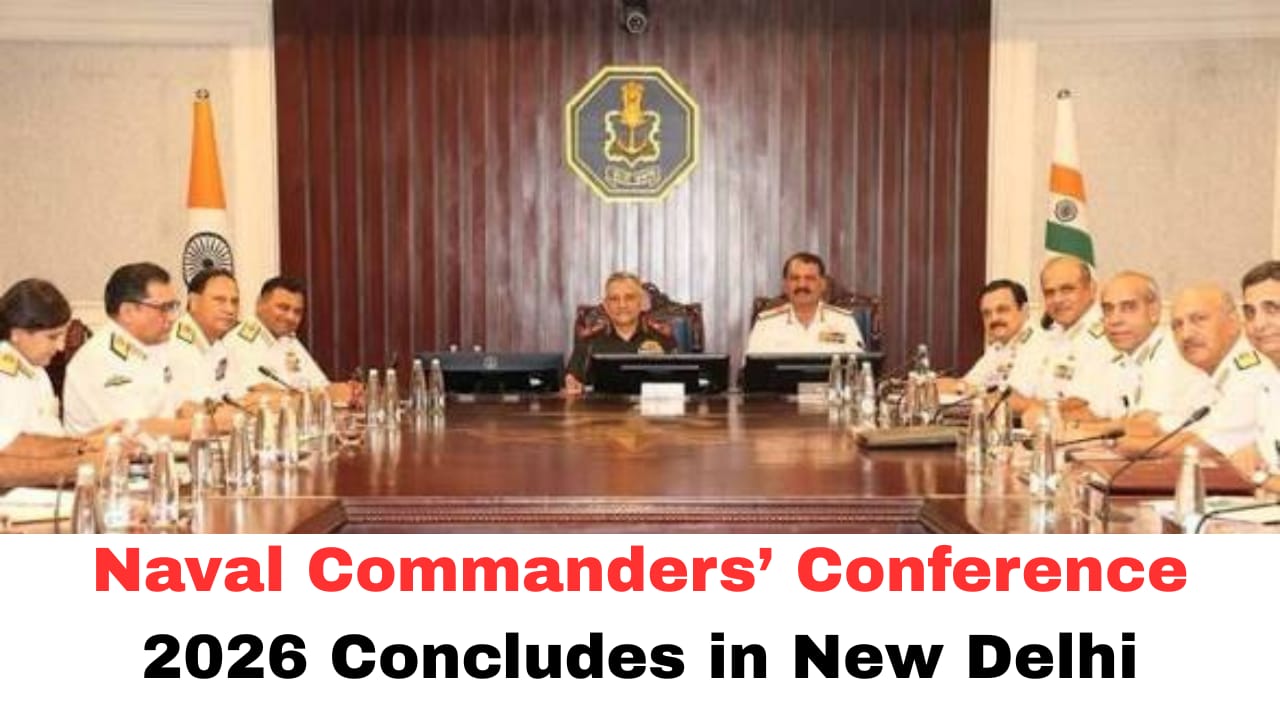
The successful conclusion of the Naval Commanders’ Conference 2026 in New Delhi marks a crucial step in strengthening India’s maritime security and naval preparedness. Held at Nausena Bhawan from April 14 to April 17, the conference brought together senior leadership of the Indian Navy to deliberate on key operational, strategic, and technological challenges.
This high-level meeting serves as an apex platform for reviewing the Navy’s current capabilities and aligning its future strategies with national security objectives.
Purpose and Significance of the Conference
The Naval Commanders’ Conference is one of the most important decision-making forums of the Indian Navy. It provides an opportunity for top commanders to assess operational readiness and evaluate ongoing and future strategies.
The 2026 edition gained particular significance due to the rapidly evolving global security environment and increasing geopolitical tensions, especially in the Indian Ocean Region. The conference aimed to ensure that India’s naval forces remain capable, responsive, and strategically aligned with national priorities.
Focus on Operational Readiness
A key highlight of the conference was the emphasis on operational preparedness. Senior naval leaders reviewed the Navy’s readiness to tackle both traditional and non-traditional threats, including piracy, regional conflicts, and disruptions to maritime trade routes.
Ensuring the safety of Sea Lines of Communication (SLOCs) was a major priority, given their importance for global trade and India’s economy. The discussions stressed the need for continuous vigilance and rapid response capabilities to address emerging challenges in maritime domains.
Addressing Energy Security Concerns
Another major theme of the conference was energy security, particularly in light of ongoing tensions in West Asia. India relies heavily on maritime routes for energy imports, making the role of the Navy crucial in safeguarding these supply chains.
The conference reviewed recent deployments and strategies aimed at protecting shipping lanes and ensuring uninterrupted energy flow. Naval leadership highlighted the importance of maintaining a strong presence in critical maritime zones to secure national interests.
Emphasis on Future Warfare and Technology
With the nature of warfare rapidly evolving, the conference placed strong emphasis on modernization and technological advancement. Discussions focused on integrating emerging technologies such as artificial intelligence, cyber warfare capabilities, and autonomous systems into naval operations.
The leadership stressed the need to build a future-ready naval force capable of operating across multiple domains. This includes adapting to hybrid warfare scenarios and leveraging advanced surveillance and defense systems.
Strengthening Jointness and Coordination
Modern warfare requires seamless coordination among different branches of the armed forces. The conference highlighted the importance of jointness and inter-service cooperation between the Army, Navy, and Air Force.
Deliberations focused on improving interoperability and developing unified strategies to address complex security challenges. This approach ensures a coordinated and effective national defense mechanism, especially during large-scale or multi-domain operations.
Strategic Alignment with National Security Goals
Another critical outcome of the conference was the alignment of naval strategies with India’s broader national security objectives. The discussions ensured that naval planning supports economic stability, regional influence, and international cooperation.
The Indian Navy reaffirmed its commitment to safeguarding maritime interests and maintaining a strong presence in the Indian Ocean Region. This includes proactive engagement with friendly nations through joint exercises and partnerships.
Role in Maritime Security and Diplomacy
The conference also highlighted the growing importance of maritime diplomacy. India aims to strengthen ties with partner nations through collaborative initiatives, joint naval exercises, and strategic engagements.
By positioning itself as a “net security provider” in the region, India seeks to promote stability, cooperation, and a rules-based maritime order. This approach is essential in addressing shared global challenges such as piracy, terrorism, and environmental threats.
Importance in the Current Global Context
The 2026 conference comes at a time when global maritime dynamics are undergoing significant changes. Increasing competition in the Indian Ocean Region, rising geopolitical tensions, and the growing importance of secure trade routes make such strategic discussions highly relevant.
The conference also reflects India’s commitment to self-reliance and indigenisation in defense, ensuring that the Navy is equipped with modern and domestically developed capabilities.
Conclusion
In conclusion, the Naval Commanders’ Conference 2026 has laid a strong foundation for enhancing India’s maritime security and naval strength. By focusing on operational readiness, technological advancement, jointness, and strategic alignment, the conference has reinforced the Indian Navy’s role as a key pillar of national security.
As global challenges continue to evolve, such high-level deliberations are essential for ensuring that India remains prepared to safeguard its interests and maintain stability in the maritime domain. The outcomes of this conference are expected to shape the future trajectory of India’s naval strategy and strengthen its position as a major maritime power.
You May Also Read: Women’s Reservation Bill 2026 Explained: 33% Quota, Delimitation & Key Debates