



Digital News Guru Madhya Pradesh Desk:
3% DA increase for government employees in Madhya Pradesh
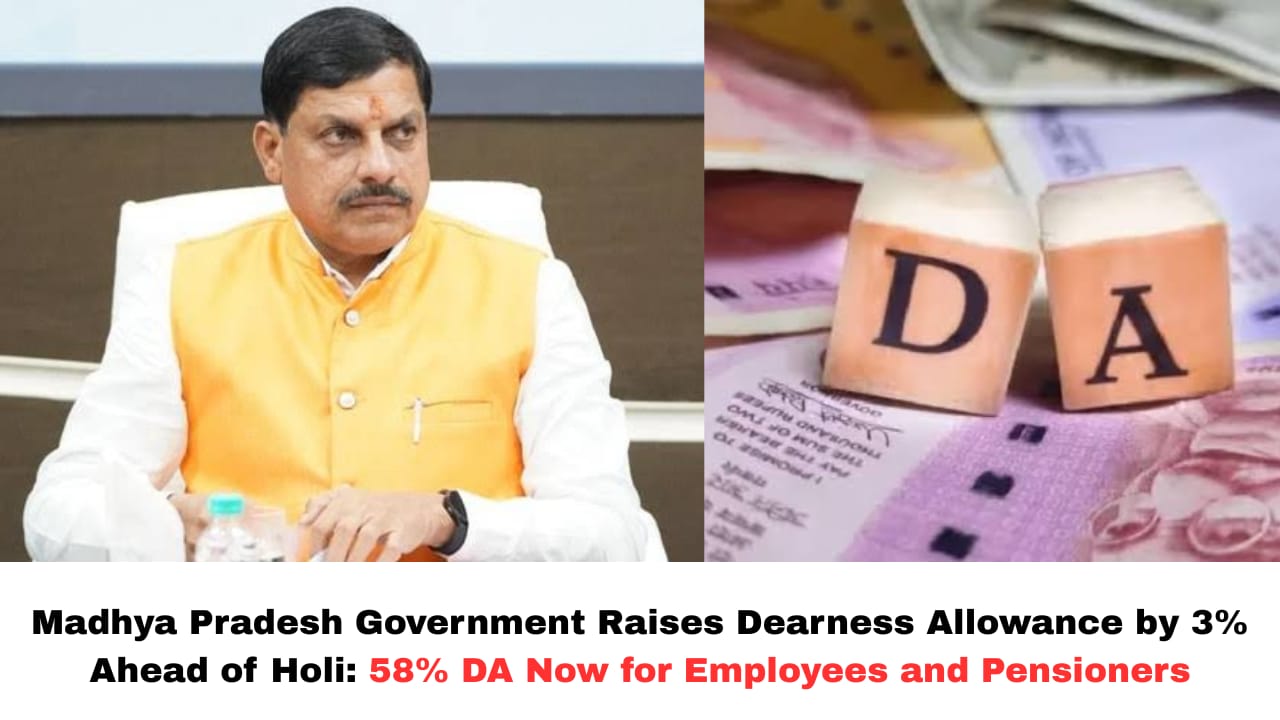
In a significant move timed with the festival of colours, the Madhya Pradesh government has announced a 3 % increase in Dearness Allowance (DA) for its state government employees and pensioners — raising the allowance from 55 % to 58 % of basic pay. The announcement was made by Chief Minister Dr. Mohan Yadav on March 2, 2026, and is expected to benefit around 7 lakh employees and pensioners across the state.
The decision has been widely welcomed as a “Holi gift” to government servants, offering financial relief amid rising prices and aligning the state’s DA with that of the Central Government.
What Is Dearness Allowance (DA)?
Dearness Allowance is a cost-of-living adjustment allowance paid to government employees and pensioners to help offset inflation. It is calculated as a percentage of the basic salary and is periodically revised based on the Consumer Price Index. States like Madhya Pradesh periodically adjust DA to reflect rising prices and offer better support to public servants.
Details of the DA Increase
- The 3 % hike means the DA for state government employees has risen to 58 % of basic pay.
- This increased DA will apply to the April 2026 salary, which employees will receive in May 2026.
- The change brings state government salaries into parity with Central Government employees’ DA, which has been at a similar level.
Chief Minister Dr. Mohan Yadav announced the decision during a cabinet meeting under the Kisan Kalyan Varsh (Farmer Welfare Year) initiative in Barwani, reinforcing the state government’s commitment to welfare measures for various sections of society.
Arrears and Payment Plan
An important feature of the announcement is the arrears payment plan. The government has decided that the arrears — covering July 2025 to March 2026 — will be disbursed in six equal instalments starting from May 2026.
This phased approach helps manage state finances while ensuring employees and pensioners receive compensation for the period when they were due higher DA. It prevents a sudden financial burden on the state treasury while providing consistent benefit over time.
Pensioners Also Benefit
The increase is not limited to serving employees. Pensioners will receive the 58 % DA for January–February 2026, further easing financial pressure on retirees.
This inclusion of pensioners demonstrates the government’s broader welfare agenda, recognising the rising cost of living for those dependent on fixed incomes.
How It Helps Employees
For state government employees, DA forms a significant part of the overall salary structure. A 3 % increase means a noticeable rise in monthly take-home pay — providing greater financial cushioning against inflation and everyday expenses.
For example, an employee with a basic pay of Rs 30,000 would see their DA component increase by about Rs 900 per month. While this is a simplified example, across tens of thousands of employees, the aggregate benefit translates into significant increased spending power.
Moreover, tying the state DA to levels similar to the central government helps reduce disparities between state and central employee pay scales, improving morale and potentially affecting retention and recruitment positively.
Why the Hike Matters Now
The announcement comes at a time when inflationary pressures — particularly for essential items like food, fuel, and housing — remain significant concerns for working families. By increasing DA just before Holi, the state government has not only given a festive boost to salaries but also responded to long-standing employee expectations for DA parity with central rates.
State employees and pensioners had earlier anticipated such revisions, especially as other states regularly adjust DA to reflect increased living costs. The timing ahead of a major festival like Holi also underscores the political and social significance of welfare decisions in state governance.
Reactions to the Announcement
The announcement has generated positive reactions from employee unions and public servants, who describe it as a timely and welcome financial boost. Many stress that the phased arrears payment plan is sensible, striking a balance between fiscal prudence and employee welfare.
Social media and local discussions reflect appreciation for the move, with many employees noting that the increased DA will help manage rising expenses on household needs and education.
However, commentators also highlight that continued monitoring of inflation and periodic revisions will be necessary to keep pace with economic realities — pointing to the need for sustained policy attention.
Broader Implications
This DA increase demonstrates the Madhya Pradesh government’s priority on employee welfare and mirrors a broader trend across Indian states to adjust allowances in response to inflation. Aligning state DA with the central figure can also simplify administrative and comparative salary frameworks, potentially setting a benchmark for future revisions.
For pensioners — who often rely on fixed incomes — the move to give them the same DA level from January onwards is particularly significant, providing a larger pension when many are grappling with higher medical and living costs.
Overall, the 3 % DA hike in Madhya Pradesh ahead of Holi represents both an immediate financial enhancement for government employees and pensioners and a broader welfare measure reflecting ongoing governance priorities. It showcases how state policies can respond to economic pressures while aligning with central norms, offering a model that workers and policymakers alike are watching closely.
You May Also Read: Holi 2026 Security in Uttar Pradesh: Police Tighten Measures for Peaceful Celebrations