



Digital News Guru National Desk:
India Takes Diplomatic Step
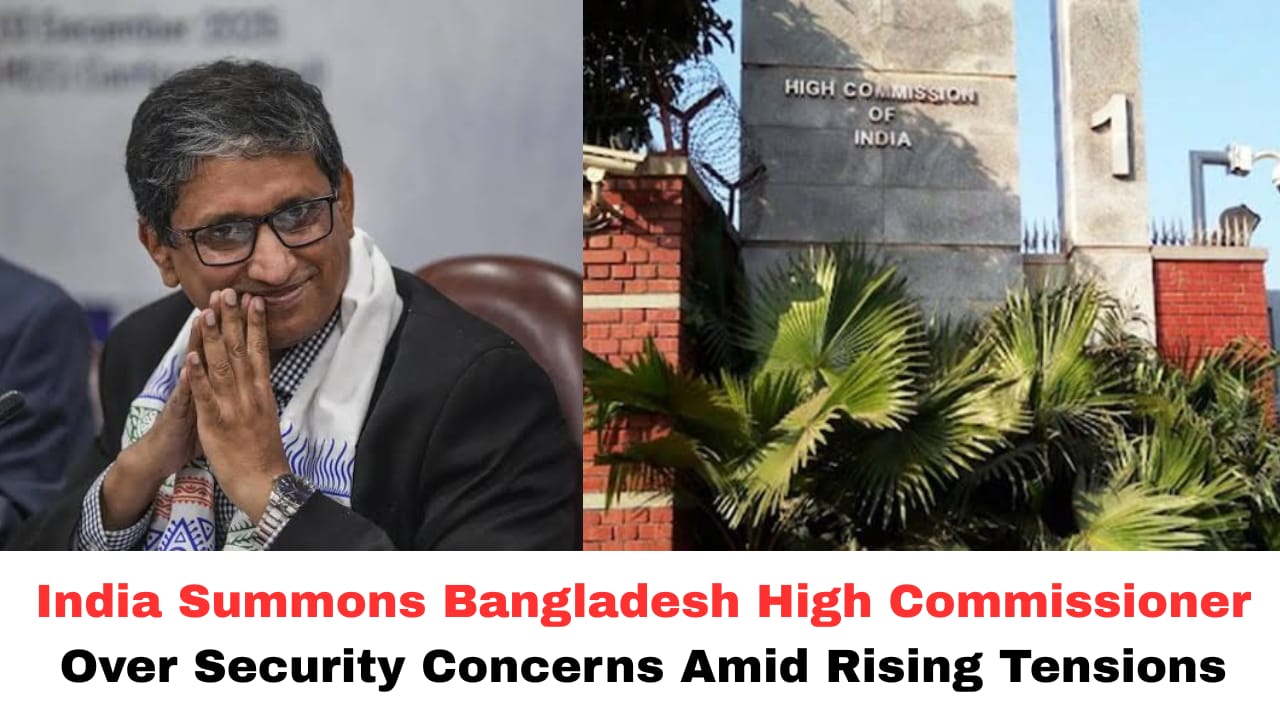
In a significant diplomatic move on 17 December 2025, India’s Ministry of External Affairs (MEA) summoned Bangladesh’s High Commissioner to India, M. Riaz Hamidullah, to convey strong concerns over the deteriorating security environment in Bangladesh — particularly threats and extremist rhetoric targeting the Indian High Commission in Dhaka. The development underscores growing bilateral tensions between the two neighbouring countries against a backdrop of domestic political upheaval in Dhaka and fiery public discourse that has spilled into the diplomatic arena.
What Prompted the Diplomatic Summons
India’s decision to summon the Bangladeshi envoy came after what New Delhi described as a worsening security situation around its diplomatic mission in Dhaka. The MEA statement highlighted concerns about the activities of some extremist elements in Bangladesh who have allegedly announced plans to create a security situation around the Indian High Commission — a step New Delhi views as a direct threat to the safety of its diplomatic staff and mission premises.

The move was triggered in part by inflammatory remarks made by Hasnat Abdullah, a leader of Bangladesh’s National Citizen Party (NCP), whose speech included sharp anti-India rhetoric. Abdullah warned that if Bangladesh were to face political destabilisation, it could potentially isolate India’s northeastern “Seven Sisters” — the cluster of seven states bordering Bangladesh — and even offer refuge to separatist or anti-India forces. Such statements were seen in India as crossing a red line given their implication for territorial integrity and security perceptions, especially at a time when the region is politically sensitive.
Official Indian Statement and Position
In its formal statement, the MEA underscored that the High Commissioner was called to New Delhi to be apprised of India’s strong concerns at the deteriorating security environment in Bangladesh, with particular emphasis on the reported extremist activities targeting the Indian mission. The Indian government stressed that it “completely rejects the false narrative sought to be created by extremist elements regarding certain recent events in Bangladesh”.
New Delhi also expressed disappointment that the Bangladesh interim government had not conducted a thorough investigation nor shared credible evidence with India regarding the incidents that prompted the diplomatic protest. The MEA reiterated that ensuring the safety of all diplomatic missions and personnel in Bangladesh is a key expectation as part of Dhaka’s obligations under international diplomatic conventions.
The MEA further noted that India has close and friendly relations with the people of Bangladesh, rooted in shared historical experience — particularly the liberation struggle of 1971 — and bolstered by long-standing developmental and people-to-people ties. India reaffirmed its support for peace, stability, and credible elections in Bangladesh, conducted in a peaceful atmosphere.
Dhaka’s Domestic Context and Political Unrest
The diplomatic spat comes amid ongoing political turbulence within Bangladesh, where students, political parties, and civil society groups have been vocally active, particularly as the South Asian nation prepares for parliamentary elections in February 2026. The interim government is led by Nobel laureate Muhammad Yunus, who has faced both internal opposition and international scrutiny.
The protests and heightened rhetoric in Dhaka have included calls for the return of ousted leaders such as Sheikh Hasina, Bangladesh’s former prime minister, who fled to India in 2024 amid mass protests against her government and has since been sentenced to death in absentia. These developments have been pivotal in shaping public sentiment and political narratives ahead of the elections.
Against this backdrop, groups such as July Oikya reportedly announced marches toward the Indian High Commission in Dhaka’s Gulshan diplomatic area, prompting heightened law enforcement presence and controversy around security arrangements. Dhaka police have in some instances intervened to prevent marches from reaching the mission’s vicinity, illustrating the fragile law-and-order situation in key parts of the capital.
Bilateral Strain: Reciprocal Diplomatic Summons
Relations between India and Bangladesh have seen diplomatic exchanges in recent days, including Bangladesh summoning India’s High Commissioner over what Dhaka considered provocative remarks from Indian political figures, adding to the strain and reciprocal nature of the diplomatic engagements. This series of exchanges has underscored a departure from the traditionally friendlier tenor of bilateral interactions and highlighted the sensitivity of political rhetoric in shaping national reactions.
Security and Visa Operations Impact
In light of the security concerns, India took the additional step of suspending operations at its Visa Application Centre in Dhaka, affecting visa services and schedules originally planned for December 17. This suspension reflects the seriousness with which New Delhi is treating the situation on the ground and represents a tangible impact of diplomatic tensions on ordinary processes.
Regional Implications and Diplomatic Expectations
The incident illustrates the complex and often delicate balance between diplomatic relations and domestic political developments in neighbouring countries. India and Bangladesh share a long border, deep cultural links, economic cooperation, and security interests. However, the recent exchanges signify how quickly public rhetoric and political manoeuvring can escalate into bilateral tensions with wider implications.
As India expects Bangladesh to uphold the safety of diplomatic missions — a core tenet of international diplomatic norms — the world watches how Dhaka responds to New Delhi’s concerns. Ensuring a secure environment for foreign missions is not only a legal obligation under the Vienna Convention on Diplomatic Relations but also essential for maintaining trust and cooperation between nations.
India’s formal summons of the Bangladesh High Commissioner thus marks a critical moment in the two countries’ contemporary diplomacy — one that could influence the tone of future engagements, electoral politics in Bangladesh, and regional cooperation frameworks, even as both capitals affirm the importance of peace, stability, and mutual respect in their shared neighbourhood.
You May Also Read: Varanasi’s Sant Ravidas Museum to Open by 2027 with Interactive Exhibits