



Digital News Guru National Desk:
Chinese national was arrested for trying to enter India from Nepal without valid travel documents
On Friday, January 9, 2026, a Chinese national was detained and subsequently arrested by Indian security forces after she allegedly attempted to enter India without valid travel documentation through the Indo-Nepal border in Maharajganj district, in the state of Uttar Pradesh. The incident has drawn attention to border security challenges and the unique legal status of the India-Nepal border.
The Incident: How She Was Apprehended
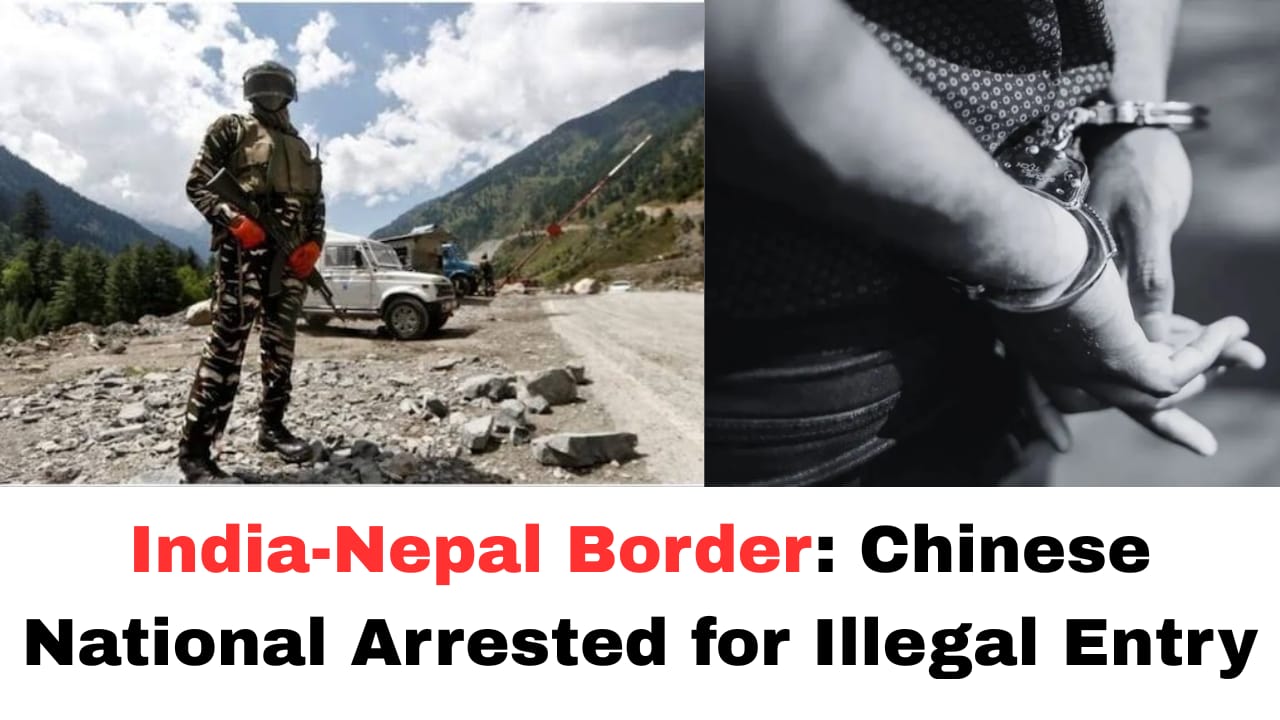
Security officials from the Sashastra Seema Bal (SSB) intercepted the woman in the Bairia Bazaar area of Nautanwa, which lies adjacent to the open Indo-Nepal boundary. She was reportedly seen entering Indian territory on foot along an informal track—a route often used by local traders and residents crossing between the two countries.

During a routine patrol and document check, the SSB personnel realized the woman was carrying no valid visa, passport, or other identification documents required for foreign nationals to enter India. After detaining her, the SSB handed her over to the local police, who then formally arrested her under relevant provisions of India’s immigration laws.
Who Is the Suspect?
Officials identified the detained woman as Huajia Jie, based on a piece of paper found on her at the time of arrest. However, details about her city of origin in China, her background, or her intentions in attempting to enter India remain unclear. Law enforcement officials have indicated that language barriers have complicated preliminary questioning, making it difficult to establish why she was trying to cross the border without proper authorization.
At present, investigators are attempting to piece together her travel history and determine whether she traveled into Nepal first and then crossed over intentionally into India, or whether her entry was accidental. These details are crucial for building the legal case and understanding the broader context of the incident.
The Unique Legal Context of the India-Nepal Border
The India-Nepal border is characterized by its open and friendly nature. Indian and Nepali citizens can cross this border freely with basic identification documents due to historical treaties and agreements between the two nations. However, this relaxed cross-border movement does not apply to third-country nationals such as citizens of China, who must have valid Indian visas and passports to enter Indian territory.
This legal distinction is essential: while Nepalese and Indian nationals can move back and forth across this 1,750-kilometre boundary with relative ease, all other foreign nationals are subject to stringent immigration checks. Security forces are trained to spot irregular entries and intercept individuals lacking proper documentation, as in this case.

Security Implications and Border Enforcement
The arrest highlights ongoing challenges faced by Indian border security agencies in monitoring a long and often porous frontier. The SSB and local police regularly conduct patrols and checks, particularly after previous instances where foreign nationals were detained for illegal entry attempts. In recent years, there have been other similar cases involving foreign citizens—including Chinese and other nationalities—trying to cross at unmonitored points along the Indo-Nepal border without authorization.
These incidents can pose both immigration concerns and national security risks, especially when the motives of such crossings are not immediately clear. While not every illegal entry suggests malicious intent, authorities treat all unauthorized crossings seriously to prevent potential threats ranging from undocumented travel to espionage or other unlawful activities.
Broader History of Illegal Border Crossings
This is not an isolated event. Over the past months and years, there have been multiple reports of foreign nationals being detained while attempting to enter India through the Nepalese border without the required permits. In some cases, these have involved individuals from various countries, including China, the United Kingdom, Pakistan, and Uzbekistan. Language barriers and unclear motives have often made it difficult for law enforcement to fully understand whether these crossings were deliberate or inadvertent.
In one notable instance from November 2025, a Chinese woman posing as a Buddhist monk was apprehended at the Rupaidiha border and later sentenced to eight years in prison for illegal entry into India after a court found her guilty under immigration laws.
Similarly, there have been arrests involving British and Pakistani nationals on the Indo-Nepal frontier, underscoring the multifaceted nature of border management challenges facing Indian security agencies.
What Happens Next in This Case
Currently, the subject of the January 2026 arrest remains in police custody while investigations continue. Authorities are working to gather more information about her movements, intentions, and any documents that may clarify her travel history. The police will likely file charges under the Foreigners Act and applicable immigration statutes, which could lead to judicial proceedings once the investigation concludes.
The case will also undergo scrutiny to determine whether it was a simple violation of immigration law or if there are other factors at play—such as human smuggling, trafficking, or other security considerations. As authorities pursue answers, this arrest continues to remind policymakers and security agencies about the complexities of enforcing laws along India’s open borders while balancing diplomatic and humanitarian concerns.
Conclusion
The arrest of a Chinese national attempting to enter India without valid documentation through the Indo-Nepal border brings into focus the delicate balance between open, friendly borders and strict immigration enforcement. As the investigation unfolds, authorities aim to understand the motives and implications of this incident fully, ensuring border integrity while respecting international norms. For now, it stands as a reminder of the challenges facing India’s frontier security in a complex, interconnected world.
You May Also Read: Delhi Government Boosts Capital Outlay by Rs 2,132 Crore in Revised Budget Estimates for 2025-26