



Digital News Guru Gujarat Desk:
Birth of a Great Indian Bustard Chick in India
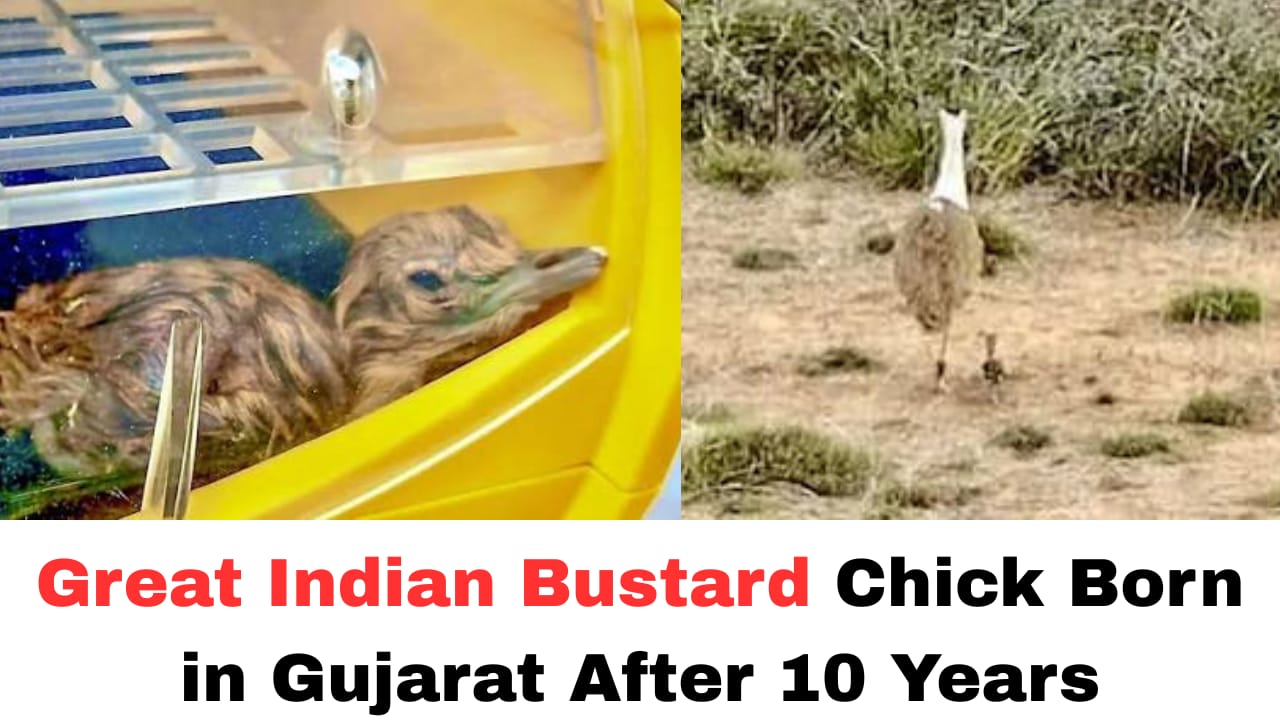
In a remarkable breakthrough for wildlife conservation in India, the birth of a Great Indian Bustard (GIB) chick in Gujarat’s Kutch region has brought renewed hope for saving one of the world’s most endangered bird species. This rare event, which occurred on March 26, 2026, marks the first successful hatching in the wild in nearly a decade, making it a historic moment for conservationists and environmentalists across the country.
The Great Indian Bustard, scientifically known as Ardeotis nigriceps, is a large ground-dwelling bird once widely found across India’s grasslands. Today, however, it is classified as critically endangered, with its population declining drastically due to habitat loss, hunting, and infrastructure-related threats such as power lines. The recent birth of a chick in the wild is therefore not just a biological event—it is a symbol of survival against the odds.
The Event and Its Significance
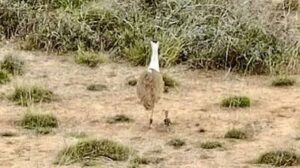
The chick was born in the Abdasa region of Kutch, Gujarat, an area that had not witnessed a successful GIB birth in the wild for almost ten years. Officials and scientists have described this as a major milestone, reflecting years of planning, coordination, and scientific innovation.
What makes this achievement even more extraordinary is the context: the local GIB population in Kutch had dwindled to just a few female birds, with no males present, making natural reproduction virtually impossible. This imbalance had led to repeated instances of infertile eggs, pushing the species closer to local extinction.
The “Jumpstart Approach”
The success of this conservation effort lies in an innovative method known as the “jumpstart approach.” Under this technique, scientists transported a fertile egg from a breeding centre in Rajasthan to Gujarat.
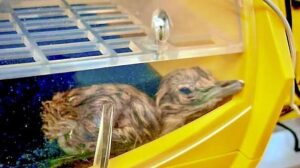
The operation itself was a logistical challenge. The egg was carried over a 770-kilometre journey in a portable incubator, ensuring constant temperature and safety during transit. Once it reached Kutch, the fertile egg replaced an infertile one in a wild female’s nest.
Remarkably, the female bird accepted the egg and incubated it naturally, leading to the successful hatching of a healthy chick. This blend of scientific intervention and natural processes highlights the evolving strategies in wildlife conservation.
Collaborative Effort
The achievement was not the result of a single organization but a joint effort involving multiple agencies. The Forest Departments of Gujarat and Rajasthan, the Union Ministry of Environment, Forest and Climate Change, and the Wildlife Institute of India (WII) all played crucial roles.
Such collaboration demonstrates how coordinated action across states and institutions can address complex environmental challenges. It also reflects the growing importance of scientific research and policy support in conservation initiatives.
Why This Matters
The birth of the GIB chick is significant for several reasons. First, it proves that innovative techniques can revive breeding in critically endangered species, even in regions where natural reproduction has ceased. Second, it provides a model that can be replicated in other areas facing similar challenges.
Perhaps most importantly, it offers hope. Conservation efforts often face setbacks, and success stories like this can inspire renewed commitment among policymakers, scientists, and the public.
A Symbol of India’s Conservation Efforts
The successful hatching of the GIB chick is more than just a scientific achievement—it is a symbol of India’s commitment to preserving its natural heritage. It highlights how modern conservation blends technology, fieldwork, and community involvement to tackle ecological crises.
As the chick grows under the watchful care of its foster mother in the wild, it represents a fragile but powerful promise: that with determination and innovation, even species on the brink of extinction can be given a second chance.
Conclusion
The birth of a Great Indian Bustard chick in Gujarat after a decade is a landmark event in India’s conservation journey. It underscores the importance of collaboration, innovation, and persistence in protecting endangered species. While challenges remain, this achievement serves as a beacon of hope, reminding us that nature can recover—if given the right support at the right time.
You May Also Read: Nayara Energy has increased petrol by Rs 5.30/litre and diesel by Rs 3/litre.