



Digital News Guru Entertainment Desk:
Dharma Responds
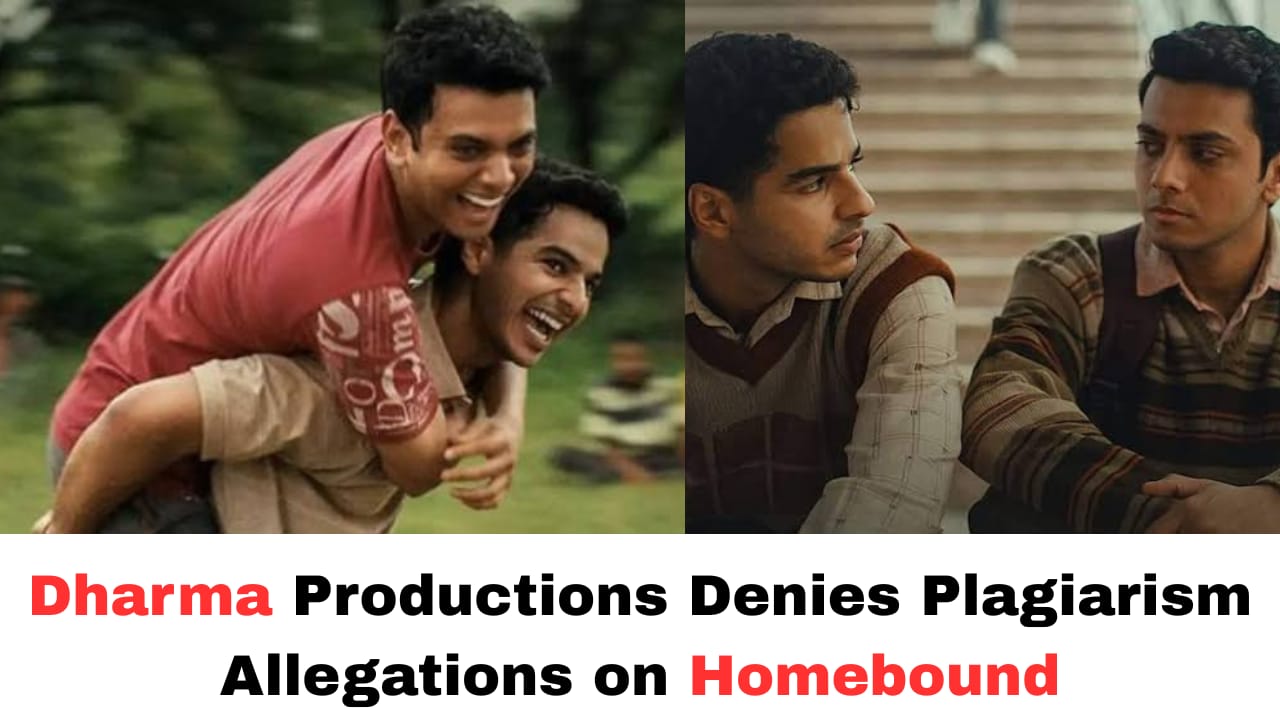
Dharma Productions has categorically rejected plagiarism claims made against its film Homebound, calling the accusations “baseless and unfounded.” The production house issued a formal statement in response to allegations from author-journalist Puja Changoiwala, who claimed that the movie copied material from her 2021 novel of the same name.
- Dharma stated that Homebound is a licensed adaptation and not derived from Changoiwala’s book. It emphasised that the film is instead officially adapted from a New York Times article by Basharat Peer, for which all rights were lawfully acquired and appropriate credit given.
- The production house acknowledged receiving a legal notice from the author in October, and said its legal team has responded to that notice. However, it maintained that it has not yet received any formal court communication regarding a legal suit.
- In its statement, Dharma said that while it’s aware of reports of pre-suit mediation in the Bombay High Court, it has not been officially informed of any such proceedings. The company added it is considering legal action to protect the film’s integrity.

Background to the Controversy
The plagiarism allegation surfaced shortly after Homebound — directed by Neeraj Ghaywan and starring Ishaan Khatter, Janhvi Kapoor, and Vishal Jethwa — was shortlisted for the Best International Feature Film category at the 98th Academy Awards.
Author Puja Changoiwala filed a detailed legal notice claiming that the film uses not just the title of her 2021 novel but also significant narrative elements, scenes, dialogue and structure from it. She argues that these similarities go beyond the common setting of the COVID-19 pandemic migrant crisis and constitute copyright infringement.
Changoiwala’s legal push aims to seek remedies including a permanent injunction on distribution, removal of allegedly infringing parts, a title change, and monetary compensation — as part of proceedings expected before the Bombay High Court.
What Homebound Is About
Homebound has attracted wide attention both in India and abroad. It premiered at the Cannes Film Festival 2025 under the Un Certain Regard section and was released theatrically on September 26, 2025, before streaming on Netflix. The film portrays the struggles of migrant workers and the emotional landscape of ordinary lives amid the 2020 COVID-19 lockdowns.
Its critical acclaim and Oscar shortlist status have added to the spotlight on the plagiarism dispute, bringing legal and creative questions into the public and industry spotlight.

Industry and Legal Perspectives
Plagiarism and adaptation disputes in cinema often involve complex legal and artistic assessments. Courts typically examine:
- Whether there’s substantial similarity in expression (not just themes or topics)
- The source materials used
- Whether proper rights and licenses were acquired
In this case, Dharma insists all needed rights for the film’s inspiration from the New York Times article were obtained and documented.
Changoiwala’s side focuses on asserting ownership of creative elements she claims were directly mirrored in the film — including specific scenes, character arcs and sequences.
What Happens Next?
- A formal suit is anticipated in the Bombay High Court, with mediation or pre-suit discussions possibly underway.
- Homebound continues to be celebrated in awards circuits, with its Oscar campaign still active.
- Dharma’s stance is firm: the production house will protect its creative rights legally and will not publicly debate specifics while the issue is sub judice.

Why It Matters
The controversy highlights growing tensions in entertainment between literary works and their cinematic portrayals, especially when films are inspired by real events or multiple source materials. As Indian cinema gains global recognition, particularly through Oscar entries, copyright and creative ownership debates are likely to become more prominent.
Summary: Dharma Productions has denied plagiarism claims over its Oscar-shortlisted film Homebound, calling the allegations baseless and unfounded, and stated the film is a licensed adaptation based on an article, not the author’s novel. A legal dispute is underway, with further proceedings expected in the Bombay High Court.
You May Also Read: Odisha Anti-Naxal Operation: Rs 1.1 Cr Bounty Maoist Ganesh Uike Dead