



Digital News Guru New Delhi Desk:
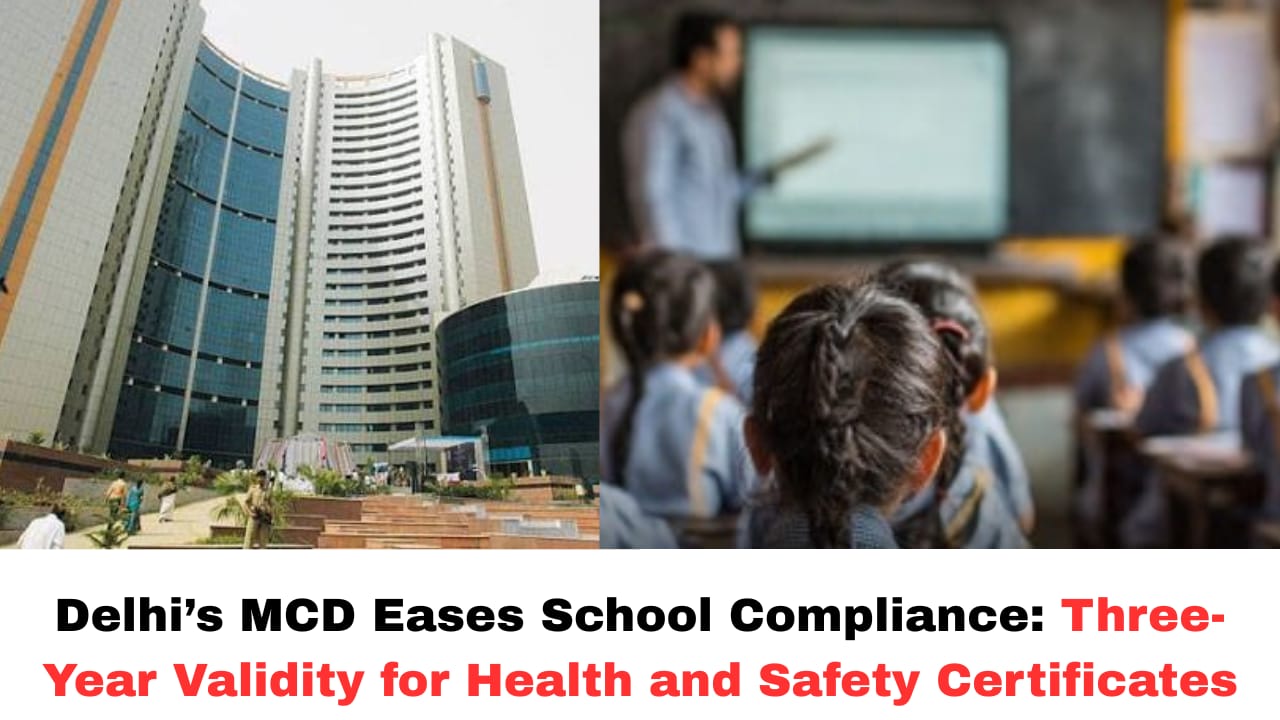
In a significant reform aimed at reducing bureaucratic hurdles for schools across the national capital, the Municipal Corporation of Delhi (MCD) has approved a proposal to extend the validity of school health and building safety certificates from one year to three years. This move, passed in an MCD council session on January 10, 2026, is expected to streamline regulatory processes and lessen the compliance burden on schools in Delhi.
Background: A Burdensome Annual Renewal System
For years, schools in Delhi — particularly private and unaided institutions — have been required to obtain health certificates and building safety certificates from the MCD on an annual basis. These certifications are mandatory prerequisites for schools to ensure basic health, sanitation, and structural safety before they can operate, renovate, or expand their facilities.
While the fire safety certificates issued by the Delhi Fire Services already enjoy three-year validity, the MCD’s health and building safety clearances did not align with this timeframe. This mismatch meant that school authorities had to visit MCD offices year after year, submit documentation, and undergo inspections — a process that administrators often described as time-consuming and repetitive.

What Exactly Changed?
The newly approved proposal, moved by MCD councillors Satyapal Singh and Pankaj Luthra, calls for:
- Health certificates for schools issued by the MCD to be valid for three years instead of one.
- Building safety certificates to follow the same three-year validity cycle, aligning with fire safety norms already in place.
- Uniform compliance timelines across all major safety certificates required for schools.
This alignment means that schools will no longer need to renew multiple certifications annually, significantly reducing administrative workload and scope for unnecessary procedural delays.
Why the Change Was Needed
The primary reason for this reform was to address the inconvenience and administrative burden faced by schools. Under the old system, principals and administrators frequently had to allocate time and resources to ensure certificates were reviewed and renewed every year — often resulting in repeated visits to MCD offices.
Officials and school representatives had raised concerns that such frequent renewals were not only logistically inefficient but also provided opportunities for harassment or procedural delays, especially in cases where minor documentation discrepancies might stall the process.
With the extension to three years, the MCD aims to:
- Reduce the compliance burden on educational institutions.
- Provide uniformity between different types of safety clearances.
- Minimize repeated interactions between school administrators and civic officials.
- Create a more predictable compliance framework that helps schools focus on education rather than paperwork.
Reactions From Schools and Stakeholders
Although official statements from school management associations are still being consolidated, early responses from educational institutions suggest that the change is widely welcomed.
School administrators have indicated that extending the validity period will save time and resources previously spent on annual inspection preparations and administrative procedures. Many principals have expressed optimism that this change will allow them to allocate more energy to core academic activities rather than routine compliance tasks, which they often viewed as repetitive.

In addition, educators say that less frequent interactions with MCD offices will reduce the opportunity for administrative backlogs or deferred inspections to disrupt school functioning, especially during admission seasons or exam periods.
What It Means in Practice
Under the new system:
- A school that receives a health certificate and building safety certificate today will not need to renew these specific clearances until 2029 — three years hence.
- During this period, routine checks and monitoring may still occur, but formal certificate renewal will not be mandatory.
- Schools will still require other clearances, such as fire safety certificates, which already follow the three-year validity rule issued by the Fire Services department.
This means that the cycle of regulatory compliance for educational institutions in Delhi is now more predictable and streamlined, reducing uncertainty, confusion, and duplicative paperwork.
Alignment With Broader Reforms
The change reflects broader attempts by civic authorities to simplify regulatory requirements, particularly in areas that directly affect public services and institutions. For instance, previous civic efforts have included modernizing school administrative processes such as:
- The digital rollout of school websites to enhance communication with parents and transparency of operations.
In addition, city courts and civic bodies have been engaged in improving school safety oversight, including time-bound inspections of infrastructure and compliance with national education standards. Recent developments point toward a more holistic approach to safety and compliance in Delhi’s schools, where regulatory efficiency is a priority.
Additional Civic Measures Passed by MCD
Alongside the school safety certificate reform, the MCD also passed another proposal related to outsourcing horticulture department manpower through the Government e-Marketplace (GeM) portal for two years. This move aims to bridge a significant staffing shortfall in maintaining the city’s parks and green spaces.
The MCD’s dual focus on education and civic infrastructure highlights the corporation’s efforts to address operational challenges across different municipal services.

Looking Ahead: Implementation and Expectations
With the resolution approved, MCD officials are expected to update administrative guidelines, informing all relevant departments and educational institutions about the revised timelines. Schools will then begin receiving three-year certificates for health and building safety, replacing the old yearly model.
The extended validity is likely to be implemented in phases, with notifications issued to principals and educational authorities in Delhi. In the coming weeks, the MCD will also likely provide clarifications on inspection schedules and compliance protocols during the new three-year period.
Conclusion
The Municipal Corporation of Delhi’s decision to extend the validity of school health and building safety certificates from one to three years marks a significant step toward regulatory reform in the education sector. By aligning these certifications with existing fire safety validity norms, the civic body has provided much-needed relief to school administrators, reducing compliance burdens and enabling institutions to focus more on delivering quality education.
This reform reflects a growing trend among civic authorities in India’s capital to simplify administrative processes, improve institutional efficiency, and foster an environment where educational and public services can flourish with minimal bureaucratic hurdles.
You May Also Read: India-Nepal Border: Chinese National Arrested for Illegal Entry