



Digital News Guru New Delhi Desk:
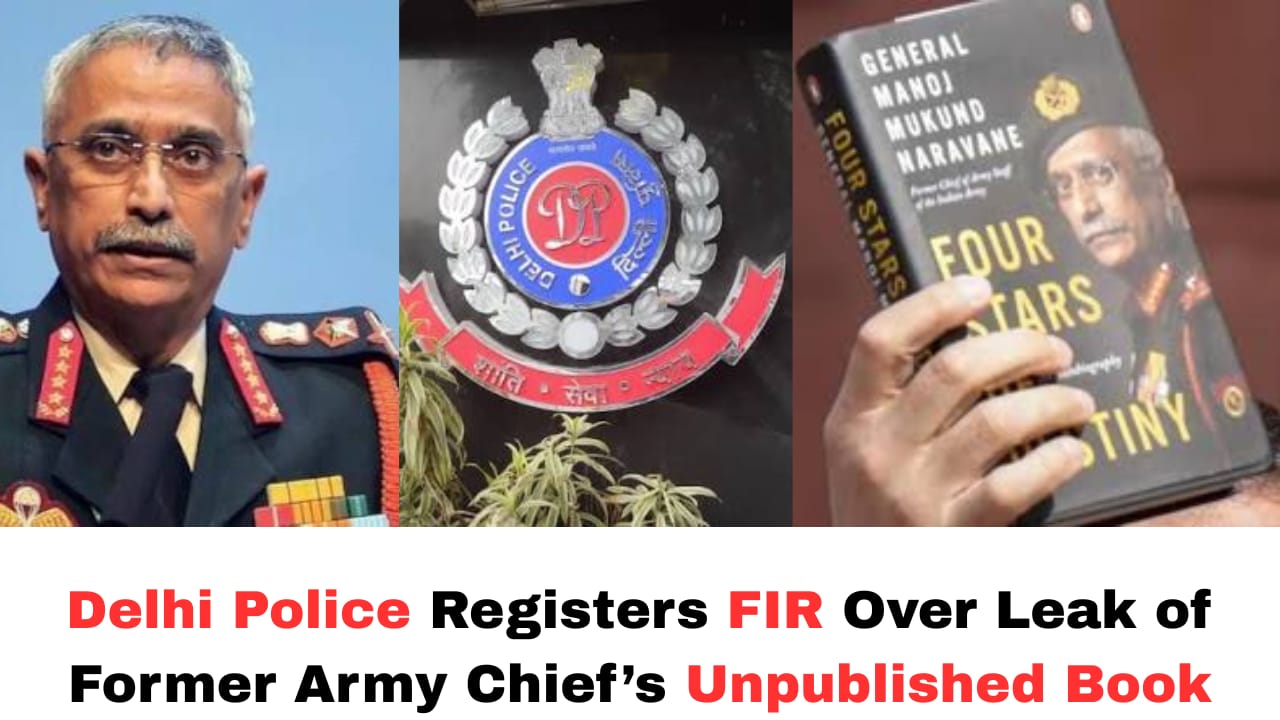
The Delhi Police took cognisance of a rapidly unfolding controversy involving the alleged leak and unauthorized circulation of an unpublished book written by former Chief of Army Staff General M. M. Naravane. Acting on multiple reports that draft copies of the yet-to-be published memoir titled Four Stars of Destiny were circulating on social media and other online platforms without required approvals from competent authorities, the police registered a First Information Report (FIR) and initiated a detailed investigation.
The case — which is unfolding at the intersection of national security, intellectual property, defence protocol and parliamentary politics — has quickly captured the attention of media, political leaders, policymakers and the public alike.
Background: What Happened and Why It Matters
The controversy began when reports surfaced that a pre-print copy of the memoir Four Stars of Destiny — penned by retired General Naravane — was being shared widely online despite the fact that the book had not received mandatory clearance from the Ministry of Defence (MoD) or other relevant review bodies responsible for vetting publications by senior military officials.

According to the Delhi Police statement, screenshots and PDF files resembling the book were available on certain websites, and some online marketplaces were erroneously displaying what seemed to be a finished book cover for sale, further complicating the authenticity issue.
Under Indian law, retired military officers — especially those writing about operational matters, internal decision-making processes or experiences involving national security — are required to submit manuscripts for clearance before they can be published or distributed. This process typically involves review by Army Headquarters, the Ministry of Defence, and sometimes the Cabinet Secretariat, to ensure no sensitive information that could compromise national security is disclosed.
Since Four Stars of Destiny was reported to still be under this vetting process and had not been officially approved, the unauthorized dissemination raised red flags among authorities.
The Delhi Police FIR and Investigation
In response to these developments, the Delhi Police filed an FIR with the Special Cell, which is tasked with probing cyber and national security related cases.
The FIR states that the police acted after receiving credible information that an unpublished manuscript was being circulated online in the absence of necessary clearance from competent authorities. The case encompasses potential violations under cyber law and confidentiality protocols, and investigators are looking into whether the leak is a criminal offense under the Information Technology Act, as well as possible breaches of other statutes related to intellectual property.
Forensic experts and technical teams are reportedly assisting the police to trace how, when and through which channels the manuscript became publicly available. The probe will likely involve digital tracebacks, examination of server logs, social media sharing patterns, and possibly cooperation with tech platforms involved in disseminating the content.
Officials have so far not publicly named any suspects, and the investigation is ongoing with confidentiality, given the sensitive nature of the issue.
Political Fallout and Parliamentary Uproar
The fallout from the book has not been limited to law enforcement. In early February 2026, Leader of Opposition Rahul Gandhi triggered a major parliamentary uproar when he attempted to quote from Four Stars of Destiny during the Lok Sabha’s Budget Session, arguing that the memoir contained important insights into India’s strategic and defence decisions. Government leaders, however, objected, citing that the book had not been published and thus could not be legitimately quoted in the House.
This clash escalated into heated debates, with senior ministers insisting that rules regarding unpublished materials must be respected — especially when they involve defence matters — and that quoting them without proper verification could be inappropriate in a parliamentary setting.
At one point, the friction between opposition members and the government over this issue contributed to suspensions of several MPs, underscoring how the debate over a manuscript could spiral into a significant political confrontation.
Core Debate: Transparency vs Security
The Naravane book row touches upon deeper questions about transparency, military accountability, civilian oversight, and national security protocols. On one hand, critics argue that senior military leaders’ insights into strategic challenges — such as the India-China border standoffs — could provide valuable input for public understanding and policy debates. Supporters of greater openness suggest that parliamentary debates should be informed by firsthand accounts from respected figures like General Naravane.
On the other hand, defence analysts and government officials caution that operational details, internal decision-making processes, and descriptions of high-stakes military engagements are traditionally subject to strict review to avoid disclosing sensitive information that could be exploited by adversaries or compromise future security decisions.
Books dealing with such matters routinely undergo a careful vetting process, and if clearance is denied or pending, publishing or quoting them prematurely may not only violate internal protocols but could also pose real threats to national security interests.

Public Reaction and What Comes Next
The public response has been mixed. Some commentators view the police action as a necessary step to uphold the rule of law and protect classified information. Others see the FIR as part of a broader controversy over freedom of expression and the political weaponization of national security concerns.
As the Delhi Police investigation progresses, several key questions remain:
- Who exactly leaked the manuscript, and how did it become accessible online?
- Was there a breach of protocol by the publisher, or did an unauthorized third party distribute the content?
- Could the revelations within the book — especially those connected to past military engagements — have influenced political debates and strategic narratives?
Answers to these will likely determine not just the legal outcome of the case, but also how India balances transparency with security in matters involving defence leadership and public discourse.
You May Also Read: Jana Nayagan Censor Row: Producers Withdraw Court Case, Film Moves to Revising Committee