



Digital News Guru Crime Desk:
Delhi’s Turkman Gate Unrest
In the early hours of January 7, 2026, a routine anti-e
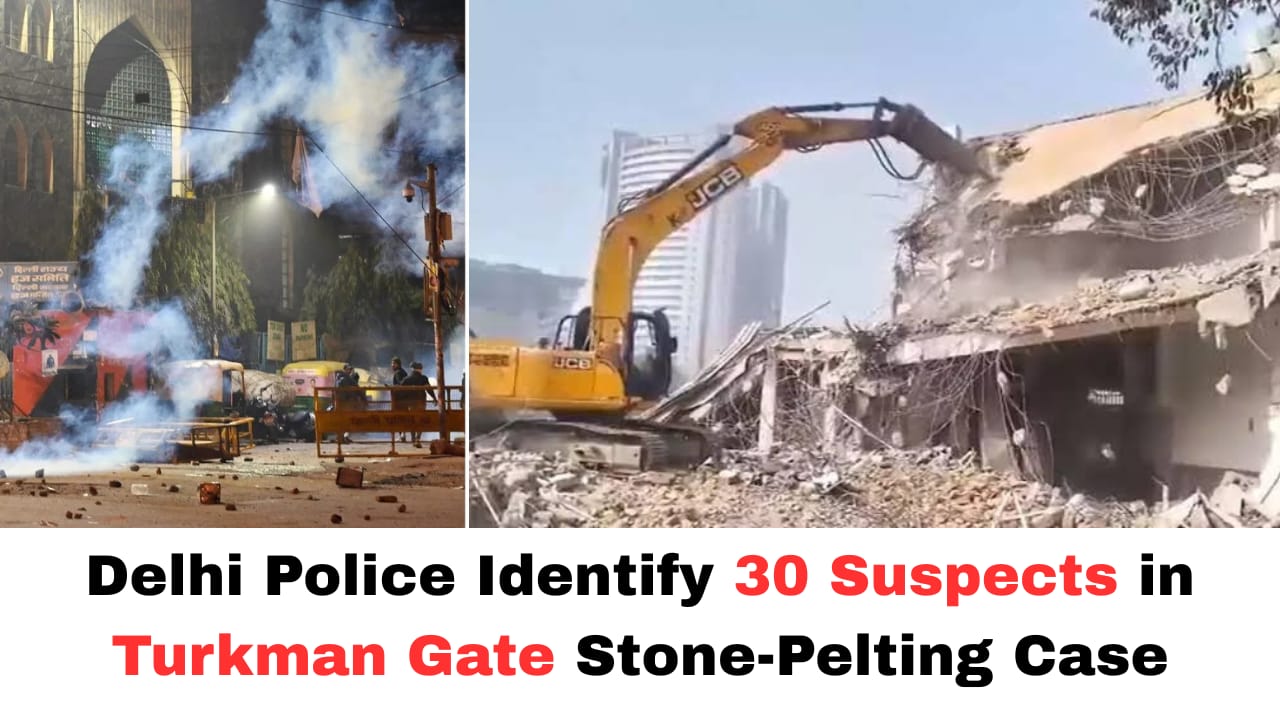
ncroachment demolition drive by the Municipal Corporation of Delhi (MCD) in the Turkman Gate area of Old Delhi escalated into a tense law-and-order situation after a group of locals allegedly pelting stones at police and civic officials, leading to a flurry of arrests and political controversy across the capital.
Background: Court Orders and Demolition Drive
The demolition operation was executed following the directives of the Delhi High Court, which on November 12, 2025, ordered the removal of 38,940 square feet of alleged illegal encroachments near the historic Faiz-e-Ilahi Masjid and Ramlila Maidan. The High Court’s order came after a joint survey by multiple civic agencies concluded that certain structures beyond 0.195 acres lacked legal ownership or valid documentation.
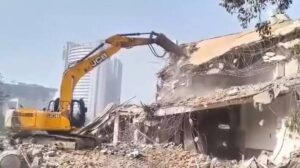
Acting on that court order, the MCD moved ahead with the clearance operation in the pre-dawn hours of January 7. In a planned initiative aiming to minimize disruption, the civic body deployed heavy machinery — including bulldozers and JCBs — and nearly 32 such units were sighted at the site. The Rapid Action Force (RAF) and multiple police units were tasked with maintaining order.
Clashes Break Out: Stone-Pelting and Police Action
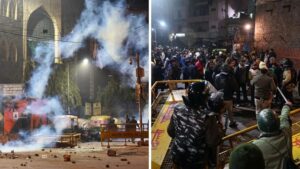
As the demolition commenced, a crowd of about 30–35 individuals reportedly gathered and threw stones at police personnel and MCD workers, according to the FIR registered by Delhi Police. The clashes occurred near barricaded points around the mosque, where officials were enforcing the demolition amidst protests.
Police said that at least five officers were injured, including Head Constable Jai Singh and Constable Vikram Ravindra, who were treated afterward at nearby medical facilities. Authorities responded with measured and minimal force and used tear gas shells to disperse the crowd and restore calm.
Following the violence, the Delhi Police registered an FIR under multiple sections of the Bharatiya Nyaya Sanhita and related laws, including rioting, obstructing public servants in the discharge of duty, destruction of government property, and causing hurt to public servants.
Arrests and Identification of Suspects
In the immediate aftermath, police detained five individuals linked to the stone-pelting, identified through a combination of CCTV footage, body-worn camera recordings, drone surveillance, and viral videos circulating on social media. The accused — named in official records as Sameer, Mohammad Arib, Mohammad Kasif, Mohammad Adnan, and Mohammad Kaif — were taken into custody and are undergoing judicial proceedings.
Beyond the initial arrests, Delhi Police officials announced that they have identified up to 30 suspects believed to have participated in the violence, and further summons may be issued, including to political figures implicated via videos and witness accounts. Among those mentioned was Samajwadi Party MP Mohibbullah Nadvi, who police intend to question as part of the ongoing investigation.
Authorities have intensified their search for others, including a popular local YouTuber “Salman”, whose presence during the clashes has drawn attention from investigators examining the incident’s escalation.
Security and Precautionary Measures
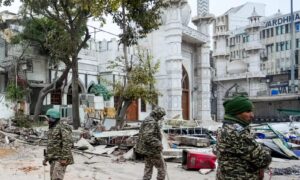
Following the unrest, the Turkman Gate area was transformed into a high-security zone, with roads and bylanes sealed off, barricades erected, and a sustained police presence ensuring no further clashes occur. Some residents described the atmosphere as unusually calm and eerily quiet after the overnight drive and subsequent cordoning-off.
Officials emphasized that while the situation remains under control, the enhanced deployment is necessary to both complete the demolition process and maintain public order around the sensitive mosque vicinity, particularly given rumors and misinformation spreading earlier in the day.
Official Statements and Government Stance
Delhi Police and civic officials have maintained that the demolition was a lawful exercise carried out strictly in compliance with the High Court’s order, emphasising that the mosque structure itself remained untouched and that only alleged illegal adjoining structures were cleared. Deputy Commissioner of Police (DCP) Nidhin Valsan clarified that the use of force was restrained, prioritising de-escalation.
Delhi Mayor Raja Iqbal Singh defended the demolition drive, asserting that it was necessary to remove illegal encroachments and improve public space usage, while criticizing rumors and misinformation that contributed to the unrest. He maintained the city’s commitment to a “clean and orderly Delhi” and reiterated that the drive was within legal boundaries.
Political and Public Reactions
The incident has triggered a political response across party lines. The Bharatiya Janata Party (BJP) strongly condemned the stone-pelting and framed it as an unacceptable assault on law enforcement, backing strict action against those responsible. They defended the demolition as a legitimate court-mandated civic duty.
In contrast, AAP MLA Amanatullah Khan and other opposition figures urged greater transparency and dialogue, expressing concerns about how civic actions intersect with sensitive heritage and religious spaces. They advocated for community consultation to defuse tensions and preserve peace.
Congress leader Sandeep Dikshit also weighed in, endorsing the drive against illegal structures but criticizing the government for allegedly targeting a particular religion, while simultaneously condemning violence against officials.
Public Sentiment and Local Impact
Reactions among residents in the Turkman Gate area were mixed. Some locals supported the clearing of encroachments, hoping for improved infrastructure and reduced congestion. Others viewed the operation as heavy-handed, especially given the timing and lack of wider community engagement. Rumors about damage to the mosque circulated online, prompting officials to reiterate that the sacred structure was unaffected.
Conclusion: Navigating Law, Development, and Community Trust
The Turkman Gate stone-pelting case reflects the complex challenges urban authorities face when implementing legal directives involving historical neighborhoods, religious sites, and residential communities. While the drive sought to enforce lawful action against alleged encroachments, the ensuing clash underscored the fragile balance between civic enforcement and community sensitivities.
As investigations continue and police pursue further suspects, authorities have stressed legal accountability, adherence to court orders, and sustained security to prevent escalation. For many observers, the incident highlights the need for inclusive civic dialogue and effective communication to complement enforcement — ensuring that development and law enforcement proceed without undermining social harmony.
You May Also Read: UP Govt Cancels Assistant Professor Recruitment Exam (April 2025)