



Digital News Guru New Delhi Desk:
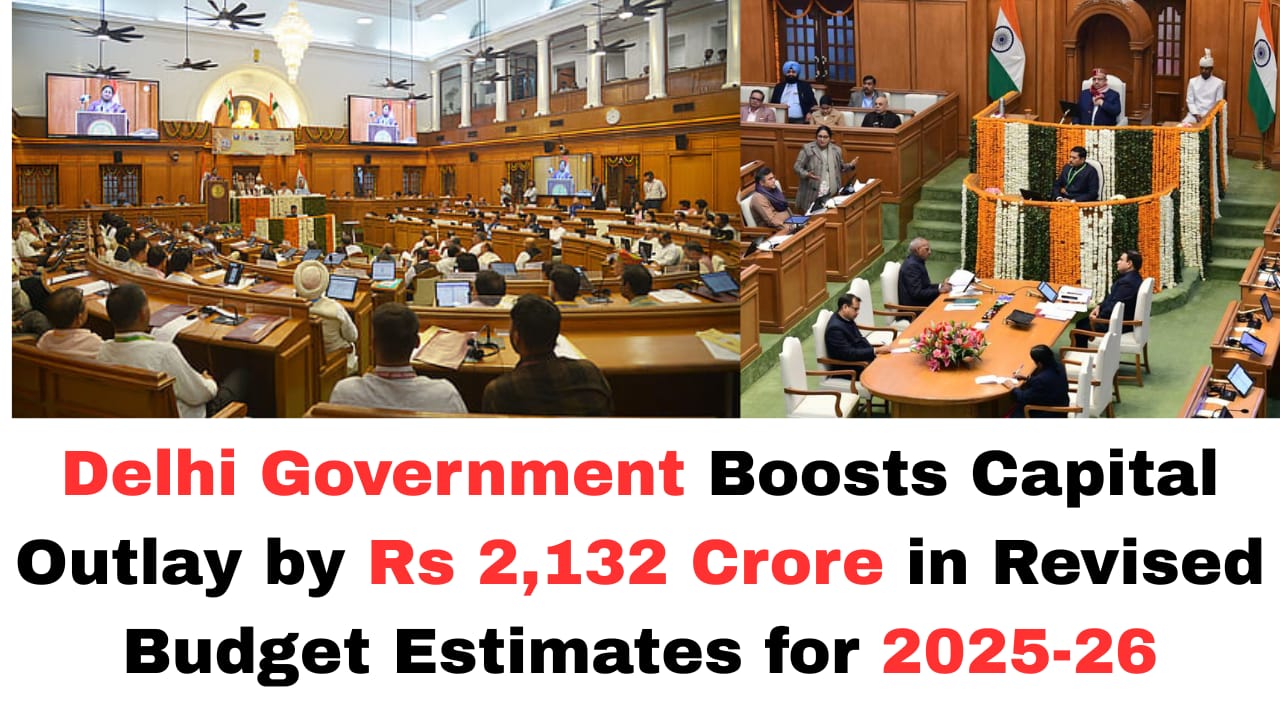
In a major fiscal decision aimed at strengthening infrastructure and improving public services across the national capital, the Delhi government has increased its capital expenditure by Rs 2,132 crore in the revised budget estimates for the financial year 2025-26. The move, approved by the Delhi Assembly during the recent Winter Session, reflects the administration’s focus on asset-creating investments and long-term development projects.
Revised Capital Outlay: What Changed
Under the Revised Estimates (RE) for the 2025-26 fiscal year, the capital expenditure allocation was raised from Rs 28,115 crore in the original Budget Estimates (BE) to Rs 30,248 crore — an increase of Rs 2,132 crore. This enhancement underscores the government’s priority to accelerate key sectors such as urban infrastructure, transport, education, civic services and environment-related initiatives.
Despite this rise in capital spending, the total budget size for 2025-26 remains unchanged at Rs 1 lakh crore, ensuring that the revision primarily reallocates resources toward high-impact projects.
Why the Increase Matters
The increased capital outlay signifies a shift toward asset creation and visible ground-level improvements rather than routine expenditure. Capital expenditure — as opposed to revenue expenditure — funds physical assets and long-lasting infrastructure like roads, bridges, metro systems, water projects and educational facilities. By directing more funds to capital outlays, the Delhi government aims to boost economic activity, improve urban mobility, and enhance quality of life for residents.
Sector-Wise Allocation Gains
The revised budget reallocates enhanced funds across several priority sectors that are crucial for the city’s growth and sustainability:
Transport and Mobility
- Transport sector funding — encompassing roads, bridges, and public transit support — has seen a significant increase. The allocation for transportation was raised from around Rs 12,952 crore to approximately Rs 16,024 crore, indicating a notable push toward improved mobility and connectivity.
This increased funding is expected to support both road infrastructure enhancements and mass transit projects, aimed at reducing congestion, improving commuter experiences, and expanding the road and bridge network.
Education Infrastructure
- The education sector has also benefited from the boost in capital outlays. Its allocation rose from Rs 19,291 crore in the Budget Estimates to about Rs 20,702 crore in the Revised Estimates.
These funds are likely to support school and college infrastructure upgrades, digital education enhancements, classroom expansions, and related facilities, aligning public education development with long-term planning.
Housing and Urban Development
- Funding for housing and urban development was also increased, moving from around Rs 10,694 crore to roughly Rs 11,754 crore — reflecting continued emphasis on urban renewal, unauthorized colony development, and civic amenities enhancement.
Municipal Services
- The Municipal Corporation of Delhi (MCD) received an additional allocation of Rs 1,031 crore, bringing its total to around Rs 11,428 crore. This boost is expected to improve waste management, sanitation, and other city services that directly affect daily life in Delhi.
Water and Sewage Infrastructure
- The Delhi Jal Board’s loans were revised upward from Rs 2,500 crore to Rs 3,500 crore, indicating increased investment in water supply, sewerage systems, and sanitation infrastructure.
Public Transport Enhancements
- Funding for the Delhi Transport Corporation (DTC) was increased by Rs 653 crore, up from Rs 2,780 crore to around Rs 3,433 crore.
Focus on Asset Creation and Quality of Life
Officials have emphasised that this revised capital outlay reflects a deliberate policy choice to focus on visible infrastructure improvements rather than short-term expenditures. Investing in capital projects like transport networks, educational infrastructure, water systems, and civic amenities builds long-lasting public assets that enhance the city’s economic productivity and quality of life.
By channeling more funds into asset creation, the government hopes to stimulate job creation in construction and related industries, improve service delivery, and attract further investment into the region.
Broader Budgetary Adjustments
Alongside the higher capital expenditure, the revised budget estimates show a reduction in revenue spending, which was adjusted downward from around Rs 71,885 crore in the original estimates to about Rs 69,752 crore. This shift allows more room for capital initiatives without increasing the overall budget size.
However, the revised budget maintains a balanced approach by also adjusting allocations for ongoing schemes, programmes and operational costs where necessary.
Political Context and Legislative Approval
The revised budget estimates and supplementary demands for grants were presented in the Delhi Legislative Assembly and passed with a voice vote during the Winter Session. The session, marked by spirited debate, culminated in approval of the revised estimates, signalling strong legislative backing for the government’s infrastructural priorities.
Chief Minister Rekha Gupta, who also holds the finance portfolio, has underscored the administration’s commitment to infrastructure, public mobility, and urban development as key pillars of the city’s growth strategy.
Public and Expert Reaction
Experts have generally welcomed the increased focus on capital expenditure, noting that sustained investment in infrastructure can significantly improve living standards and economic competitiveness. Urban planners and economists point out that capital outlays have a multiplier effect, stimulating related sectors and encouraging broader development.
Residents and civic groups have also expressed optimism that the additional funds could translate into better roads, smoother commutes, enhancements in educational facilities, and more effective utility services throughout the city.
Looking Ahead: Implementation and Impact
With the additional Rs 2,132 crore now allocated, the government is expected to begin rolling out key projects and programmes in the coming months. Priorities will likely include the expansion of urban mobility infrastructure, improvements to education sector facilities, enhanced civic services, and upgraded water and sanitation systems.
Given the focus on capital projects that create lasting assets, Delhi’s revised budget for 2025-26 positions the city for improved infrastructure outcomes, stronger growth prospects and a higher quality of urban life for millions of residents.
In summary: The Delhi government’s decision to increase capital expenditure by Rs 2,132 crore in the revised 2025-26 budget reflects a strong commitment to infrastructure, transport, education, and urban development — all designed to create visible, long-term benefits for the capital city and its inhabitants.
You May Also Read: UPPSC LT Grade (Assistant Teacher) Admit Card 2025 Released – Exam from Jan 17