



Digital News Guru New Delhi Desk:
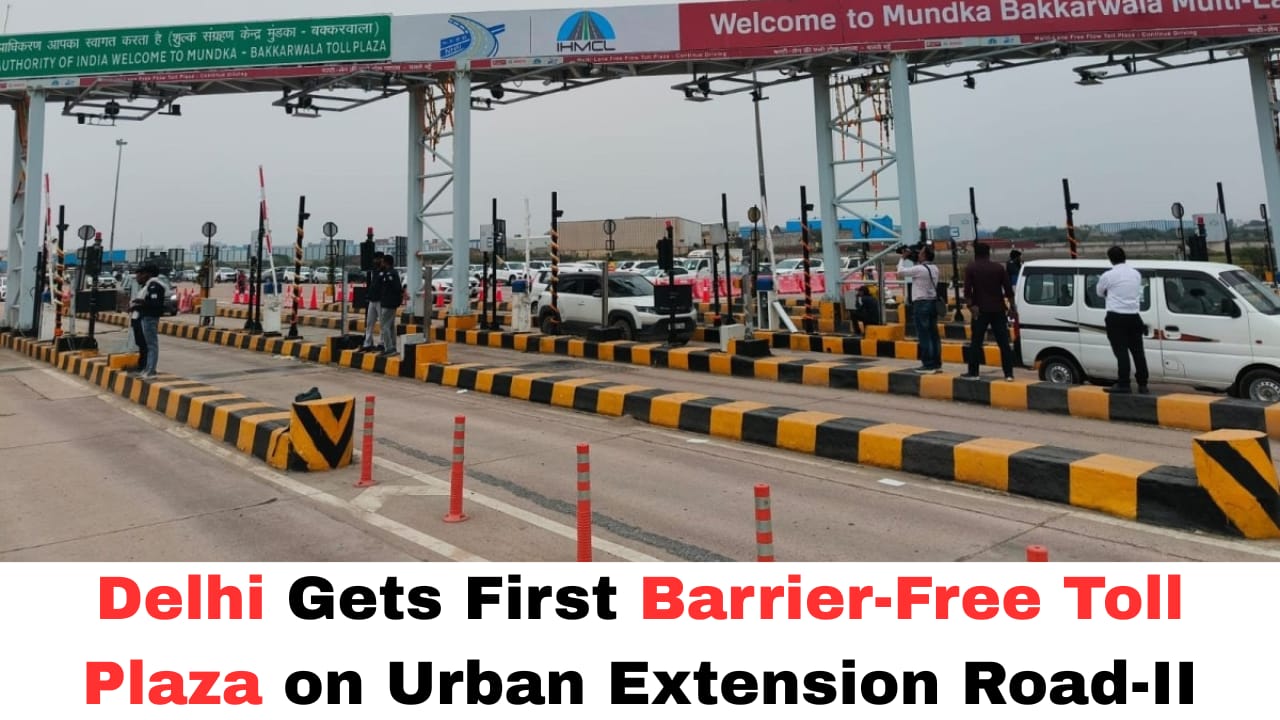
Delhi has taken a major step toward modernising road infrastructure with the inauguration of its first barrier-free toll plaza on the Urban Extension Road-II (UER-II) corridor near Mundka-Bakkarwala. Union Road Transport and Highways Minister Nitin Gadkari inaugurated the new Multi-Lane Free Flow (MLFF) toll system, which is expected to significantly reduce congestion and travel delays for commuters entering and exiting the national capital.
The project marks an important milestone in India’s push toward fully digital and seamless highway travel. Unlike traditional toll plazas where vehicles are required to stop or slow down for toll payment, the new system allows vehicles to pass through without stopping, while toll charges are automatically deducted through FASTag-linked accounts.
What Is a Barrier-Free Toll Plaza?
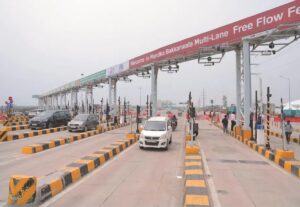
A barrier-free toll plaza uses advanced electronic toll collection technology instead of physical barriers and manual toll booths. Cameras, sensors, and Automatic Number Plate Recognition (ANPR) systems identify vehicles moving through the toll lane at normal speed. Toll charges are then deducted digitally through FASTag systems linked to vehicle owners’ bank accounts.
Officials say the system is designed to reduce waiting time, improve fuel efficiency, and minimise traffic congestion on major roads. Vehicles no longer need to queue up at toll booths, which often leads to long traffic jams during peak hours.
The government believes this technology could eventually replace many traditional toll collection systems across India.
Location and Importance of the New Toll Plaza
The newly launched toll system is located on the Urban Extension Road-II corridor, a key infrastructure project aimed at improving connectivity between Delhi and surrounding regions of Haryana and western Uttar Pradesh. The corridor is expected to play a crucial role in reducing traffic pressure on Delhi’s existing road network.
UER-II is one of Delhi’s major upcoming expressway projects and is intended to connect important highways and industrial zones without forcing heavy traffic into central parts of the city. Officials believe the new toll system will improve the efficiency of freight movement and daily commuting in the region.
According to reports, the toll plaza near Mundka-Bakkarwala is the first of its kind in Delhi and among the earliest large-scale implementations of Multi-Lane Free Flow tolling in the country.
How the New System Will Benefit Commuters
The barrier-free system is expected to provide several benefits to commuters and transport operators. One of the biggest advantages is reduced travel time. Traditional toll plazas often create bottlenecks, especially during rush hours and holiday seasons. The new technology aims to eliminate these delays completely.
Officials also highlighted environmental benefits. Since vehicles no longer need to stop and restart repeatedly at toll booths, fuel consumption and vehicle emissions are expected to decrease. This could contribute to lower pollution levels in Delhi-NCR, which frequently struggles with poor air quality.
Transport experts say smoother traffic movement will also reduce stress for drivers and improve road safety by minimising sudden braking and lane changes near toll collection points.
FASTag and Digital Monitoring System
The toll plaza relies heavily on FASTag integration and digital surveillance systems. Cameras installed across the toll lanes continuously monitor vehicle movement and verify registrations through FASTag-linked databases. Vehicles without valid FASTag accounts could face penalties or receive toll notices later through digital enforcement systems.
Authorities have advised commuters to ensure their FASTag accounts are active and properly linked to avoid payment-related issues while using the new corridor.
The government has already made FASTag mandatory for most highway toll payments across India, and this latest development is seen as the next phase of India’s digital highway infrastructure plan.
Government’s Vision for Future Toll Collection
During the inauguration, Nitin Gadkari reportedly stated that India is moving toward advanced toll collection technologies similar to systems used in developed countries. The government aims to make highway travel faster, more transparent, and technologically efficient.
The ministry is also exploring satellite-based tolling and GPS-enabled vehicle tracking systems that could eventually allow toll collection based on the exact distance travelled by a vehicle instead of fixed toll booth locations.
Experts believe such systems could significantly transform highway travel in India over the next decade.
Challenges and Concerns
While the project has been widely welcomed, some experts have raised concerns regarding technical reliability and enforcement. Issues such as FASTag errors, camera failures, incorrect vehicle identification, and payment disputes may still occur during the initial implementation phase.
Some commuters have also expressed concerns about data privacy and surveillance because of continuous camera monitoring and digital tracking systems. Authorities, however, have assured that the system complies with national digital security guidelines.
Traffic experts say public awareness and proper system maintenance will be crucial for the successful operation of barrier-free tolling.
Delhi’s Push Toward Smart Infrastructure
The launch of the barrier-free toll plaza reflects Delhi’s broader efforts to modernise transportation infrastructure through digital technology and smart traffic management systems. Over the past few years, the capital has seen increasing investment in expressways, flyovers, smart traffic systems, and metro expansion projects.
Officials believe projects like the UER-II corridor and MLFF tolling system could help reduce congestion inside Delhi while improving regional connectivity for neighbouring states.
The initiative is also expected to support economic activity by improving freight movement and reducing transportation delays for businesses operating in and around the National Capital Region.
Conclusion
Delhi’s first barrier-free toll plaza marks a significant step in India’s journey toward smarter and more efficient road infrastructure. By eliminating physical toll barriers and introducing fully digital toll collection, authorities hope to reduce congestion, save fuel, lower pollution, and improve the overall commuting experience.
As the system begins operations on the Urban Extension Road-II corridor, commuters and transport experts will closely watch how effectively the technology performs in real-world conditions. If successful, the model could pave the way for similar barrier-free toll systems across highways throughout India.
You May Also Read: Chand Mera Dil May 22 Release: All Eyes on Ananya Panday and Lakshya’s Love Story