



Digital New Guru International Desk:
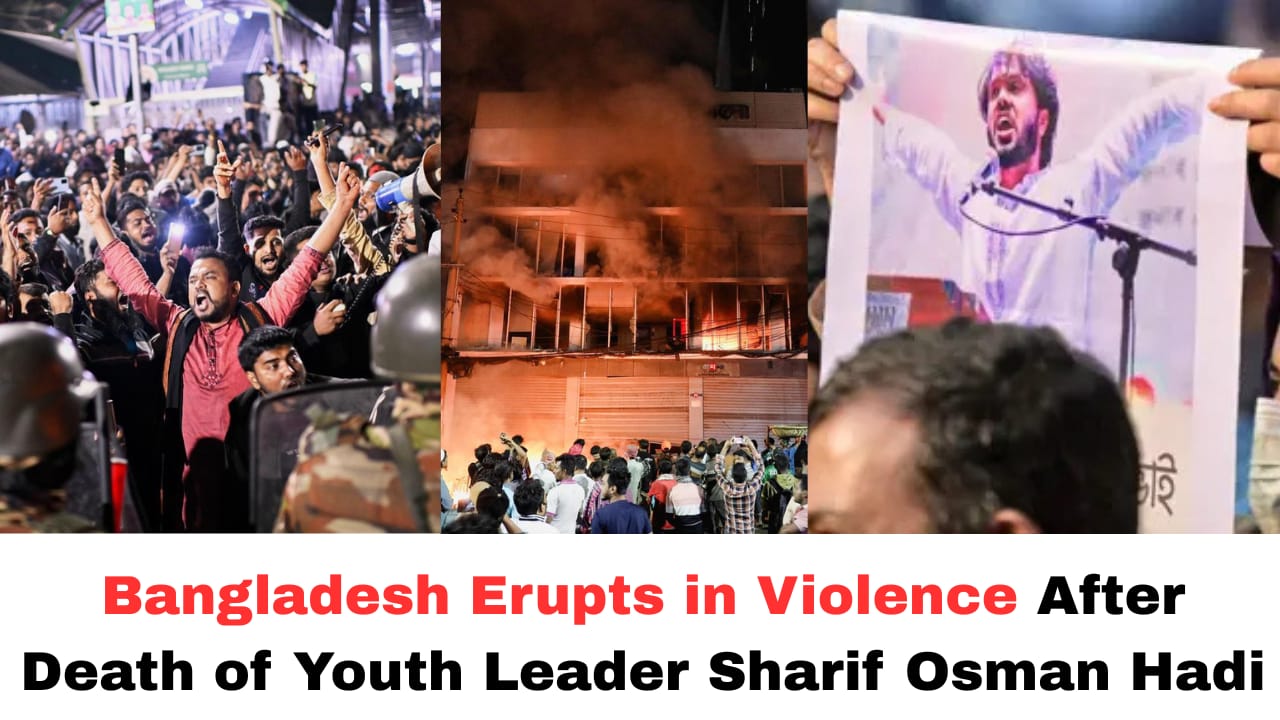
Bangladesh is experiencing a fresh wave of intense unrest and political turmoil following the death of Sharif Osman Hadi, a prominent youth leader and activist whose shooting has ignited widespread protests across major cities, including the capital Dhaka. The situation has rapidly escalated into violent demonstrations, arson, and clashes with authorities, raising grave concerns about the nation’s stability just weeks ahead of a crucial national election scheduled for February 2026.
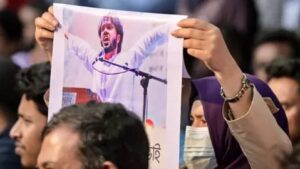
Hadi, 32, was a key figure in the student-led uprising that overthrew former Prime Minister Sheikh Hasina’s government in 2024. He was shot by masked assailants on December 12 while campaigning for a parliamentary seat and was airlifted to a Singapore hospital for treatment. After six days on life support, he died on December 18, triggering immediate outrage among supporters and political activists.
Nationwide Protests Turn Violent
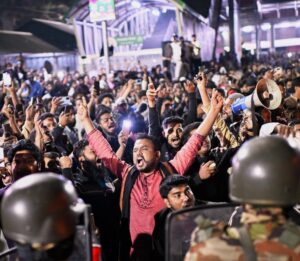
News reports from multiple outlets indicate that protests began spontaneously after news of Hadi’s death spread throughout Bangladesh. Demonstrators filled the streets shouting slogans, demanding justice, and blaming the authorities for failing to protect one of their prominent leaders.
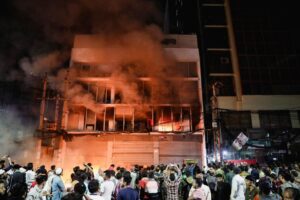
Clashes between protesters and security forces quickly broke out, and numerous buildings were vandalised — including the offices of leading newspapers Prothom Alo and The Daily Star, which were set on fire in Dhaka. Videos circulating on social media showed journalists trapped inside the burning buildings before being evacuated by firefighters.
In addition to media houses, cultural institutions like Chhayanaut were attacked and torched by mob violence. Protesters also blocked major highways, attacked political party offices, and in some places attempted to march towards diplomatic missions.
Bangladesh Protest Fallout
The unrest comes at a particularly volatile time for Bangladesh’s political landscape. After Sheikh Hasina was ousted and fled to India following the 2024 uprising, an interim government led by Nobel laureate Muhammad Yunus has been in power. The country remains deeply divided, with rival political factions jockeying for influence ahead of the next general election.
In reaction to Hadi’s death, the interim government declared a national day of mourning, authorising flags to be flown at half-mast, and pledged a transparent investigation into the shooting. Yunus addressed the nation, calling Hadi’s passing an “irreplaceable loss” to Bangladesh’s democratic process and urging citizens to remain calm.
Despite these appeals, large crowds continued to demonstrate in major urban centres, and witnesses reported security forces struggling to contain the unrest. In several regions, more troops and paramilitary units were deployed to help restore order and protect key infrastructure.
Anti-India Sentiment and Diplomatic Tensions
One of the most alarming aspects of the unrest is the emergence of anti-India sentiment among certain protest groups. Hadi was a vocal critic of India’s policies and influence in Bangladesh, and some demonstrators have chanted anti-India slogans during protests.
In response to security threats, India has temporarily shut down visa application centres in two Bangladeshi cities — Khulna and Rajshahi — citing concerns over the ongoing protests. The Indian Visa Application Centres (IVACs) in these locations will remain closed until further notice to protect staff and applicants amid tensions. Meanwhile, the main Indian visa centre in Dhaka was briefly closed but has since reopened under enhanced security measures.
The Indian Ministry of External Affairs (MEA) also summoned the Bangladeshi envoy, signalling New Delhi’s concern over escalating anti-Indian rhetoric and threats against diplomatic premises. These diplomatic disruptions highlight the strain on Indo-Bangladesh relations amid the volatile political climate.
Impact on Society and Media Freedom
The targeting and burning of major media outlets have raised serious concerns about press freedom and the safety of journalists in Bangladesh. Reports suggest that as media buildings were set on fire, journalists had to be rescued from within, with some trapped temporarily amidst heavy smoke.
Human rights organisations and international observers have condemned the violence and urged all parties to respect the rule of law and protect civil liberties, including freedom of expression and the safety of non-combatant citizens.
The violence has also highlighted broader fears over the protection of minority communities and civil society during periods of political upheaval, especially given Bangladesh’s history of religious and ethnic tensions. While this current unrest is largely political, such underlying social fault lines contribute to the fragility of the situation.
Regional and Economic Implications
The turmoil in Bangladesh carries regional implications, particularly for neighbouring South Asian countries like India, which shares close geographic and economic ties with Dhaka. Any prolonged instability could lead to disruptions in trade, cross-border travel, and bilateral cooperation in areas such as security, water-sharing, and infrastructure projects.
The temporary closure of Indian visa centres not only affects diplomatic relations but also has practical implications for travel, business, and tourism. Thousands of Bangladeshis travel to India annually for education, medical treatment, work, and leisure — sectors that may see disruption if the unrest continues.
Economists caution that sustained civil unrest could harm investor confidence and slow economic growth, complicating Bangladesh’s development prospects and its integration into regional markets.
Looking Ahead: Elections and Stability
With national elections scheduled for February 12, 2026, the timing of this upheaval is particularly consequential. The death of a prominent leader associated with the recent uprising could energise political factions and intensify demands for accountability, free elections, and reforms.
However, analysts warn that continued violence may weaken democratic processes, discourage voter participation, and create an atmosphere of polarization that undermines public confidence in the electoral system.
International diplomatic circles are closely monitoring the situation, urging restraint from all parties and advocating for dialogue to avert further violence and protect the democratic transition.
Conclusion: A Nation at a Crossroads
The death of Sharif Osman Hadi and the subsequent unrest have placed Bangladesh at a critical juncture. Protesters have expressed deep anger and frustration that transcends political allegiance, reflecting broader anxieties about justice, governance, and national identity.
As the interim government navigates this crisis with national mourning, investigations, and security operations, much will depend on its ability to respond effectively without exacerbating tensions. For ordinary Bangladeshis, the coming weeks may determine not only the country’s political trajectory but also its social cohesion and regional relationships — particularly with India.
You May Also Read: Bharti Singh and Haarsh Limbachiyaa Welcome Their Second Child — A Baby Boy