



Digital News Guru Delhi Desk:
Delhi Schools Resume Sanitary Napkin Distribution for 6 Lakh Girls
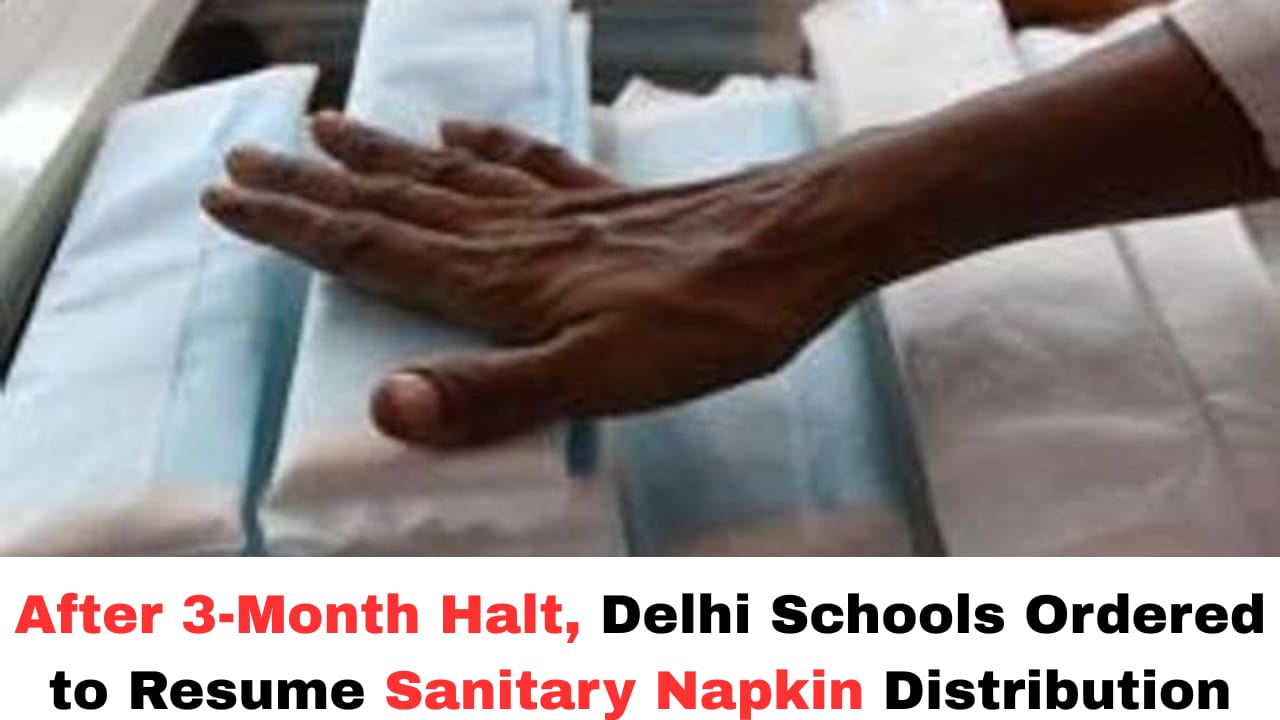
In a major development impacting girls’ education and menstrual health in the national capital, the Delhi Directorate of Education (DoE) has issued a directive mandating the resumption of sanitary napkin distribution in government schools following a prolonged three-month suspension that left over six lakh girls without menstrual hygiene supplies. The move comes amid legal pressure and public concern over compliance with a Delhi High Court order that had sought an uninterrupted supply of these essential products under the Kishori Yojana scheme.
The Pause, Legal Pushback, and Policy Response
The disruption in the supplies, which reportedly lasted for around three months until late 2025, triggered criticism from civil rights groups and activists who argued that the suspension directly contravened judicial directives aimed at safeguarding girls’ health and educational continuity. On December 24, the DoE reauthorised school principals to procure and distribute sanitary napkins to students of classes VI to XII — the cohort traditionally covered under the menstrual hygiene programme.
The supply gap did not merely interrupt deliveries; it sparked a legal notice for contempt of court against the Chief Secretary of Delhi, alleging deliberate inaction to uphold a prior court order. Activists representing rights group Social Jurist submitted that the failure to ensure continuous distribution violated a July 2022 High Court directive that emphasized the importance of menstrual hygiene as a factor in girls’ school attendance and overall wellbeing.
For context, the High Court had previously acknowledged in mid-2022 that lack of sanitary products could adversely affect attendance and even deter girls from their studies, especially in the sensitive adolescent phase. While the government had assured steps to supply the products — including floating e-tenders and allocating funds to school heads — the recent lapses indicate gaps in execution of those commitments.
Why Sanitary Napkin Distribution Matters
Menstrual hygiene is a critical yet often overlooked aspect of girls’ health and education. In a country where social stigma around menstruation remains prevalent, structured programmes in schools are vital for normalising the discussion and ensuring access to safe products. When a school lacks consistent menstrual health support, girls can face discomfort, health risks, and in many cases miss classes or drop out temporarily during their cycle — directly affecting their learning outcomes and self-esteem.
The Kishori Yojana, under which Delhi schools distribute sanitary napkins, was designed to help address precisely these issues by ensuring that products are available at no cost to students who might otherwise struggle to afford them. Keeping this supply uninterrupted is more than a bureaucratic obligation; it is a step toward gender-equitable education and dignity.

Operational Challenges and Government Response
The recent directive from the DoE instructs school heads to actively procure sanitary napkins and restart distribution by December 26, with schools open through the end of the month, giving a narrow window to restore supply chains. Officials have reportedly begun mobilising vendors to deliver this crucial stock. While the exact reasons for the prior three-month lapse have not been made fully public, the situation highlights recurring administrative challenges in maintaining consistency of government welfare schemes.
School administrators, often juggling multiple responsibilities, will now be expected to not only resume but maintain these supplies continuously — a responsibility requiring logistical coordination, reliable vendor relationships, and clear accountability structures.
Advocates Weigh In: A Mixed Picture
Education activists and advocates of women’s rights have called the resumption an essential corrective step but contend that this episode reflects systemic weaknesses. According to Social Jurist, the disruption was not a mere oversight but a failure of compliance with explicit judicial directions — a lapse serious enough to warrant consideration of formal contempt proceedings.
Critics argue that continued stutters in delivery undermine the very purpose of schemes like Kishori Yojana, which is intended to create a predictable framework for menstrual health support, free from bureaucratic uncertainty.
Beyond Supplies: The Broader Context of Menstrual Health in Schools
The conversation about menstrual hygiene in schools is not limited to product distribution. It intersects with wider issues such as the availability of separate toilets, clean water, disposal facilities, and awareness programmes. Across India, stakeholders and policymakers have increasingly recognised how these factors influence adolescent girls’ comfort and confidence in educational spaces.
For instance, a separate policy initiative by the Union government provides subsidised sanitary pads through outlets like Pradhan Mantri Bhartiya Janaushadhi Pariyojana, which offers products at significantly low prices, thereby helping broader access beyond schools.
Furthermore, landmark court directives and NGO efforts have pushed for improved sanitation infrastructure in schools, recognising that menstrual health is not only about free products but also supportive environments where girls feel safe and dignified.

Looking Ahead: Policy and Practical Imperatives
The resumption of sanitary napkin distribution in Delhi schools marks a positive step toward fulfilling judicial mandates and supporting adolescent girls. However, ensuring sustainability will require:
- Robust supply chain mechanisms that prevent future disruptions.
- Monitoring and accountability frameworks that enforce continuity of services.
- Integration with broader menstrual health policies, including education and infrastructure improvements across all schools.
- Community and parental engagement to support programmes and destigmatise menstruation.
A reliable menstrual hygiene programme not only fulfils legal and administrative requirements but also signals a commitment to gender equity in education — ensuring that millions of girls in government schools can attend classes with dignity, health, and confidence.
You May Also Read: Good Governance Day 2025: India Honors Atal Bihari Vajpayee’s Legacy