



Digital News Guru National Desk:
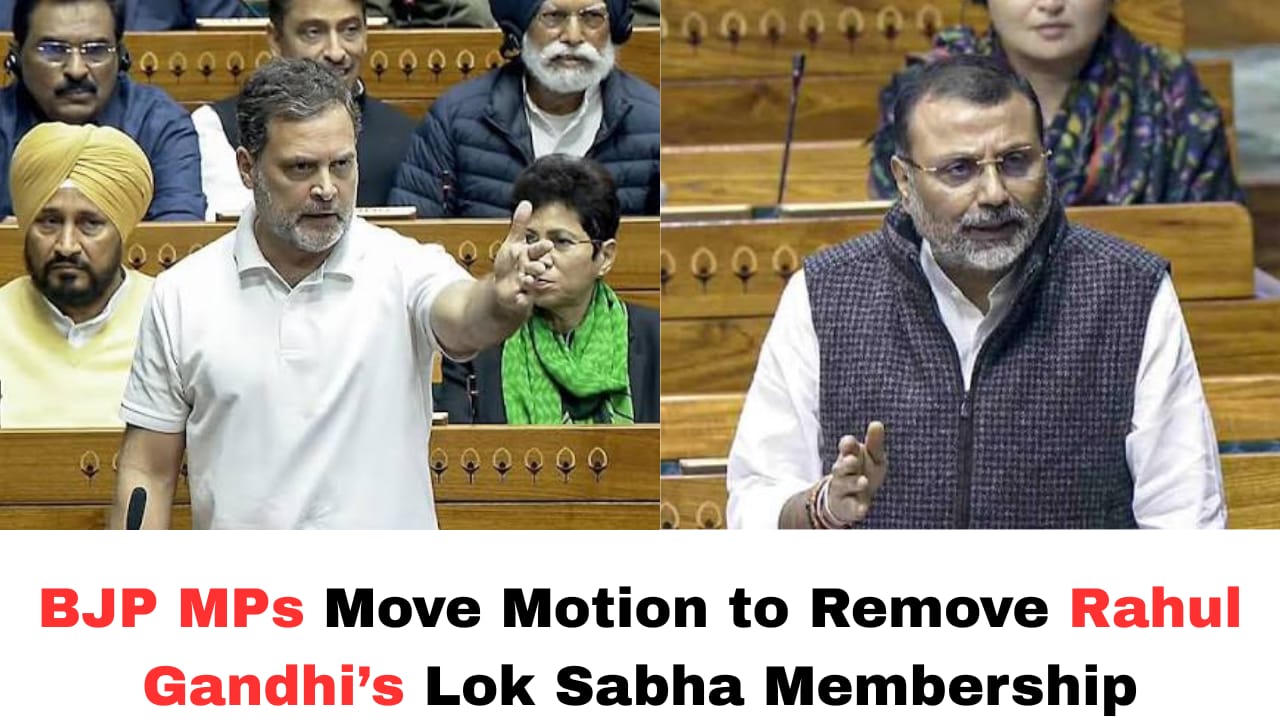
BJP MP Files Notice to Disqualify Rahul Gandhi
In a dramatic escalation of political confrontation in the ongoing Budget Session of the Indian Parliament, a senior BJP MP has submitted a notice to initiate a substantive motion against Rahul Gandhi, the Leader of the Opposition in the Lok Sabha, seeking the cancellation of his parliamentary membership and demands that he be barred from contesting elections for life.
The notice was tabled on Thursday, February 12, 2026, by BJP MP Nishikant Dubey in the Lok Sabha complex in New Delhi. Dubey’s move marks one of the most contentious parliamentary maneuvers in recent years, with implications for India’s political discourse and legislative proceedings.
What the Notice Says
In his notice, Dubey has accused Rahul Gandhi of actions that, he claims, amount to misleading the nation and collusion with “anti-India forces”. According to the MP, Gandhi’s foreign visits — during which he interacted with organisations like the Soros Foundation, USAID and the Ford Foundation — indicate a pattern of behaviour that undermines national interest. Dubey claimed that these engagements demonstrate Gandhi’s links with forces allegedly hostile to India’s sovereignty and democratic stability.
Dubey also explicitly stated that he was not moving a privilege motion (which deals with breaches of parliamentary rules), but rather a substantive motion — a formal parliamentary procedure that, if adopted by a majority in the House, could lead to the cancellation of an MP’s membership. In his notice, Dubey has additionally sought a lifetime ban on Rahul Gandhi contesting future elections, a demand that underscores the severity of the BJP’s position.
What Is a Substantive Motion?
A substantive motion in the context of parliamentary procedure is a proposal put before the House to deliberate and decide on a definite action or policy. Unlike routine motions or privilege notices, substantive motions can, if passed by a majority, lead to consequential outcomes — including expulsion of a member or initiation of an inquiry. By moving such a motion, Dubey aims to bring the matter into formal discussion in the Lok Sabha for debate and voting.
While seldom used, substantive motions carry significant weight as they reflect not just procedural concerns, but political and ethical questions that the House must consider. A historic precedent cited in parliamentary discourse was in 2005, when substantive action resulted in the expulsion of multiple members after a probe into a cash-for-questions controversy.
Political Context and Background
The notice against Rahul Gandhi comes amidst heightened tensions during this year’s Budget Session. Gandhi has been a vocal critic of the government’s economic policies, especially its handling of trade negotiations with the United States. His recent speech in the Lok Sabha, which included references to unpublished material and geopolitical concerns, drew strong reactions from ruling party MPs, prompting moves to expunge parts of the speech from the parliamentary record.

Before the notice of substantive motion was filed, there were indications that BJP members were preparing other motions against Gandhi, including potential breach of privilege notices, for remarks they deemed unbecoming of a member of Parliament. However, Union ministers later signaled that the government might avoid privilege notices and instead focus on formal parliamentary debate.
Reactions from the Opposition
The notice has drawn sharp criticism from Congress leaders and opposition spokespersons, who dismissed the move as politically motivated and designed to stifle dissent. K C Venugopal, general secretary of the Congress party, reacted defiantly, stating that the party is “not bothered” by such notices and is prepared to face any eventuality. In a pointed remark, Venugopal said, “We are ready to be hanged also” — a dramatic expression of the party’s unwillingness to back down from its positions.
Priyanka Gandhi Vadra, another senior Congress leader and Rahul Gandhi’s sister, has echoed this sentiment, arguing that no procedural action will deter their political work or curb their engagement in national debates. Congress leaders have also accused the BJP of applying double standards by targeting opposition voices while protecting actions by ruling party leaders.
The opposition has framed the notice as an attempt to divert attention from substantive policy issues, specifically the ongoing debates over the country’s economic direction and foreign relations. Critics contend that attempting to remove a seasoned parliamentarian from the House undermines democratic norms and sets a concerning precedent.
Public and Media Reactions
The move has dominated political discourse across media platforms and sparked vigorous debate on social media and television news. Supporters of the BJP have framed the substantive motion as a legitimate parliamentary tool to check conduct they deem harmful, while critics have decried it as an overreach that threatens parliamentary tradition and free speech.
Political analysts have noted that such motions, though rare, highlight deepening polarization in Indian politics where legislative instruments are increasingly being used to settle political scores. Some commentators argue that the substantive motion, if accepted for debate, must be rigorously examined within procedural norms to ensure that parliamentary democracy is respected.
What Happens Next?
The substantive motion must first be acknowledged by the Speaker of the Lok Sabha and admitted for consideration. If admitted, it would be listed for discussion and a vote in the House, where a simple majority could determine its outcome. Given the BJP’s majority in the Lok Sabha, the motion’s admission and potential passage cannot be ruled out. Such a scenario would deepen political fault lines and potentially alter the balance of parliamentary debate.
However, procedural experts caution that even if a motion is admitted, the path to actual expulsion or disqualification involves complex parliamentary scrutiny, including opportunities for the member in question — here, Rahul Gandhi — to defend himself and challenge the motion’s factual basis.
Conclusion
The substantive motion moved by BJP MP Nishikant Dubey against Rahul Gandhi represents a significant escalation in the political rivalry between India’s ruling party and the main opposition. It highlights the intensifying use of parliamentary procedures to contest political legitimacy and policy disagreements. As the matter unfolds in the Lok Sabha, it will likely shape the tenor of parliamentary politics in the months ahead and influence broader public debate on democratic process and accountability in India.
You May Also Read: India Releases Revised Government Inflation Data: Retail Inflation at 2.75% in January 2026