



Digital News Guru Health Desk:
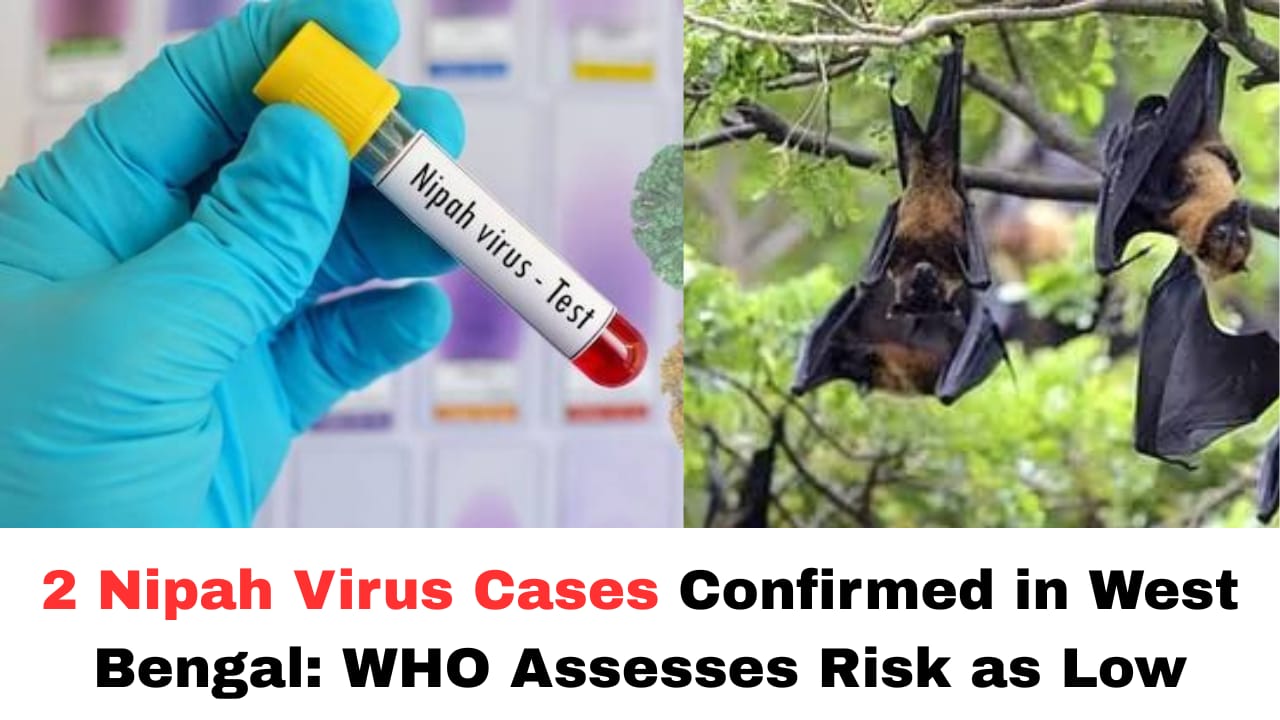
India has confirmed 2 cases of the deadly Nipah virus in the eastern state of West Bengal, prompting heightened surveillance by health authorities and review by the World Health Organization (WHO). While the disease is known for its high fatality rate and potential to cause severe neurological illness, the WHO has assessed the risk of further spread as low and has ruled out the need for travel or trade restrictions at this stage.
The two confirmed cases involve 25-year-old nurses—a male and a female—both employed at a private hospital in Barasat, located in the North 24 Parganas district near Kolkata. They started showing symptoms in late December 2025, which quickly progressed to severe neurological complications. Both were immediately isolated in early January and placed under intensive care. As of the latest health bulletins, the male patient is reported to be recovering, while the female patient remains in a critical condition.

This outbreak is significant as it marks another occurrence of Nipah virus in India, a nation that has seen sporadic outbreaks before, particularly in Kerala. However, West Bengal had not reported confirmed cases for nearly two decades, with prior outbreaks in 2001 and 2007.
Public Health Response: Contact Tracing and Containment
Indian health authorities, including the Union Health Ministry and the National Centre for Disease Control (NCDC), acted swiftly after the initial cases were suspected. A total of 196 people who had come into contact with the two infected nurses were identified, traced, and tested. According to official data, all contacts tested negative and are currently asymptomatic, providing an early indication that human-to-human transmission may have been limited or contained.
The rapid containment effort reflects India’s preparedness based on prior responses to Nipah outbreaks and other infectious disease challenges. Health officials have also been monitoring symptoms among healthcare workers and in the wider community, while urging calm among the public to avoid speculation or dissemination of unverified information.
WHO Assessment: Low Risk but Ongoing Vigilance
The World Health Organization has closely tracked the situation and released a risk assessment, stating that:
- The national, regional, and global risk of spread remains low.
- The virus cases are confined to a single district, with no evidence of widespread transmission so far.
- There is no need for travel or trade restrictions at this point.
The WHO noted that the virus continues to circulate naturally among fruit bats (flying foxes)—its primary animal reservoir. These bats are found in parts of West Bengal and neighboring Bangladesh, which may occasionally lead to zoonotic spillover (animal-to-human transmission). However, human-to-human transmission of Nipah virus typically requires close and prolonged contact, and so far no sustained spread has been observed in this incident.
Despite this reassurance, WHO and local health experts emphasize ongoing monitoring to detect any new cases early and prevent escalation. In its official update, WHO described the outbreak response and surveillance measures being implemented jointly by national and state teams.

Public Reaction and Regional Precautions
The confirmation of Nipah cases in West Bengal has prompted reactions both domestically and internationally. Several Asian countries, including Thailand, Singapore, and Hong Kong, have reinstated Covid-style health screenings at airports for travelers arriving from India as a precautionary step, despite WHO’s stance that travel restrictions are unnecessary.
In West Bengal, local communities have also taken precautionary measures. For example, date palm sap collectors in Joynagar (South 24 Parganas)—a group potentially at risk because bats often contaminate sap collection pots—have begun adopting protective measures such as covering collection containers to reduce the risk of bat exposure.
Public health campaigns are also emphasizing basic protective measures, including avoiding consumption of raw date palm sap (a known risk factor for Nipah transmission), maintaining good hygiene, and steering clear of contact with fruit bats or sick animals. Experts warn that while cases are currently limited, vigilance is key given the virus’s severity.
Understanding Nipah Virus: Severity and Symptoms
Nipah virus is a zoonotic pathogen first identified in 1999 during an outbreak among pig farmers in Malaysia and Singapore. It is known for causing severe respiratory illness and encephalitis (inflammation of the brain) in humans. The disease has a high case fatality rate—historically between 40% and 75%—and there are currently no licensed vaccines or specific antiviral treatments available. Care remains supportive and symptomatic.
The virus generally spreads through:
- Contact with infected fruit bats or consumption of contaminated food.
- Close physical contact with infected individuals, particularly in healthcare or household settings.
Common early symptoms may include fever, headache, fatigue, and muscle pain, which can progress rapidly to respiratory distress and neurological impairments. Because early symptoms overlap with many common illnesses, early detection and prompt isolation of suspected cases are critical to contain outbreaks.

What Comes Next? Monitoring and Preparedness
As of now, health authorities remain alert but cautiously optimistic. The lack of additional cases among nearly 200 contacts suggests that transmission may have been limited, and current containment measures appear effective. Still, experts advocate for continued surveillance, especially since the virus remains endemic in bat populations and could reemerge sporadically.
For the general public, staying informed through official health channels and adhering to preventive guidelines—such as avoiding risky food practices and reporting symptoms early—will be key to minimizing risk. With historically effective containment responses and ongoing cooperation between Indian health agencies and international bodies like WHO, India appears positioned to manage this small outbreak without broader disruption.
You May Also Read: Producer Reveals Salman Khan Was Furious After Vivek Oberoi’s 2003 Press Conference