



Digital News Guru Sports Desk:
Cricket tension with Bangladesh over T20 WC scheduling
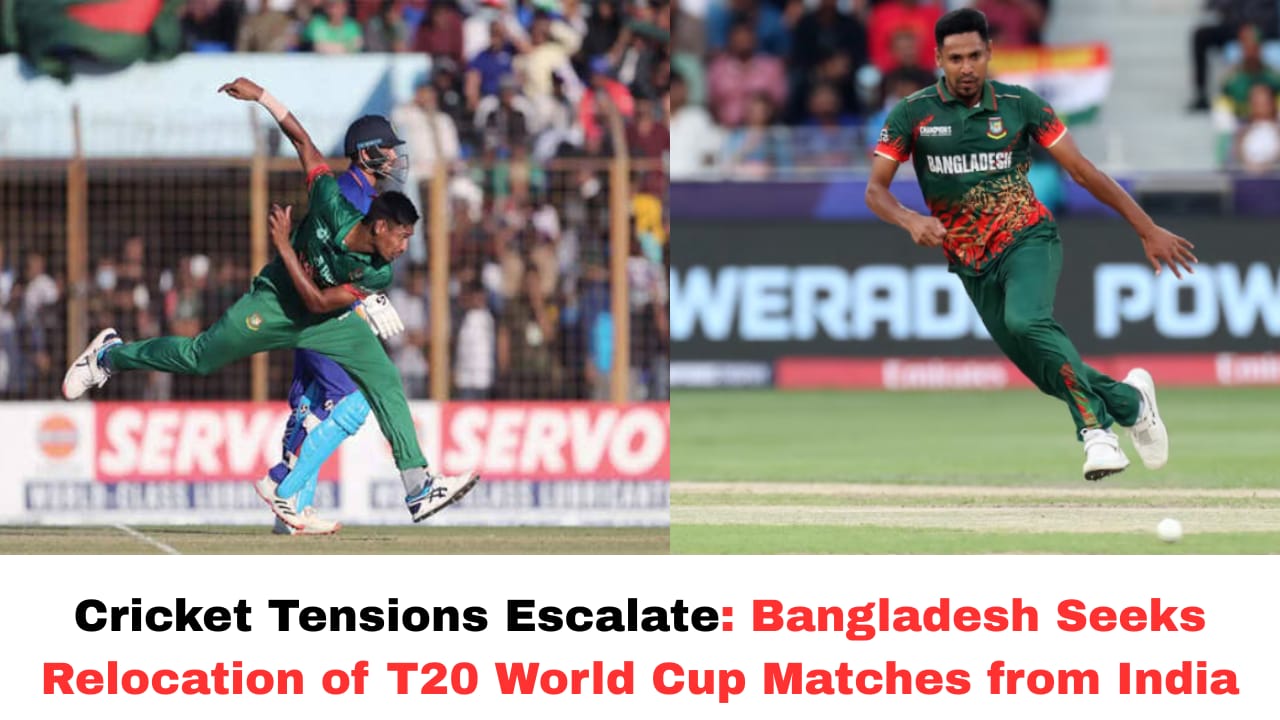
Just weeks before the ICC Men’s T20 World Cup 2026, cricket relations between Bangladesh and India have taken an unexpected and tense turn. At the centre of this unfolding situation is Bangladeshi pace bowler Mustafizur Rahman and his controversial removal from the Indian Premier League (IPL), which has triggered calls from Bangladesh’s government and cricket authorities to move the team’s World Cup matches out of India.
The Mustafizur Controversy: A Spark for Diplomatic Strain
The controversy began in early January when the Board of Control for Cricket in India (BCCI) instructed IPL franchise Kolkata Knight Riders (KKR) to release Mustafizur Rahman from their squad ahead of the IPL 2026 season. The 30-year-old left-arm pacer, one of Bangladesh’s most prominent international cricketers — and bought for Rs 9.20 crore in the IPL mini-auction — was abruptly dropped following the decision.
The BCCI’s directive came amidst broader political sensitivities linked to reported communal violence in Bangladesh and protests in India. While the Indian board described the decision as related to “recent developments,” it did not explicitly elaborate on the political context.

The move drew fierce criticism from Bangladeshi commentators, fans, officials and political figures, framing the removal as an affront to national pride and cricketing dignity. This has since become more than an internal IPL matter: it has evolved into a diplomatic flashpoint between the neighbouring cricketing nations.
Bangladesh Government Intervention and BCB’s Position
The situation escalated when Bangladesh’s youth and sports adviser, Asif Nazrul, intervened, directing the Bangladesh Cricket Board (BCB) to take action. Nazrul instructed the board to write to the International Cricket Council (ICC) with two major contentions: first, that the removal of Mustafizur from IPL raised questions about player safety and respect; and second, that these concerns should extend to the national team’s participation in matches scheduled in India during the T20 World Cup.
Critically, Nazrul publicly suggested that the BCB formally request that Bangladesh’s four group-stage matches — originally slated to be held in India — be moved to Sri Lanka.
The official reasoning provided by Nazrul stated that if a contracted Bangladeshi player could not be assured participation in Indian conditions, then team management and officials would understandably have doubts about the safety and security of the full national squad.
World Cup Matches at Stake
Under the original schedule agreed when India and Sri Lanka were named co-hosts of the ICC T20 World Cup 2026, Bangladesh’s group matches were to take place in India:
- vs West Indies – February 7, Eden Gardens, Kolkata
- vs Italy – February 9, Eden Gardens, Kolkata
- vs England – February 14, Eden Gardens, Kolkata
- vs Nepal – February 17, Wankhede Stadium, Mumbai
If Bangladesh succeeds in its request to the ICC, these fixtures could be shifted to neutral venues, likely in Sri Lanka, where arrangements for Pakistan’s group matches are already in place due to longstanding agreements between cricket boards.
BCCI’s Response: Logistical and Practical Barriers
The BCCI has been swift and firm in its initial response to the Bangladesh proposal, dismissing the idea of relocating matches as practically impossible at this late stage. A senior BCCI source told PTI that changing venues weeks before the tournament would be a “logistical nightmare”, pointing to travel plans, hotel bookings, broadcast crew assignments, and fixed match schedules across co-host nations.
“You can’t just change games at someone’s whims and fancies,” the official said, adding that multiple matches are already planned per day across sites in India and Sri Lanka, making such adjustments extremely disruptive.
The board’s position underlines the complexities inherent in organising a major ICC event — where fixtures, team travel, broadcasting commitments, security arrangements, and commercial contracts are often locked in months in advance.
Political and Sporting Fallout
This controversy has broader implications beyond logistics. Cricket, often dubbed the religion of the subcontinent, is closely tied to national pride and diplomatic sentiment. What began as a sporting decision related to a franchise has spilled over into international relations between India and Bangladesh — two neighbours whose ties have already been strained by political developments in recent months.
The debate over broadcast rights is also gaining traction. Reports indicate that Bangladesh’s information and broadcasting ministry is considering suspending IPL broadcasts in the country as a retaliatory measure if the Mustafizur case is not addressed satisfactorily.
Additionally, there are emerging concerns that bilateral cricket tours could be affected. Some sources indicate India’s tour of Bangladesh may be put on hold, signaling deeper strain within the cricketing relationship.
What’s Next? ICC’s Role and Final Decision
Ultimately, the decision rests with the International Cricket Council (ICC), which will have to balance concerns over security and player welfare with the practicality of altering major tournament logistics. The ICC, led by President and former BCCI chief Jay Shah, is expected to review the BCB’s representations carefully but also consider the established tournament framework agreed upon months ago.
Whether Bangladesh’s World Cup matches will remain in India or be shifted to Sri Lanka remains uncertain. What is clear, however, is that the intersection of cricket, politics, and national sentiment has made this one of the most contentious pre-World Cup developments in recent memory — spotlighting how off-field controversies can profoundly affect the sport’s global calendar.
You May Also Read: Tragedy in Odisha: Rock Collapse at Stone Quarry in Dhenkanal Leaves Workers Feared Dead