



Digital News Guru Rajasthan Desk:
As India prepared to usher in 2026, law enforcement officials in Rajasthan’s Tonk district foiled what could have been a serious security threat by intercepting a vehicle carrying a large cache of explosive material, leading to the arrest of two men and a high-alert response across the region. The development comes amid heightened vigilance nationwide against the misuse of explosive materials during major public events.
Major Security Alert in Tonk on New Year’s Eve
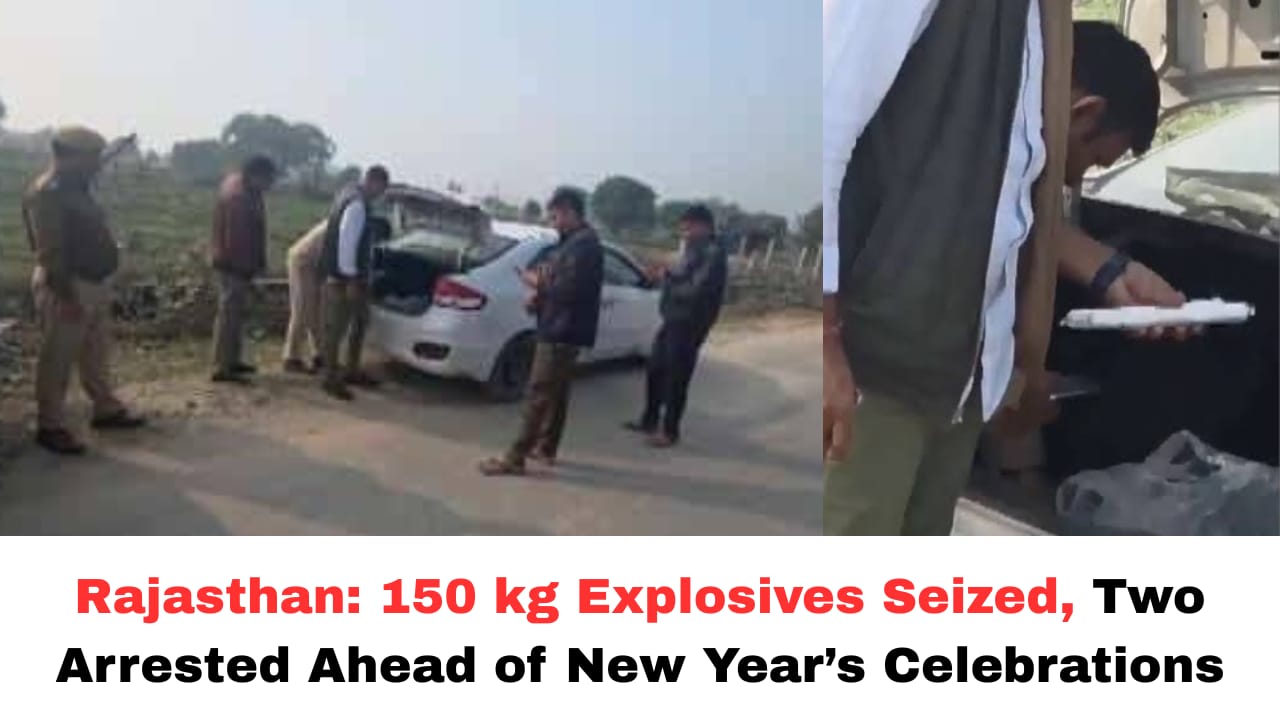
On December 31, 2025, police received specific intelligence indicating that a vehicle traveling from Bundi district toward Tonk was carrying illegal explosive material. Acting swiftly on the tip-off, officers from the District Special Team (DST) of the Tonk police set up a blockade on the Tonk–Jaipur highway, near the Baroni police station area, to stop and search the suspicious vehicle.

Upon inspection, authorities uncovered a Maruti Ciaz car laden with approximately 150 kilograms of ammonium nitrate — a chemical substance commonly used in mining and as a component in improvised explosive devices (IEDs). The explosive material had been concealed under bags of urea fertilizer, a tactic often used to avoid detection during transit.
In addition to the ammonium nitrate, police also recovered around 200 explosive cartridges and six bundles of safety fuse wire measuring roughly 1,100 metres — items that could be used in the construction and detonation of explosive devices.
Arrests and Initial Investigation
Two individuals, Surendra Patwa (48) and Surendra Mochi (35), both residents of Bundi district, were taken into custody at the scene. They are currently being interrogated by police as part of the ongoing investigation. Authorities have seized the vehicle used to transport the materials and have launched a detailed inquiry into the origins, destination, and intended use of the explosive consignment.
According to Deputy Superintendent of Police Mrityunjay Mishra, the rapid response following the intelligence tip-off prevented what could have escalated into a dangerous situation amid New Year festivities. Mr. Mishra stated that police are examining whether the consignment was meant for illegal activities, such as unauthorized mining operations, or if there were more sinister motives at play.
Why Ammonium Nitrate Is Concerning
While ammonium nitrate has legitimate uses in agriculture as a fertilizer and in the mining industry as a blasting agent, it is also widely recognized for its potential misuse in bomb-making when combined with fuel or detonators. Large quantities of ammonium nitrate have featured in past terrorist attacks and accidental explosions worldwide, including a devastating blast in Beirut in 2020 and several incidents in India itself. Because of this dual-use potential, heavy regulation and safety protocols govern its production, transport, and storage.
In India, law enforcement agencies treat unauthorized transport of large quantities of ammonium nitrate as a serious threat, since it could be diverted for criminal or terror activities. This concern has been heightened in 2025 by previous incidents involving explosive materials recovered in security operations, such as the car blast near the Red Fort in Delhi in November this year, which also involved explosive compounds.
Wider Security Measures in Rajasthan
The seizure in Tonk occurred within a broader context of heightened security across northern India as authorities prepared for the New Year and remained on alert following earlier explosive-related incidents this year. Police have been conducting stringent vehicle inspections, checkpoints and intelligence-driven operations to intercept illegal arms and explosive consignments.
The Rajasthan Police’s swift action underscores the effectiveness of intelligence sharing and proactive policing in thwarting potential threats before they can materialize. Coordination among district units, rapid deployment of the DST, and timely intervention were key to preventing the illicit explosives from reaching their destination.
Possible Motives and Ongoing Probes
Investigators are pursuing multiple angles as part of the inquiry into the Tonk seizure. One possibility is that the explosive material was being transported for illegal mining operations, where ammonium nitrate is in demand as a commercial blasting agent. But questions remain about whether proper clearances for such use were in place — or if the material was being diverted for unauthorized or harmful purposes.
Authorities are also exploring whether there could be organized networks involved in the illegal supply and distribution of explosive precursors, especially given the sophistication of the concealment and the volume involved. The interrogation of the arrested suspects, along with forensic analysis of the seized material, is expected to shed more light on the route, suppliers, and intended usage.

Public Safety and Government Response
In response to the seizure, police and state security agencies have maintained a heightened state of alert, particularly in districts adjacent to Tonk. Local residents have been urged to stay vigilant and report suspicious activity to authorities. While no official claim has been made linking the incident to a terror plot, the volume and nature of the materials have prompted rigorous scrutiny by law enforcement.
Government officials have also reiterated the importance of regulating and tracking the movement of explosive materials, emphasizing cooperation between industry, transporters, and security agencies to prevent misuse. These regulatory frameworks are essential to balance legitimate industrial needs with public safety imperatives.
Conclusion
The interception of an explosives-laden vehicle in Rajasthan’s Tonk district just before New Year’s celebrations highlights both the challenges and successes of India’s internal security efforts. Acting on precise intelligence, police were able to seize 150 kg of ammonium nitrate, hundreds of cartridges, and extensive safety fuse wire, and arrest two suspects before any harm could occur.
With ongoing investigations, authorities aim to trace the network behind the illegal transport, determine intentions behind the shipment, and ensure such incidents remain isolated. As India enters 2026, this event serves as a reminder that proactive intelligence, inter-agency coordination, and vigilant enforcement remain critical to thwarting threats and safeguarding public celebrations and civic life.
You May Also Read: Jaishankar in Dhaka: India Pays Tribute to Ex-Bangladesh PM Khaleda Zia