



Digital News Guru National Desk:
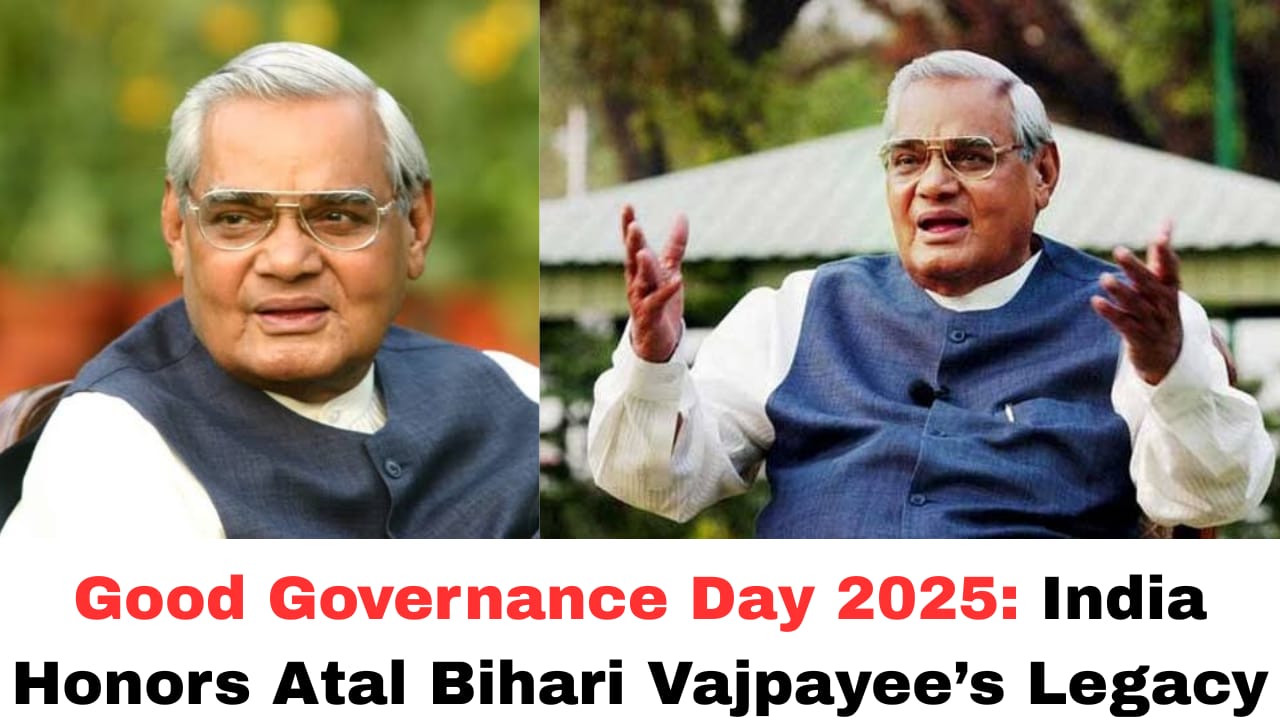
Good Governance Day is being observed across India, December 25, 2025, as the nation commemorates the 101st birth anniversary of Bharat Ratna and former Prime Minister Atal Bihari Vajpayee. The day, officially recognized as Sushasan Diwas, celebrates transparent, accountable and people-centric governance — principles that Vajpayee championed throughout his political career.
At formal ceremonies in the capital and in states from Odisha to Bihar, leaders paid solemn homage and reflected on Vajpayee’s enduring contributions to India’s democratic and developmental journey. Across government offices, cultural events, exhibitions and public programmes, citizens and officials alike marked the occasion with renewed commitment to good governance and public service.
Nation’s Leaders Honour Vajpayee’s Legacy
In New Delhi, President Droupadi Murmu, Vice-President C.P. Radhakrishnan, and Prime Minister Narendra Modi led the day’s tributes at the ‘Sadaiv Atal’ memorial, where they offered floral respects and spoke about Vajpayee’s remarkable leadership. The event, attended by senior Union Ministers, Members of Parliament and state officials, reaffirmed the reverence with which the veteran statesman is remembered.
In his address, PM Modi noted that Vajpayee’s life was “dedicated to good governance and nation-building,” and said his personality, work and leadership would continue to inspire progress and development across India. Modi described Vajpayee not only as a visionary leader but also as an eloquent orator and a spirited poet whose words resonated with citizens across generations.
Former Vice-President M. Venkaiah Naidu also praised Vajpayee’s decisive contributions to governance and national development, highlighting his role in steering India through complex political terrains with dignity and foresight. Leaders from various parties, including those beyond the ruling coalition, took to social media to honour his memory and call for the continuation of his legacy of inclusive governance.
State-Level Commemorations and Public Pledges
State capitals and districts held parallel observances. In Patna, a state-level function saw Bihar’s Chief Minister Nitish Kumar garland Vajpayee’s statue before a gathering of ministers, legislators and citizens committed to preserving his ideals of good governance and public service.
In Jaipur, Rajasthan’s Chief Minister Bhajanlal Sharma led officials at the government secretariat, where officers took a public service oath to uphold principles of transparency, accountability and citizen-centric governance — echoing the ethos of Sushasan Diwas.
Across Haryana and other states, civic events, exhibitions, and cultural performances celebrated Vajpayee’s life and thoughts. For instance, local municipalities organised exhibitions depicting his life, while officers and employees at district headquarters took oaths to strengthen administrative responsiveness and integrity. Such events reinforced the message that Good Governance Day transcends ceremonial tribute and is an opportunity to renew commitment to ethical public administration.
What Is Good Governance Day?
Atal Bihari Vajpayee, born on December 25, 1924, in Gwalior, served as India’s Prime Minister three times: briefly in 1996, and later from 1998 to 2004. He is widely respected across political lines for his statesmanship, poetic eloquence, and efforts to foster national unity. Under his leadership, India pursued economic reforms, strengthened democratic institutions, and navigated complex international relations with skill.
His emphasis on consensus building and inclusive development left an indelible imprint on Indian politics. Many leaders recall his simplicity, humility, and ability to balance political firmness with personal warmth — qualities that have contributed to his lasting popularity among citizens from diverse backgrounds.
Good Governance Day was first declared in 2014 by the Government of India to coincide with Vajpayee’s birthday. The observance aims to foster awareness about the importance of good governance in public life — promoting ethical leadership, transparency in administration, and responsiveness to citizens’ needs.
Public Engagement and Cultural Tributes
Beyond formal ceremonies, cultural tributes played an important role in the day’s activities. Schools, colleges and community groups organised discussions, essay competitions and exhibitions focusing on Vajpayee’s life and teachings. In cities like Surat and Shamli, exhibitions and panel discussions showcased his speeches, poems and pivotal moments from his political career — inviting public reflection on how his values can inspire future generations.
In some regions, including Firozabad in Uttar Pradesh, political parties and local bodies mobilised volunteers to spread awareness about Good Governance Day at the grassroots level, distributing images and literature about Vajpayee and his ideals. Such efforts aim to connect citizens directly with the principles behind the day’s observance — not merely as a tribute to history but as inspiration for civic engagement today.
Continuing the Vision of Governance
As India commemorates Good Governance Day in 2025, the theme of service before self resonates across public discourse. Leaders emphasised that good governance is not just about administrative efficiency but also about compassionate leadership and the empowerment of citizens. This year’s observance — marked by heartfelt tributes, statewide programmes, and public pledges — reflects a collective commitment to carry forward Vajpayee’s vision of transparent and accountable governance.
At a time of rapid social and economic transformation, the celebration of Good Governance Day serves as a reminder that democratic values anchored in integrity, inclusivity and dignity are central to India’s progress. The legacy of Atal Bihari Vajpayee, as a statesman who balanced political acumen with moral clarity, continues to be a guiding beacon for public servants and citizens alike.
You May Also Read: Uddhav and Raj Thackeray Reunite for Mumbai BMC Polls After 20 Years