



Digital News Guru Madhya Pradesh Desk:
Bhopal Enters India’s Metro Map
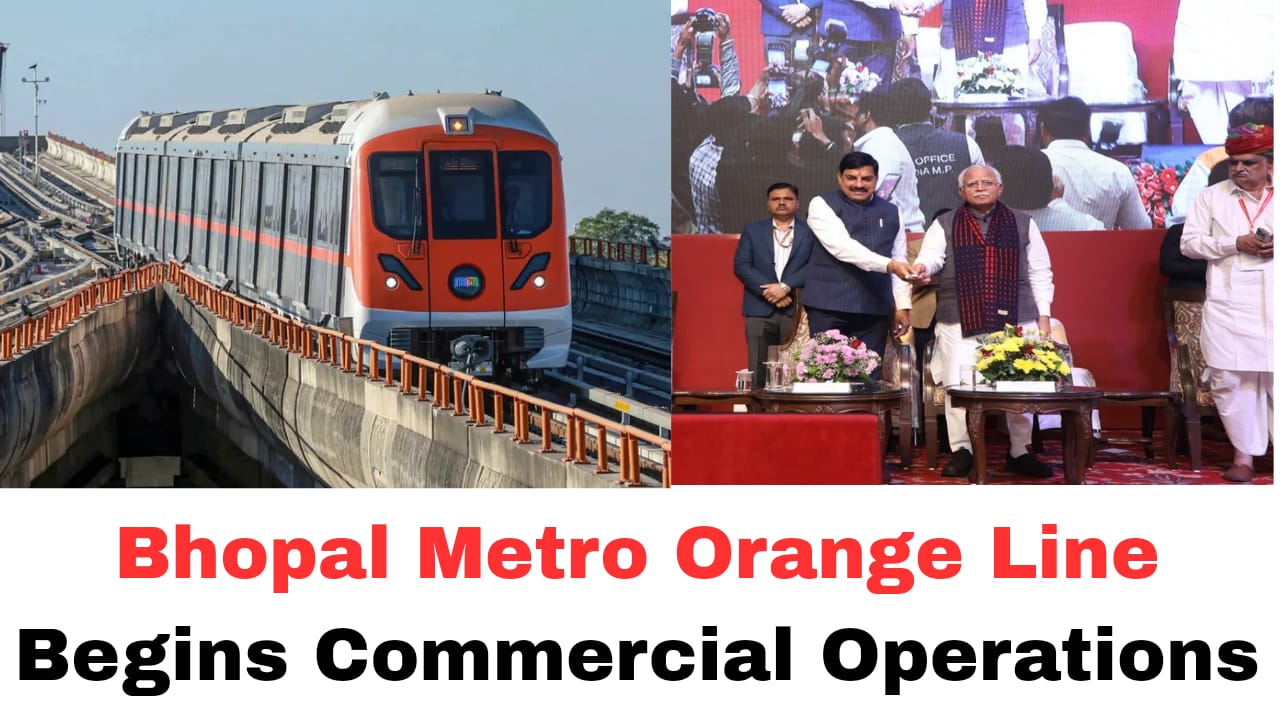
Today marks a landmark moment in the urban development of Bhopal, as the city’s first metro rail service on the Orange Line priority corridor begins commercial operations, officially launching its modern mass-transit system for daily commuters. This development not only transforms travel in the state capital but also positions Bhopal as the second city in Madhya Pradesh, after Indore, to operate a metro rail service — a testament to long-term planning, significant investment, and sustained commitment to improving urban infrastructure.
From Vision to Reality: The Long Road to Metro Transit
The Bhopal Metro project, officially named the Bhoj Metro, has been in planning and development for nearly a decade. Originally conceived to address growing traffic congestion, environmental concerns, and the need for efficient urban transit, the project faced several challenges along the way, including administrative hurdles, funding complexities, and delays due to broader systemic issues. However, persistent efforts by the Madhya Pradesh government and project authorities have brought the metro to this historic opening day.
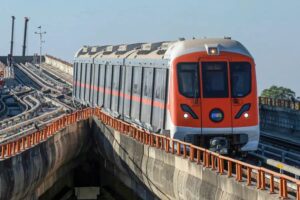
The priority corridor that begins operations today covers approximately 6.22–7 kilometres of elevated track and includes eight stations linking key zones from Subhash Nagar to AIIMS Bhopal — areas of commercial, residential, educational, and medical significance. These stations include, among others, Kendriya Vidyalaya, Board Office Chauraha, MP Nagar, Rani Kamalapati Station, DRM Office, and Alkapuri. The connectivity this route offers is expected to significantly cut travel time and ease congestion on some of Bhopal’s busiest roads.
Formal Inauguration and Public Launch
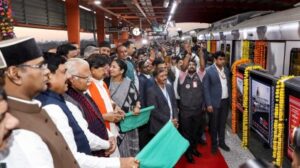
The metro’s inauguration took place on December 20, 2025, at the Kushabhau Thakre International Convention Centre (Minto Hall) in Bhopal. The ceremony was presided over by Union Housing and Urban Affairs Minister Manohar Lal Khattar, Madhya Pradesh Chief Minister Dr. Mohan Yadav, and senior state officials. They flagged off the first metro train along the Orange Line’s priority corridor as part of the formal launch activities.
Public services officially began today Sunday morning, December 21, with trains scheduled to operate between 9 a.m. and 7 p.m., making this a momentous day for urban commuters across the city.
Fares and Service Details
The Bhopal Metro has introduced a simple fare structure to encourage daily use while keeping affordability in focus. Fare slabs are planned as follows:
- Rs 20 for travel across 1–2 stations
- Rs 30 for travel across 3–5 stations
- Rs 40 for travel across 6–8 stations
There are 17 scheduled train runs each day, offering frequent and predictable service for riders. Notably, the metro is not offering free introductory rides; passengers are expected to pay the full fare from the very first day of operations — a departure from how some other metro systems have launched in India.
Modern Features and Commuter Experience
The metro service has been designed with passengers in mind, incorporating a range of modern amenities aimed at comfort, accessibility, and safety. The three-coach trains include:
- Air-conditioned interiors for comfort in all seasons
- Mobile device charging points
- Digital passenger information systems to aid easy navigation
- Wheelchair spaces and accessibility features for differently-abled commuters
- Automatic doors and platform screen doors for safety
The stations themselves are equipped with high-speed lifts and escalators, clearly marked gates, and other conveniences typical of world-class metro systems. Advanced signaling systems and regenerative braking technologies contribute to both operational efficiency and reduced environmental impact.
Impact on Urban Mobility and Commuting Patterns
For decades, Bhopal’s residents have depended largely on road transport — buses, private vehicles, and auto-rickshaws — to navigate a city that has expanded rapidly. This growth, while positive from a developmental perspective, also brought challenges: traffic congestion, longer commute times, and increased pollution. The metro system is expected to alleviate these issues, offering a fast, reliable, and eco-friendly alternative for thousands of daily commuters.
By linking critical urban nodes — from educational institutions to healthcare centres and commercial hubs — the metro will encourage a modal shift in how people travel, potentially relieving pressure on the city’s roads and public bus systems. Over time, this should result in more predictable travel patterns, less traffic congestion, and a noticeable improvement in air quality within the urban core.

Future Expansion Plans
Today’s launch covers only the priority section of the Orange Line. The full Phase-1 project of the Bhopal Metro includes two major corridors:
- The Orange Line, planned to extend from AIIMS to Karond (approx. 16.74 km)
- The Blue Line, planned to run from Bhadbhada to Ratnagiri (approx. 14.16 km)
Combined, these corridors will add up to about 31 km of metro network, creating a comprehensive system that connects more residential and commercial areas across Bhopal. Project officials have stated that future phases will be developed based on ridership demand and urban planning priorities.
Looking Ahead: A Smarter, Greener City
The launch of the Bhopal Metro Orange Line marks a significant milestone not just in infrastructure but in the city’s broader narrative of growth and modernization. It reflects strategic thinking that extends beyond transport — planning that anticipates future urbanization, demographic shifts, and environmental sustainability.
Residents and experts alike have welcomed the metro’s opening, noting its potential to reshape daily life in Bhopal. For many commuters, the metro offers a new way to navigate the city — one that’s faster, cleaner, and more efficient than conventional road travel.
As Bhopal embraces this new era, today’s developments signal a shift toward smarter urban mobility — one that aligns with India’s broader goals of sustainable city planning and enhanced quality of life for its citizens. From easing traffic woes to giving everyday commuters a reliable alternative to road transport, the metro’s opening stands as a major milestone in Bhopal’s ongoing transformation.
You May Also Read: India becomes the world’s 4th largest economy