



Digital News Guru Sports Desk:
India vs South Africa T20I match affected
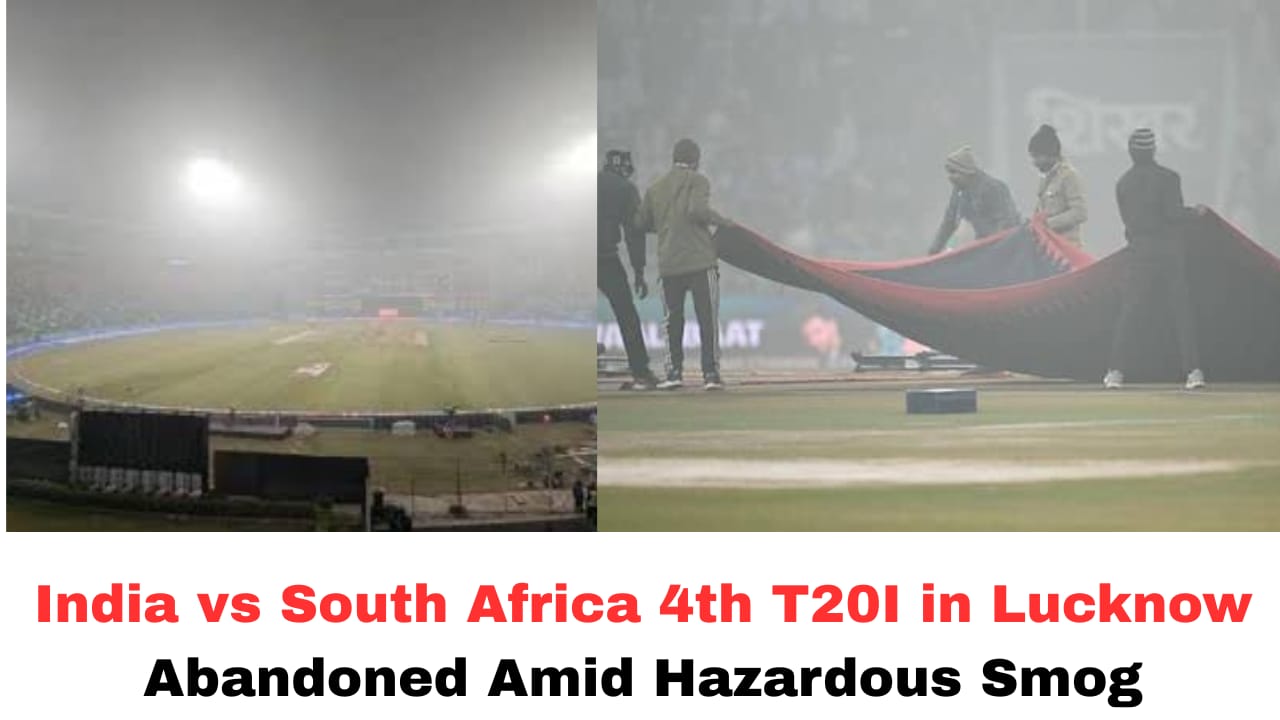
In a dramatic twist to the ongoing India vs South Africa T20I series, the much-anticipated fourth Twenty20 International scheduled for 17 December 2025 at the Bharat Ratna Shri Atal Bihari Vajpayee Ekana Cricket Stadium in Lucknow was abandoned without a ball being bowled after dense fog and smog enveloped the venue, rendering conditions unsafe and unsuitable for play. Both cricket fans and authorities were left disappointed as weather, rather than cricket, became the deciding factor in what was set to be a key match in the five-game series.
Fog and Smog: A Weather Wrecking Ball
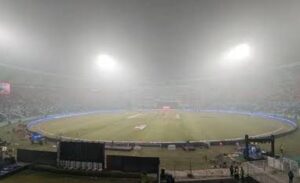
The abandonment was directly linked to extremely poor visibility caused by excessive fog and smog, a familiar challenge in northern India’s winter months. Thick haze descended on Lucknow well before the scheduled start of the evening fixture, dramatically reducing visibility on and around the field. Match officials repeatedly delayed the toss, originally set for around 6:30 pm, as the fog refused to lift under floodlights.
As visibility deteriorated, air quality levels climbed to hazardous levels — with AQI (Air Quality Index) reportedly crossing the 400 mark — pushing conditions beyond acceptable safety thresholds for high-level sport. In fact, scenes from the stadium saw players like Indian all-rounder Hardik Pandya wearing a mask during pre-match warm-ups, symbolising the severity of the air pollution challenge.
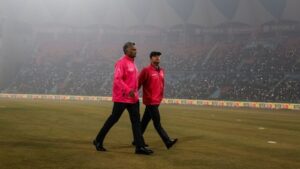
Officials conducted multiple on-field inspections throughout the evening, notably at 6:50 pm, 7:30 pm, 8:00 pm, 8:30 pm and again later into the night, but none showed any sign of improvement. Umpires ultimately concluded that the fog had persisted without respite, making it impossible for either team to safely engage in play — especially for outfielders trying to track the ball under conditions where visibility was often measured in just a few metres.
Abandonment Without a Toss: A Unique Outcome
In an unusual conclusion, the match was called off without the toss taking place, leaving both teams and fans high and dry. Despite the stadium being partially filled with hopeful spectators, the ferocity of the weather ensured that the fixture could not commence. Even seasoned commentators noted how the fog remained stubbornly dense, prompting lengthy discussions between match officials and broadcasters over the viability of beginning the game.
This abandonment marks a rare instance where a match has been entirely washed out due to fog and smog rather than rain, bringing attention to the unique meteorological challenges faced by organisers when scheduling international sports in northern India during winter.
Series Context and Aftermath
Prior to this washout, India led the five-match series 2–1, with both sides having contested three games in spirited fashion. With the fourth game scrapped, the series now heads to the fifth and final T20I in Ahmedabad on 19 December, where South Africa will look to level the overall score and India will aim to secure a series win.
From a tactical perspective, the abandonment denied both teams a chance to gain momentum. India, buoyed by strong performances in earlier matches, and South Africa, seeking to bounce back after narrow losses, were both left frustrated, with players returning to their hotels after continued inspections failed to offer respite from the dense haze.
Reactions: Fans, Officials and Critics
The decision to scrap the match ignited immediate criticism of the Board of Control for Cricket in India (BCCI) and its scheduling practices. Many fans and commentators pointed out that holding a night T20I in northern India during peak winter — when fog and poor air quality are widely expected — was a risky proposition. Critics suggested that alternative venues in southern or coastal regions, where winter smog is less severe, might have been better suited for December fixtures.
Among the vocal critics was Congress MP Shashi Tharoor, who highlighted the scheduling dilemma by contrasting the hazardous air quality in Lucknow with much cleaner conditions reported in other states such as Kerala on the same day. Tharoor’s comments underscored a broader public debate on whether cricket boards should factor in environmental and health considerations more robustly when planning high-profile matches.
Supporters in the stadium expressed their own frustration, with some reportedly demanding refunds after the match was called off — a stark reminder of the disappointment that fans, many of whom had travelled and paid significant amounts to witness live action, faced due to circumstances entirely out of their control.
A Broader Issue: Environment Meets Sport
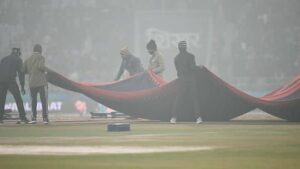
The abandonment also brought attention to a growing intersection between sport and environmental conditions. As cities like Lucknow grapple with periodic spikes in air pollution and winter fog, sporting bodies are increasingly challenged to weigh the health and safety of players and fans against scheduling imperatives. With climate and environmental unpredictability intensifying worldwide, the cricketing community is now grappling with difficult questions about traditional season timelines and venue rotations.
Spectators and cricket analysts alike are now likely to push for reform in cricket scheduling, especially when it comes to international tours in regions prone to adverse weather events. The Lucknow incident could serve as a catalyst for broader changes in how and where matches are planned during vulnerable periods of the year.
Looking Ahead: Final T20I and Lessons Learned
With the T20I series conclusion set for Ahmedabad, teams now turn their attention to what promises to be a series-deciding fifth match. Both India and South Africa will have extra time to recalibrate and prepare, but the shadow of the Lucknow cancellation looms large, reminding all stakeholders of the unpredictable nature of weather and the need for adaptive planning.
As the cricketing world digests the fallout from this unusual washout, one thing is clear: weather no longer remains just a sideline factor — it’s central to the very viability of sporting events, and future series planning must take this reality into account to safeguard the spirit of the game, the safety of players, and the passion of fans.
You May Also Read: PM Modi’s Landmark Visit to Ethiopia: A New Era in India-Africa Relations