



Digital News Guru Uttar Pradesh Desk:
Crackdown in UP: What’s Happening
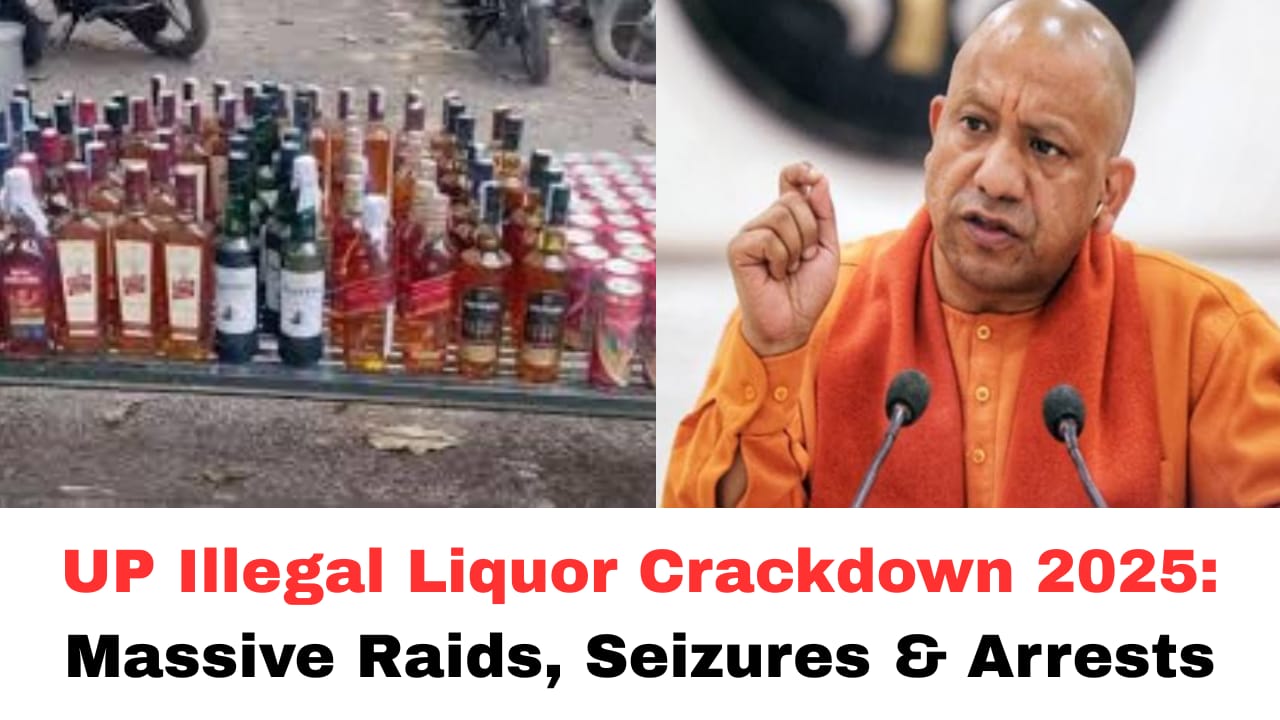
The government of Uttar Pradesh, under Yogi Adityanath, has ramped up its campaign against the illegal liquor trade — ordering a state-wide, no-tolerance crackdown on smuggling, unlicensed sale and illicit production of alcohol.
Under new directives, law-enforcement, excise, and excise-regulatory agencies across the state have been mobilized for coordinated operations to target and dismantle networks trafficking in unlicensed liquor.
Recent raids have resulted in large-scale seizures of illicit liquor, multiple arrests, registration of thousands of cases, confiscation of vehicles used for smuggling, and a crackdown on establishments flouting licensing norms.
The Scale of Enforcement: Numbers So Far
The intensity of enforcement in 2025–26 has been significant:
- From April to October 2025, authorities registered 70,017 cases related to illegal liquor. During this period, about 18.5 lakh litres of illicit liquor were seized. Around 13,243 individuals involved in illegal liquor trade were arrested, out of which 2,464 were sent to jail.
- In November 2025 alone, there were 10,002 new cases filed — including the seizure of 2.35 lakh litres of illicit liquor and confiscation of smuggling vehicles.
- Enforcement operations also targeted large smuggling consignments: for instance, in a recent bust near Lucknow’s Sitapur Road toll plaza, a joint operation by the state’s Special Task Force (STF) and local police seized 13,812 bottles of illicit English liquor hidden under sacks of potatoes in a truck. One member of the smuggling gang was arrested.
- The crackdown has involved numerous districts — including Rampur, Bareilly, Lakhimpur Kheri, Jhansi, Mathura, Ballia, Sonbhadra, Azamgarh and more — reflecting systematic, widespread action beyond urban centres.
These moves reflect the state’s intent to dismantle not just small-scale local bootlegging but also larger interstate smuggling syndicates.
What’s Driving the Crackdown
Several factors have combined to drive this intensified enforcement:
- The government’s renewed commitment to public safety and law-and-order. Officials argue that unregulated liquor trade fuels health hazards, unsafe drinking, black-market profiteering and social unrest — motivating a crackdown under strong political will.
- Under the new excise policy (2025–26), licensing of liquor shops has undergone reform (e.g. issuance of licences through e-lottery), making regulation more formal and reducing the scope for unlicensed sale.
- Strengthened coordination between excise department, local law enforcement, and task-force units like STF — giving more teeth to raids, surveillance, and interception of smuggling operations.
Broadly, this enforcement surge reflects a shift from occasional raids to a full-scale, sustained crackdown.
Enforcement in Action: How Raids and Busts Are Unfolding
The enforcement strategy combines several elements:
- Surprise raids on known or suspected dens of illegal liquor sale/manufacture, including unlicensed bars, parties, warehouses, and transit points. Inspectors are also targeting misuse of temporary licences (for example, clubs or venues operating as bars without proper licensing).
- Inter-state smuggling busts: The STF and local police have intercepted trucks carrying large liquor consignments — often concealed among agricultural produce or using false paperwork — destined for other states. The recent truck seizure near Lucknow is a prime example.
- Vehicle seizure: Gangs often use vehicles to transport liquor. Confiscating vehicles disrupts logistics and makes large-scale operations harder.
- Targeted operations in districts: Given data indicating hotspots, raids are being prioritized in districts with high smuggling activity, making enforcement more localized and effective.
Wider Impacts: What This Means for Government, Citizens, and Smugglers
The crackdown has multiple consequences across different stakeholders:
For the government and law-enforcement:
- The state has seen a surge in excise revenue — reflecting both higher compliance and the plugging of revenue leaks that previously went to illicit trade.
- Crackdown helps curb black-market profiteering, dismantle smuggling networks, and assert stronger regulatory control over alcohol trade.
For citizens:
- Reduction in illicit liquor availability potentially reduces health risks, consumption of unregulated or adulterated alcohol, and associated social ills.
- More regulated system of licensed shops may bring transparency — though consumers may face shortages or higher prices in short-term as illegal channels dry up.
For smugglers and illegal networks:
- Intercepted supply chains and vehicle confiscations strain operations. The risk of arrests and long jail sentences raises the cost of doing illicit business.
- Given the wide geographic spread of raids, smugglers may find it harder to operate openly — but networks may adapt, requiring sustained vigilance.
Challenges & What Remains to Be Done
Despite heavy enforcement, several challenges persist:
- Smuggling networks are adaptive. Even after major busts, there’s a risk that illicit trade may resurface in more covert or fragmented formats — necessitating ongoing surveillance and operations.
- Enforcement fatigue or corruption at local levels can hamper the crackdown. Consistent checks, transparency, and accountability will be essential.
- Demand for cheap alcohol remains — especially in rural or low-income areas. Unless legitimate access (through licensed shops) is made affordable and accessible, demand may push people back toward illicit sources.
- Monitoring and regulation must continue — not just raids but systematic licensing, digital tracking, and public awareness — to ensure long-term success.
What to Watch Next
Looking ahead, here are key signals to watch:
- Whether seizures and arrests continue at the current scale in the coming months — indicating sustained enforcement rather than a temporary surge.
- If official data shows reduction in consumption of illicit liquor, fewer cases of alcohol-related health or law-and-order incidents — signs that crackdown is translating into social impact.
- Implementation of reforms: proper licensing under the new e-lottery system, regulated sale points, compliance by bars/retailers, and better oversight by authorities.
- Community response and public awareness — whether citizens start preferring licensed purchase and avoid black-market sources, especially in rural and semi-urban areas.
Conclusion
The ongoing crackdown on illegal liquor trade in Uttar Pradesh marks a sharp and serious shift in how the state is dealing with smuggling, unlicensed sale, and illicit alcohol consumption. With strong political will, coordinated enforcement, and widespread seizures and arrests, the state appears determined to dismantle long-standing liquor mafias and curb black-market alcohol distribution.
Yet, dismantling entrenched networks is a long game. The real test will lie in sustained enforcement, transparent licensing, equitable legal access, and consistent community compliance. If managed properly, this crackdown could not only disrupt illegal supply, but also promote safer, regulated consumption — a significant win for public health, governance, and law and order.
You May Also Read: Nagpur on High Alert After Intelligence Warning of Terror Threat