



Digital News Guru Environment Desk:
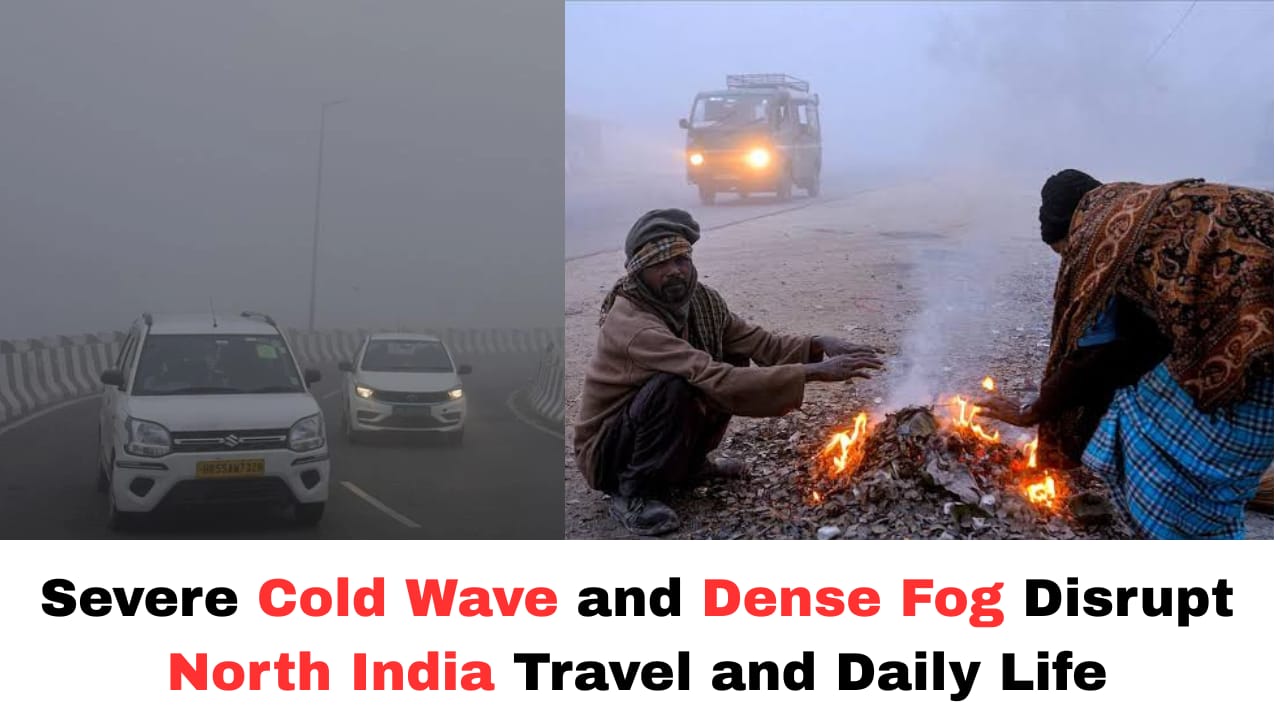
North India is currently enduring one of the harshest winter spells of the season, as a severe cold wave coupled with pervasive dense fog has swept across the northern plains, significantly impacting daily life, transport networks, and public health. From the National Capital Region (NCR) to Uttar Pradesh, Punjab and Haryana, the chilling conditions have disrupted air, road and rail travel while prompting weather warnings from authorities.
Cold Wave & Dense Fog Grip North India
The India Meteorological Department (IMD) has confirmed that dense to very dense fog conditions will persist across large parts of North India for the next few days, particularly during early morning and late-night hours. This weather pattern is the result of calm winds, high humidity and plummeting nighttime temperatures, creating a thick layer of fog that reduces visibility to dangerously low levels.
In Delhi, the cold wave has deepened, with the city registering its first major cold day of the season recently, when the maximum temperature hovered around 16.9 °C, several degrees below the seasonal average, and minimum temperatures dipped close to 6 °C. Such prolonged chill and fog have made mornings particularly harsh for commuters and residents.
The IMD has issued orange and red weather alerts covering states like Uttar Pradesh, Punjab, Haryana, Bihar and Rajasthan, warning of severe fog and cold day conditions that are likely to persist into the end of December. These alerts aim to notify the public and authorities to prepare for widespread travel disruptions, slippery surfaces and poor visibility that could impact routine activities and essential services.
Air Travel Hit Hard: Flight Cancellations and Delays
The aviation sector has been among the worst affected. At Indira Gandhi International (IGI) Airport in Delhi, flight operations have suffered major disruptions for several consecutive days due to low visibility caused by dense fog. On one of the most challenging days, airport sources reported that 129 flights were cancelled, including 66 arrivals and 63 departures, as safety protocols limited take-offs and landings.
Even when some flights are able to operate, they do so under CAT III low-visibility procedures, which allow aircraft equipped for such conditions to land and take off, but with strict safety measures in place. Airlines such as IndiGo, Air India and SpiceJet have issued travel advisories, urging passengers to check the status of their flights before heading to the airport and to plan their journeys with ample buffer time.
The impact of foggy conditions is not restricted to Delhi alone. Airports in Chandigarh, Amritsar, Jammu, Lucknow, Varanasi, Patna and Hindon have also reported delays and cancellations, with airline officials noting that continuously low visibility will likely disrupt schedules over the coming days.
Rail and Road Travel Disrupted
Dense fog has taken a toll on railway operations as well, with trains across major northbound and eastbound routes running behind schedule. The Railway Board has had to impose speed restrictions in fog-prone sections, leading to cascading delays across long-distance trains that connect the region to other parts of India.

Road travel has also been severely affected, as visibility often drops below 100–200 meters in the early morning. Highways connecting Delhi to neighbouring states have seen slow-moving traffic, with commuters urged to switch on fog lights, maintain safe distances and exercise extra caution to avoid accidents.
Public Health Concerns: Pollution Meets Fog
Aside from visibility issues, air quality levels in many north Indian cities remain a growing concern. In the Delhi-NCR region, the Air Quality Index (AQI) has hovered near the ‘severe’ category, exacerbating respiratory distress among vulnerable populations, such as children, the elderly, and people with chronic lung conditions. The dense fog often combines with pollutants to form smog, making breathing difficult for many residents.
Medical professionals and environmental experts have advised citizens to avoid strenuous outdoor activities, wear masks when necessary, and keep medications readily available for people with existing respiratory issues. Some schools and offices have even considered flexible hours or work-from-home advisories to reduce exposure during peak fog and pollution periods.
Weather Forecast and IMD Alerts
According to the latest weather forecasts, the IMD predicts that the current cold wave and foggy conditions will persist through most of this week. In addition to the dense fog across the plains, western disturbances are expected to bring rain and snowfall to the Himalayan regions, potentially causing travel disruptions on mountain passes and key highways.
Weather bulletins also indicate that while daytime temperatures may see slight improvements in some areas, early mornings and nights will remain extremely cold, with dense fog likely to return at sunrise and after sunset. This cyclical pattern could mean transport and visibility challenges continue well into Christmas week, affecting travel plans for millions of people during the peak holiday season.
Government and Public Advisory Measures
In response to the situation, several state governments have issued advisories and safety instructions. Authorities have urged commuters to stay updated with local weather and traffic bulletins, reduce unnecessary travel during dense fog periods, and use caution when navigating major roads. Emergency services and police have also stepped up patrols on key highways and busy intersections to manage fog-related accidents and incidents.
Airlines, airports and civil aviation authorities are coordinating closely to manage flight rescheduling, passenger facilitation and airline ground support under low-visibility conditions. Meanwhile, public advisories stress the importance of checking travel updates, keeping buffer times for longer journeys, and using official communication channels for the latest weather and flight information.
Looking Ahead
As North India grapples with this severe cold wave and dense fog episode, citizens and authorities are bracing for continued challenges in travel, daily routines and health safety. With weather experts forecasting persistent fog and cold conditions over the next several days, residents are advised to stay informed, prepare for disruptions, and take precautions to navigate this winter spell as safely and comfortably as possible.
You May Also Read: KGMU in Uttar Pradesh Seeks INI Status