




Digital News Guru Uttar Pradesh Desk:
Big Crackdown: Rs 425 Crore Codeine-Syrup Racket Exposed in Sonbhadra
A major blow has been dealt to an illicit narcotics-trade ring operating out of eastern Uttar Pradesh — the illegal codeine-syrup syndicate busted by the Special Investigation Team (SIT) of the province has been found to have a financial trail amounting to Rs 425 crore, as per latest police disclosures.
The racket allegedly involved diversion, stockpiling, and interstate smuggling of codeine-based cough syrup — a controlled substance under narcotics laws. Bogus firms, fake distributors, and manipulated GST/billing records were used to camouflage the illegal trade and channel it across state borders.

Who’s Behind It — Key Players & Modus Operandi
According to police, the syndicate was allegedly run by Shubham Jaiswal, with operations managed using a network of shell companies. The main shell-company flagged was Shaili Traders — a Jharkhand-based super-stockist firm linked to the racket.
Investigations revealed that several front-firms, bogus distributors, and medical stores from Sonbhadra, Bhadohi and elsewhere were shown as legitimate suppliers. Numerous bank accounts — estimated at around 30 — used in hiding the proceeds have been frozen, and approximately 60 lakh has already been blocked as part of anti-money-laundering measures.
The financial irregularities reportedly span two financial years. A chartered accountant associated with the firm was summoned to present complete financial ledgers, GST filings, invoices, and transaction records for detailed scrutiny.
Scale of the Operation — How Big It Was
As per the SIT’s findings:
- The 425 crore figure represents the turnover linked to illegal diversion and distribution of codeine-based syrups.
- The trade was not local, but interstate: the syrup was allegedly routed through multiple states — from Jharkhand and Uttar Pradesh to other regions — before possible export or further distribution.
- Fake duplication of records (fake distributors, forged bills, bogus firms) was the modus operandi, to circumvent regulatory oversight and allow for large-scale trafficking.
Authorities consider this among the largest illicit cough-syrup or narcotic-medicine rackets uncovered in recent years in Uttar Pradesh.
Wider Crackdown: From Seizures to FIRs
This arrest is part of a broader, statewide crackdown:
- The government has launched a campaign — under a “zero tolerance” policy — against codeine-based cough syrups and other controlled narcotics, targeting illicit manufacture, sale and distribution across multiple districts.
- Hundreds of FIRs have been filed under relevant narcotics laws (including the NDPS Act), and dozens of drug-stores, front-firms, and accused individuals are under investigation.
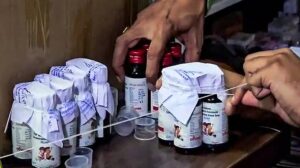
- The crackdown has already resulted in major seizures: in an earlier incident, around 1.19 lakh bottles of banned cough syrup worth roughly Rs 3 crore were seized from container trucks intercepted in Sonbhadra.
Officials say that more arrests and legal actions are likely in the coming days as the investigation proceeds.
Why This Matters — Public Health & Law-Enforcement Angle
- Codeine-based syrups are supposed to be tightly regulated and dispensed on valid prescriptions because of their potential for misuse and addiction. That such a large network functioned for years indicates a serious breakdown in regulatory control and enforcement.
- The racket isn’t just about illegal profit — it has public-health implications: abuse of codeine syrups can lead to addiction, health emergencies, and exploitation of vulnerable populations. Such illicit supply chains can worsen drug-abuse problems, especially among youth.
- Systematic use of bogus firms, manipulated paperwork, fake billing, and laundering — all suggest organized crime, not isolated incidents. This necessitates a coordinated response involving police, drug-control agencies, financial regulators.
- Given the cross-state — and possibly international — nature of the network, root-level reforms in tracking distribution and sale of controlled medicines are essential to prevent recurrence.

What’s Next — Investigation, Legal Action & Reforms
- The SIT has issued notices to multiple firms and individuals involved, demanding disclosure of procurement records, stock registers, transport receipts, digital communications — to map the full supply chain.
- Authorities are expected to broaden the probe, linking other seizures (in Jharkhand, Bihar, Ghaziabad, etc.) to this racket — to see if they were part of the same network.
- In parallel, regulatory oversight over distribution of codeine-based medicines is likely to intensify: monitoring of pharmacies, stock limits, stricter vetting of sellers, and more frequent audits.
- The case may also trigger legislative and policy review on how narcotic cough syrups are regulated — especially to close loopholes exploited by smugglers using fake documents and shell firms.
This expose of the Rs 425-crore codeine-syrup racket in Sonbhadra is a significant — and alarming — reminder of how prescription medicines can be diverted into illicit supply chains if regulatory vigilance and law-enforcement are lax. The ongoing crackdown, meticulously tracing financial and supply-chain links, may help dismantle large-scale drug syndicates operating under the guise of legitimate trade.
You May Also Read: Delhi Gets 17 New Back-Hoe Loaders & 2 “Super-Sucker” Machines — MCD Expands Sanitation Fleet