



Digital News Guru National Desk:
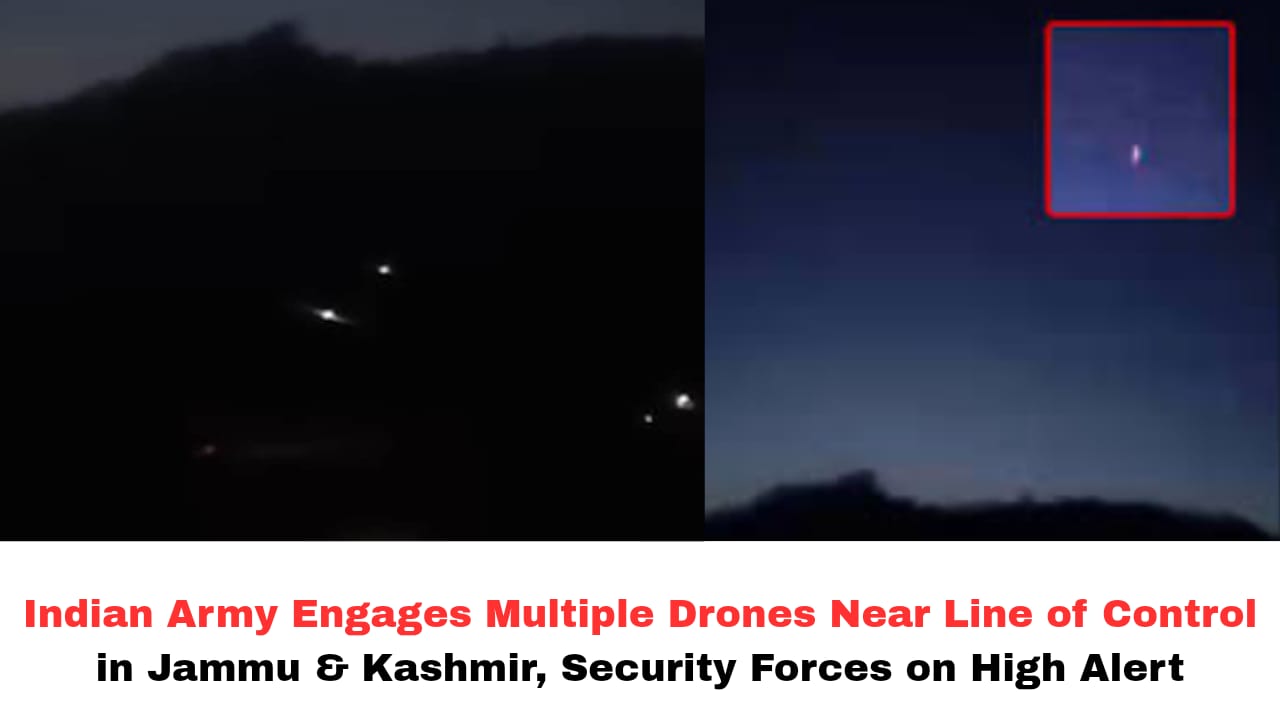
On Sunday evening (January 11, 2026), Indian security forces detected and engaged multiple unmanned aerial vehicles (UAVs) near the sensitive Line of Control (LoC) and International Border (IB) in Jammu & Kashmir, marking one of the latest episodes in continuing border tensions between India and Pakistan. Several suspected drones were spotted hovering over forward areas in the Samba, Rajouri and Poonch districts before retreating back across the border, prompting swift action by the Indian Army and ground search operations.
Drone Activity and Army Response
According to officials, suspected drones originating from across the LoC were observed entering Indian airspace in multiple locations on Sunday evening. The movements were first noted in forward areas of Samba, followed by sightings in Rajouri’s Nowshera sector and near Poonch — all regions that lie along the LoC and IB where Indian forces maintain vigilant surveillance.
Security personnel responded decisively. In the Nowshera sector, Indian Army troops fired upon one of the drones using medium and light machine guns as it hovered over Gania-Kalsian village, a forward civilian area close to the border, to prevent possible delivery of contraband or weapons. Additional drones were logged by ground and air surveillance but quickly exited Indian territory, officials said.
The fleeting nature of the incursions — with drones hovering only briefly before retreating — highlights an emerging pattern of probing reconnaissance and potential smuggling tactics. This marks the latest in a series of similar drone activities targeting the western frontier that have been reported periodically over the past year.
Search Operations Launched
Following the sightings and engagement, search operations were initiated across the affected frontier districts. Security forces — including Army units and local police — combed areas beneath the flight paths to check for any dropped items such as weapons, narcotics, or surveillance devices that might have been released from the UAVs. These operations aim to ensure that no threat items have been delivered onto Indian soil, as has occurred in previous incidents.
Context: Rising Drone Intrusions
Drone intrusions along the LoC and IB have become a recurrent security concern. Last year, India reported hundreds of drone intrusion incidents along its borders, with the Defence Ministry noting nearly 791 occurrences along the IB and LoC combined in 2025. These included drones carrying war-like payloads, narcotics, and payload-less reconnaissance missions. A significant portion of these incursions were successfully countered by Indian forces through the deployment of spoofers, jammers, and anti-drone defenses.
The uptick in aerial incursions has evolved beyond occasional reconnaissance to include attempts at smuggling illicit materials and conducting surveillance on Indian military positions. The use of small UAVs for such missions carries inherent challenges for defense forces due to their low radar signatures and ability to operate at low altitudes.
Security Implications and Strategic Patterns
The drone sightings near Samba, Rajouri, and Poonch occur against a broader backdrop of heightened border vigilance. Samba and Poonch sectors have historically witnessed periodic ceasefire violations and probing incursions, often coinciding with broader geopolitical developments between India and Pakistan.
Security analysts note that such drone activities serve multiple purposes:
- Surveillance of Indian Army deployments and terrain;
- Potential delivery of weapons, ammunition, or narcotics to support militant groups;
- Testing defensive readiness and response patterns along key sectors of the LoC and IB.
As small UAVs become more accessible and easier to deploy, their use in border infiltration attempts has increased worldwide — and South Asia is no exception.
Government and Military Response Framework
In response to the evolving drone threat, Indian defense agencies have strengthened counter-drone capabilities along the western border. The Indian Army, Border Security Force (BSF), and affiliated security organs have integrated detection and interdiction systems — including radio frequency jammers, radar surveillance, and rapid response firing units — to neutralize aerial incursions as soon as they are detected.
Officials assert that such defensive measures have been successful in preventing major breaches, emphasizing that no significant damage or successful infiltration has been confirmed from the latest wave of drone activity. Nevertheless, the repeated sightings underscore the persistent threat environment along these frontiers and the need for continued vigilance.

Public Safety and Alert Mechanisms
Despite the frequency of these incidents, authorities have emphasized that civilians in border areas should remain calm. Most incursions do not result in direct engagements involving civilian populations, and rapid military responses are designed to minimize risks. In some cases, precautionary measures — such as controlled blackouts or temporary mobilization orders — have been employed to improve visibility for defense systems and reduce civilian hazards.
Security briefings issued after such events typically stress that the situation remains firmly under control and that Indian forces are prepared to swiftly respond to aerial threats without escalation.
Regional Stability and Ongoing Challenges
The repeated drone sightings highlight ongoing challenges in maintaining peace and stability along the sensitive India-Pakistan border. These interactions occur in the context of broader diplomatic and military tensions between the two nations, which have periodically flared into direct conflicts. Despite ceasefire agreements and diplomatic efforts, sporadic incursions and security incidents continue to punctuate life along the border for both military personnel and local civilians.
For its part, the Indian Army’s response reflects a robust defensive posture aimed at safeguarding territorial integrity and responding diplomatically and militarily to unauthorized airspace violations. Continued patrols, technological enhancements, and coordinated intelligence efforts remain critical components of India’s strategy to counter asymmetric threats such as UAV incursions.
Summary: On January 11, 2026, the Indian Army engaged multiple suspected Pakistani drones near the LoC and IB in Jammu & Kashmir, triggering search operations and highlighting ongoing aerial security challenges. Indian defenses remain vigilant to prevent smuggling, surveillance, or hostile use of drones while maintaining border stability and civilian safety.
You May Also Read: Mission Pragati — Punjab’s free training drive for youth preparing for government competitive exams