



Digital News Guru New Delhi Desk:
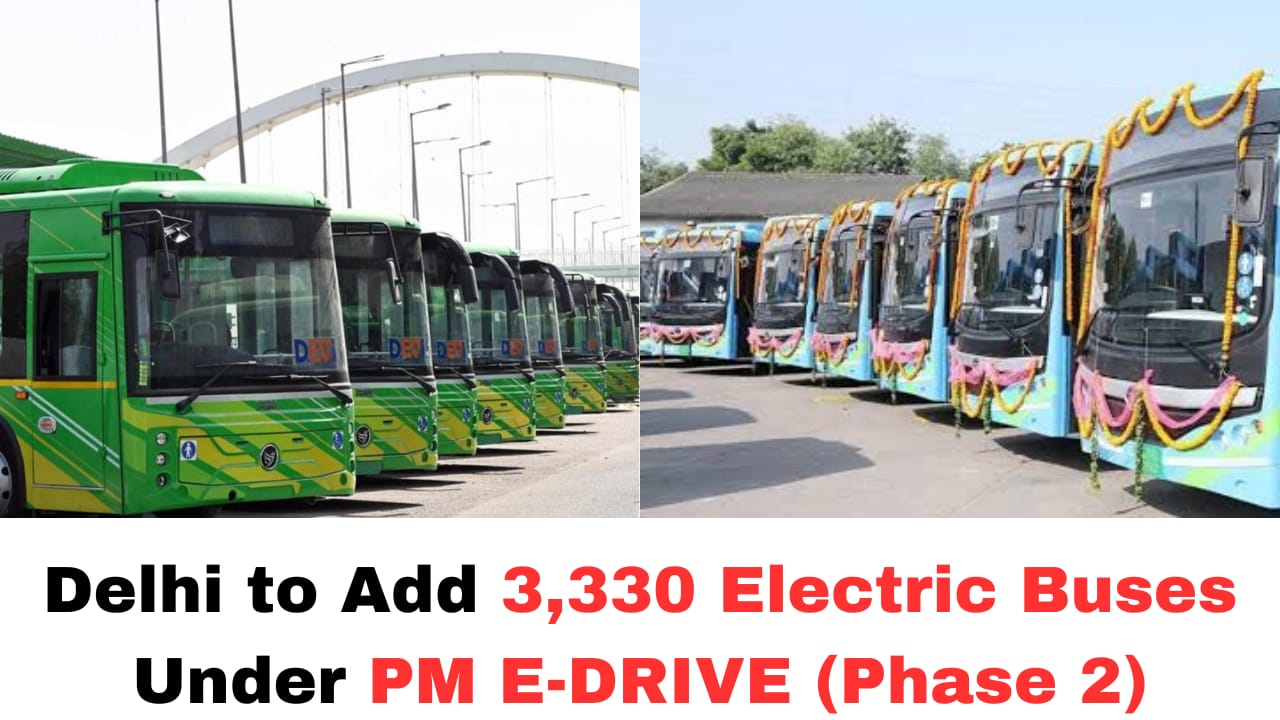
The Delhi government has unveiled plans to significantly expand the city’s public transport fleet by procuring 3,330 additional electric buses as part of Phase 2 of the PM E-DRIVE scheme — a central government initiative aimed at boosting electric mobility across Indian cities.
This proposal was formally sent by the Transport Department to Convergence Energy Services Limited (CESL) — a central government agency responsible for facilitating the adoption of electric vehicles and infrastructure under the scheme.
Chief Minister Rekha Gupta emphasized that this move aligns with the city’s larger goal of creating a fully green, modern, and pollution-free public transport system. Delhi officials are seeking the central government’s approval and subsidies for the addition of these new buses under the PM E-DRIVE Phase 2 allocation.
What the Expanded Fleet Includes
The new fleet of 3,330 electric buses will comprise different sizes and types to meet varied transit needs across the city:
- 500 buses of 7 metres — ideal for narrow streets and last-mile connectivity.
- 2,330 buses of 9 metres — to serve feeder routes and secondary roads.
- 500 buses of 12 metres — to operate on major corridors and high-demand routes.
All these buses will be low-floor, air-conditioned electric vehicles, designed to increase comfort and accessibility for commuters, including women, senior citizens, and people with disabilities.
Why This Matters — Clean Air & Better Connectivity
Delhi’s transport expansion comes amid ongoing efforts to combat air pollution and reduce dependence on private vehicles — a key contributor to the city’s poor air quality. The new electric buses are expected to significantly reduce vehicular emissions while improving last-mile and feeder connectivity for daily commuters.
CM Rekha Gupta has also highlighted that even if there are technical delays in obtaining central subsidies under the PM E-DRIVE scheme, the Delhi government is prepared to proceed independently in order to avoid procurement delays.
Boosting Public Transport & Fleet Growth
Delhi already operates a sizeable public bus network. According to official data:
- The city currently runs 5,336 government buses, of which 3,535 are already electric.
- With 2,800 buses approved under Phase 1 of PM E-DRIVE, the fleet was slated to expand to about 10,430 buses.
- With the newly proposed 3,330 buses under Phase 2, the total fleet would grow to an estimated 13,760 buses — making Delhi one of the largest electric bus fleets in the country.
Officials have also stated that more than 5,000 electric buses are expected to be operational on Delhi roads by March 2026, with goals to add even more in the coming years.
Benefits for Residents & Commuters
This major expansion of the electric bus fleet is expected to benefit residents in several ways:
- Reduced air pollution: Electric buses emit zero tailpipe emissions, improving air quality in a city that frequently battles smog and high pollution levels.
- Enhanced last-mile connectivity: Smaller buses will reach inner streets and residential zones that larger vehicles often bypass.
- Comfort & accessibility: Low-floor, air-conditioned buses improve ease of travel, particularly for elderly passengers and those with disabilities.
- Reduced reliance on private vehicles: A robust electric bus network encourages more commuters to choose public transport, lowering traffic congestion and fossil fuel use.
About the PM E-DRIVE Scheme
The PM E-DRIVE (Electric Drive Revolution in Innovative Vehicle Enhancement) is a flagship programme by the Ministry of Heavy Industries aimed at accelerating the adoption of electric vehicles across India — including e-buses, e-cars, and e-three-wheelers.
Under this scheme:
- Central subsidies and incentives are provided to state transport agencies for procuring electric buses.
- Charging infrastructure support and other ecosystem development measures are also facilitated.
- The scheme has an overall outlay to support thousands of electric buses across major Indian cities — including Delhi, Mumbai, Chennai, Kolkata, and more.
What’s Next
The next steps involve formal approval from the central government and finalisation of the procurement contract through CESL. Once approved, the phased induction of the 3,330 buses is expected to begin, adding momentum to Delhi’s transition toward clean public transport.
City officials remain optimistic that with coordinated efforts between the Delhi government, Centre, and CESL, the expanded electric bus fleet will make daily commuting greener, safer, and more efficient for millions of residents.
You May Also Read: Mukesh Ambani praising India’s resilience under PM Narendra Modi at the Vibrant Gujarat Regional Conference