




Digital News Guru New Delhi Desk:
Tihar Jail to Move Out of Delhi
The Government of Delhi has announced a strategic initiative to relocate Tihar Jail, one of South Asia’s largest prison complexes, from its longstanding location in West Delhi to the outskirts of the national capital. The decision, unveiled by Chief Minister Rekha Gupta, forms part of a wider effort to improve justice delivery, decongest urban infrastructure, and address longstanding challenges facing the Delhi prison system.
Speaking at the 25th anniversary event of the Society of Indian Law Firms (SILF), CM Gupta emphasized that “ease of living cannot be achieved unless ease of justice is fulfilled,” highlighting the government’s focus on strengthening judicial infrastructure alongside the relocation plan.
Why Relocate Tihar Jail?
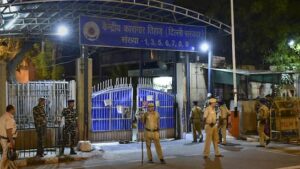
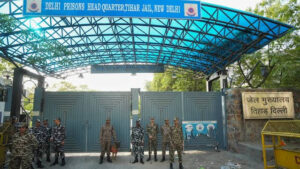
Tihar Jail, established in 1958, is one of India’s largest prison complexes, consisting of multiple jails spread across hundreds of acres in West Delhi. Over the decades, the prison’s population has ballooned far beyond its intended capacity. Originally designed to hold approximately 10,000 inmates, official reports indicate the complex now houses close to 20,000 prisoners, more than double its sanctioned capacity.
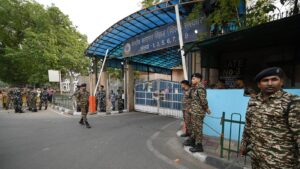
This overcrowding has strained resources, compromised living conditions, and posed logistical challenges for prison administration. Authorities and experts have long pointed out that such extreme congestion affects everything from security and sanitation to rehabilitation programs, making conditions difficult for both inmates and staff.
Moreover, the current location of Tihar — close to densely populated residential areas such as Tilak Nagar and Hari Nagar — raises security and urban planning concerns. Local residents have previously cited issues like restricted mobility, frequent security alerts, and infrastructure strain due to the jail’s proximity.
The Strategy Behind the Move
The relocation plan aims to address multiple issues: reduce overcrowding, enhance prison administration, improve security, and free up central urban land currently occupied by the jail complex. Officials said that a new site of approximately 400 acres would be necessary to build a modern replacement complex capable of housing inmates with better facilities.
During the most recent Delhi budget for 2025–26, the government allocated Rs 10 crore for surveys and consultancy to lay the groundwork for the relocation project. This financial commitment underscores the government’s intent to carefully assess potential sites, design state-of-the-art facilities, and ensure a seamless transition process.
In addition to the relocation plan, the government has underscored the importance of expanding judicial infrastructure. CM Gupta stressed plans to build additional court blocks and courtrooms, and to strengthen fast-track courts, which collectively aim to “maximize the reach of justice” and reduce pressure on the judicial system.
Judicial Reform and Infrastructure Expansion
The relocation initiative comes at a time when the Delhi government is also focused on judicial reforms and enhancing the overall criminal justice ecosystem. By expanding courts and providing better facilities for dispute resolution and mediation, the government hopes to reduce pendency in cases and improve access to justice for citizens.
At the SILF event, the Chief Minister highlighted the launch of a new mediation centre, aimed at promoting alternative dispute resolution. This centre, equipped with facilities for online arbitration and non-litigation advisory services, reflects a broader push to address legal backlogs and costs associated with prolonged litigation.
Challenges and Considerations
While the relocation plan has been broadly welcomed by various stakeholders, it also raises several practical and policy questions. Securing suitable land on the outskirts of Delhi — while negotiating with land authorities such as the Delhi Development Authority (DDA) — will be a key hurdle. Jail authorities have indicated that they require significant land parcels to build a facility that meets modern standards for capacity, security, and inmate welfare.
The scale of the project also requires careful planning to avoid disruptions in daily prison operations. A phased approach will likely be essential, with interim measures such as decongestion through new satellite prisons and enhancements to existing facilities like the emerging high-security complex in Narela already underway.
There are also broader considerations about prisoner rehabilitation and integration with the community. Advocates argue that any relocation should be paired with improved rehabilitation programs, vocational training, and after-care initiatives that support inmates’ reintegration into society once released.
Public and Political Reactions
The relocation plan has sparked discussion among legal professionals, civil society groups, and residents. Supporters typically argue that the move will reduce pressure on urban infrastructure and enhance public safety. Critics, however, caution that relocation alone is not a panacea for systemic issues such as overcrowding or judicial delays unless accompanied by comprehensive reforms in policing, prosecution, and court processes.
Regardless of differing opinions, there is broad consensus that the status quo — with Tihar operating far beyond its capacity — is unsustainable in the long term. Many see the relocation as a necessary, if complex, step toward a more humane and effective corrections system.
Looking Ahead
As the Delhi government proceeds with surveys, consultations, and planning for the Tihar relocation, all eyes will be on how the project unfolds and how quickly tangible progress can be made. With the dual focus on relocation and judicial reform, policymakers are aiming for a holistic upgrade to the capital’s justice and corrections infrastructure.
The coming months will likely reveal the next milestones in this ambitious plan — from site selection to architectural design and eventual construction phases. What remains clear is that the relocation of Tihar Jail — a symbol of India’s largest prison system — represents more than a change of address; it reflects a larger vision for justice, security, and urban planning in one of the world’s most dynamic capital cities.
You May Also Read: High-Level Terror Alert in India as Hanukkah Begins: Security Forces on High Vigilance