



Digital News Guru Current Affairs Desk:
Delhi’s Capital Declaration Anniversary
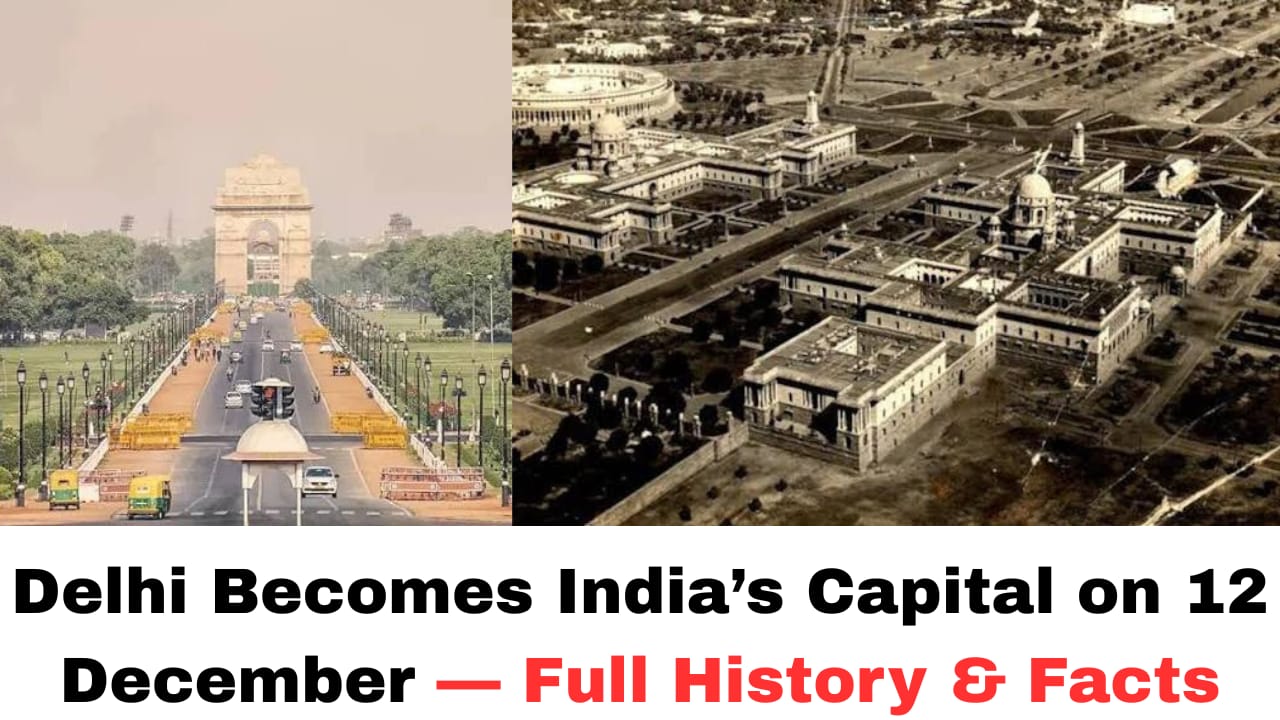
Every year on 12 December, Delhi observes a historically significant milestone — the anniversary of the day the city was announced as the capital of India. While not a public holiday, this date holds deep cultural and historical resonance for Delhiites and Indians at large, symbolising the city’s central role in the political and administrative life of the nation.
A Historic Announcement in 1911
On 12 December 1911, during a grand imperial gathering known as the Delhi Durbar — an official coronation event held at what is today Coronation Park in Delhi — **King George V of Britain declared that the capital of British India would be shifted from Calcutta (now Kolkata) to Delhi.
Prior to this momentous announcement, Calcutta had served as the seat of British administration since the early 19th century. It was a thriving commercial and cultural hub, but British officials came to view it as geographically too far east to be an effective administrative capital for all of India. A more central location, closer to various princely states and political centres of power, was seen as strategic — and Delhi’s deep historic ties to Indian empires made it a fitting choice.
The declaration at the Delhi Durbar was a pivotal event attended by princes, dignitaries and colonial officials. In his address, King George V officially announced the transfer of the seat of the Government of India to Delhi, underscoring its historic and strategic importance.
This event marked a symbolic restoration of Delhi’s past political prominence. Before British rule, Delhi had been the seat of several major empires, including the Mughals, whose capital once brought together diverse regions and cultures of the subcontinent.
Why Delhi Was Chosen
Scholars and historians note multiple factors that influenced the decision to move the capital from Calcutta to Delhi:
- Geographical centrality: Delhi is situated much closer to the political and military heartland of British India, compared with Calcutta in the east.
- Historical legacy: As a former seat of empires, Delhi carried symbolic weight and prestige that could serve British colonial interests.
- Strategic and administrative convenience: Being located closer to the North and a number of princely states, Delhi offered logistical advantages for a central administration.
Despite the importance of the announcement in 1911, the actual work of designing and building the new capital would take nearly two decades.
Designing the New Capital: Lutyens and Baker
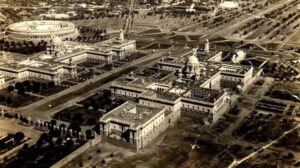
Following the declaration, British authorities appointed prominent architects Sir Edwin Lutyens and Sir Herbert Baker to design the new capital’s layout and buildings. The task was enormous: to construct a modern imperial city that would reflect power and administrative order.
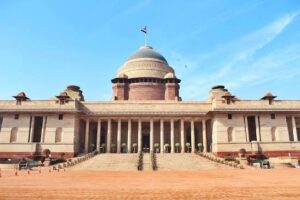
Raisina Hill was chosen as the focal point for the new government complex, where iconic structures such as the Viceroy’s House (now Rashtrapati Bhavan), the Secretariat Buildings, and the Parliament House were planned. These buildings were designed to embody a blend of classical Western architecture and Indian elements, creating a distinctive identity for the new capital.
The process of planning and construction began soon after the announcement and continued through the next decade. Portions of the government began operating from temporary buildings even as construction progressed.
Official Inauguration in 1931
Although the decision to make Delhi the capital was announced in 1911, it was only on 13 February 1931 that the newly constructed city — New Delhi — was officially inaugurated as the seat of the government of India.
The inauguration was carried out by Lord Irwin, the then Viceroy, in a grand ceremony attended by dignitaries from across the subcontinent. This event marked the culmination of years of planning and building, and New Delhi’s emergence as a key centre in the governance of British India.
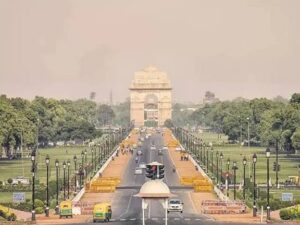
The new capital’s grand avenues, monumental government buildings and expansive green spaces were testaments to the visions of Lutyens and Baker — and remain defining features of the city today.
Legacy and Cultural Importance
Today, 12 December is not an official public holiday, but it is popularly remembered as a historical anniversary and celebration of Delhi’s role as India’s capital. Many residents affectionately refer to it as Delhi’s “birthday” or anniversary of its designation as the nation’s political heart.
Coronation Park — the site of the 1911 Durbar — remains a historical landmark, though much of its original colonial structures have weathered time. The park continues to draw visitors interested in the city’s layered past.
Although some historians argue that the 1911 announcement was more symbolic than practical — noting that the actual transfer of administrative functions happened over years — the date nonetheless encapsulates a turning point in the history of modern India.
Delhi Through the Ages
Delhi’s history as a city predates colonial rule by many centuries. Long before the British decision in 1911, it had served as the seat of Mughal, Sultanate and Lodi dynasties — each leaving behind architectural, cultural and societal imprints that shape the city today.
In this sense, the anniversary on 12 December is about more than administrative shift: it is a tribute to Delhi’s sustained significance as a hub of power, culture and diverse heritage.
Reflection on Modern Delhi
In contemporary times, Delhi is not only the political nucleus of India but also a vibrant metropolis with layers of history permeating everyday life. From historic monuments like the Red Fort and Qutub Minar to the majestic central administrative zone at Raisina Hill and the Parliament House — Delhi represents a confluence of India’s past and present.
As the city commemorates this anniversary, residents and visitors alike reflect on how far Delhi has come — from imperial proclamation in 1911 to the bustling capital of the world’s largest democracy. It’s a reminder of the city’s resilience, transformation and enduring legacy in shaping India’s national story.
You May Also Read: Prada to Launch Rs 84,000 Luxury Kolhapuri-Style Chappals in India