



Digital News Guru National Desk:
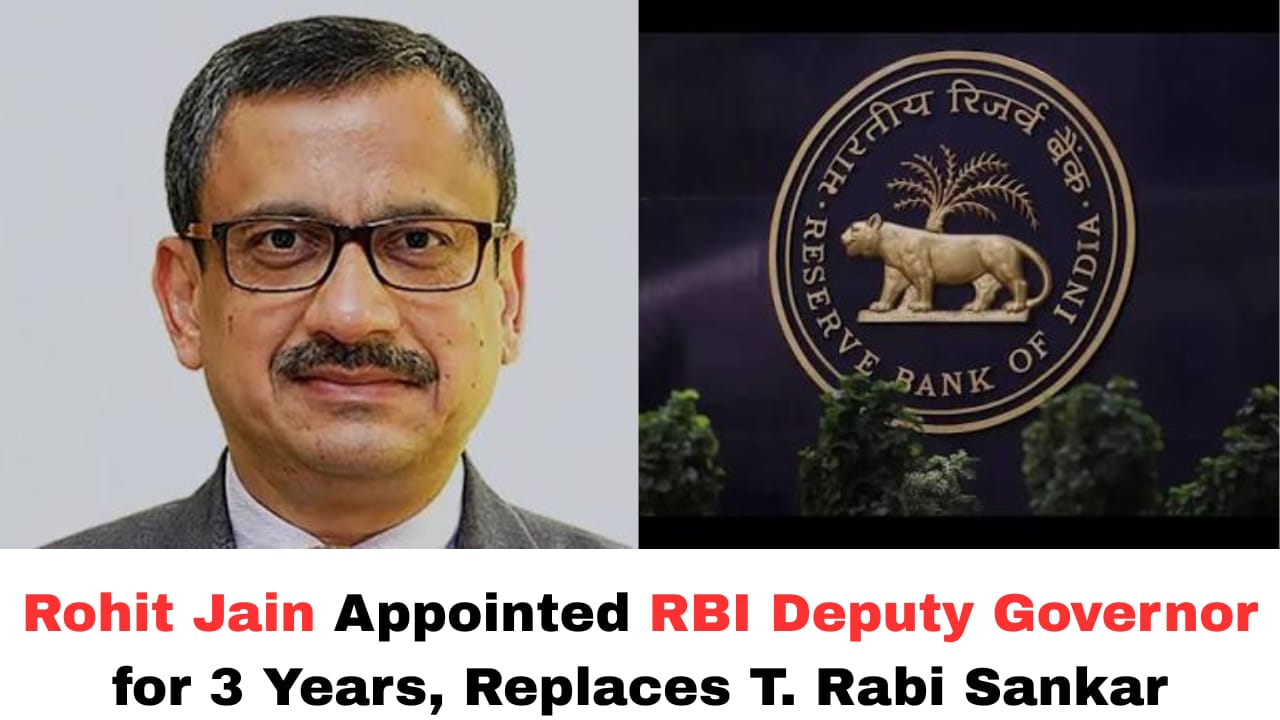
In a significant development for India’s financial and banking sector, Rohit Jain has been appointed as the new Deputy Governor of the Reserve Bank of India (RBI). The appointment, approved by the government, marks an important transition in the leadership of the country’s central bank at a time when the economy is navigating both domestic and global challenges.
A Strategic Appointment
The decision to appoint Rohit Jain was cleared by the Appointments Committee of the Cabinet (ACC), the highest authority for senior-level government appointments. Jain will assume office starting May 3, 2026, for a tenure of three years.

He replaces T. Rabi Sankar, who retired after completing his term as Deputy Governor. The transition ensures continuity in the RBI’s leadership structure, which plays a critical role in shaping India’s monetary and financial policies.
Who is Rohit Jain?
Rohit Jain brings with him extensive experience within the RBI. Prior to his elevation, he served as an Executive Director at the central bank, a role in which he handled crucial supervisory and regulatory responsibilities.
With nearly three decades of experience, Jain has worked across key areas such as banking supervision, financial regulation, and institutional oversight. His long tenure within the RBI positions him as a seasoned insider who understands the complexities of India’s financial system.
As Executive Director, he was closely involved in monitoring banking operations and ensuring financial stability—functions that are central to the RBI’s mandate. This background is expected to help him transition smoothly into his new role.
Role and Responsibilities
The position of Deputy Governor is one of the most critical in the RBI’s hierarchy. Deputy Governors assist the Governor in managing the central bank’s operations, including monetary policy implementation, banking regulation, and financial supervision.
While Jain’s specific portfolio has not yet been officially announced, reports suggest that he may oversee key areas previously handled by his predecessor. These could include:
- Financial markets regulation
- Foreign exchange management
- Payment and settlement systems
These departments are vital to maintaining liquidity, ensuring currency stability, and supporting the growth of digital payments in India.
Timing and Economic Context
Jain’s appointment comes at a crucial time for the Indian economy. The RBI is currently dealing with multiple challenges, including:
- Managing inflation and interest rates
- Ensuring stability in financial markets
- Strengthening banking sector resilience
- Supporting the rapid growth of digital financial services
Globally, economic uncertainty—driven by geopolitical tensions and fluctuating commodity prices—adds another layer of complexity. In this environment, experienced leadership within the central bank becomes essential.
Jain’s appointment signals a continuity-driven approach, with the government opting for an experienced insider rather than an external candidate. This is often seen as a way to maintain policy stability while adapting to evolving economic conditions.
Strengthening RBI’s Leadership Team
The RBI typically has four Deputy Governors, each responsible for different functional areas such as monetary policy, banking supervision, and financial markets.
Jain’s inclusion further strengthens the leadership team, which works closely with the RBI Governor to guide the country’s financial system. His expertise in supervision and regulation is expected to complement the existing leadership structure.
In recent years, the RBI has taken several major steps, including tightening regulatory norms for banks, promoting digital payments, and enhancing financial inclusion. Jain is likely to play a key role in continuing these initiatives.
Focus Areas Going Forward
Experts believe that Rohit Jain’s tenure may focus on several critical priorities:
1. Financial Stability:
Ensuring the health of banks and non-banking financial companies (NBFCs) will remain a top priority, especially in a rapidly evolving financial landscape.
2. Digital Payments and Fintech:
India has seen explosive growth in digital transactions. Strengthening payment systems and regulating fintech innovations will be crucial.
3. Regulatory Oversight:
With increasing complexity in financial markets, robust regulation and supervision will be essential to prevent systemic risks.
4. Economic Growth Support:
Balancing inflation control with growth objectives will remain a key challenge for the RBI.

Why This Appointment Matters
The appointment of Rohit Jain is more than just a routine administrative decision—it reflects the government’s broader strategy for managing India’s financial system. By promoting a career central banker, the authorities are emphasizing:
- Institutional continuity
- Deep domain expertise
- Stability in policy direction
At a time when India aims to strengthen its position as a major global economy, the role of the RBI—and its leadership—becomes even more critical.
Conclusion
Rohit Jain’s elevation to Deputy Governor marks a significant moment for the Reserve Bank of India. With his extensive experience and deep understanding of the financial system, he is expected to play a pivotal role in shaping the country’s monetary and regulatory landscape.
As India navigates economic uncertainties and opportunities alike, the effectiveness of its central bank leadership will be closely watched. Jain’s appointment, therefore, represents both continuity and preparedness—qualities that are essential for steering the economy through complex times.
You May Also Read: Delhi Fire Tragedy: 9 Dead in Vivek Vihar Shahdara Blaze, AC Blast Suspected